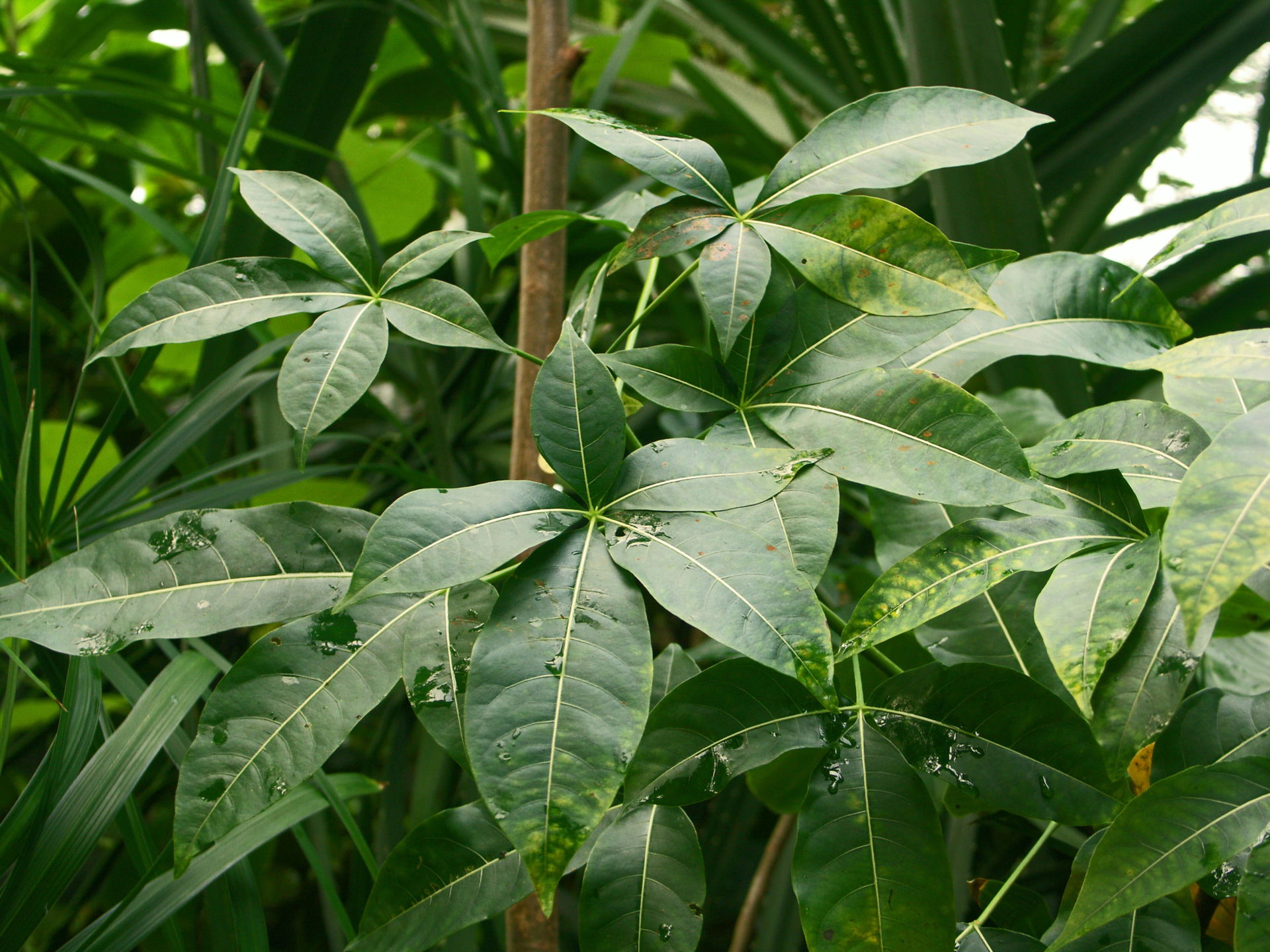
Affenbrotbaum im Masoala Regenwald vom Zoo Zürich

Baobab

African baobab

Adansonia madagascariensis

A fully-grown baobab tree can store tens of thousands of litres of water.

LC

Red List
Least Concern

Baobab trees are found in the rather dry forests of western and northern Madagascar. They grow to between 10 and 35 metres in height. In mature trees, the bottle-shaped, water-storing trunk and the irregular crown are particularly striking.

Baobab flowers remain open for only around 24 hours. During this brief period, they are pollinated by fruit bats, insects and the wind. The fruits are up to ten centimetres in size.

The name ‘monkey bread tree’ suggests that monkeys like to eat the fruit. The name ‘baobab’ comes from Arabic and means ‘fruit with many seeds’.

Distribution

Madagascar and Mayotte

Number of related species

The genus of the woolly-tree family comprises just eight species, six of which are found in Madagascar.

Use

Baobabs are a tourist attraction in Madagascar. The baobab avenue in Marondava is particularly famous. The roots of young trees are eaten as a vegetable. The leaves are used as animal feed.

Habitat at the zoo:

Masoala Rainforest

Godparent

Support the plants of Zoo Zurich with your annual godparent sponsorship

African baobab for CHF 800.–

Become a godparent

Godparent

Support the plants of Zoo Zurich with your annual godparent sponsorship

African baobab for CHF 800.–

Become a godparent
Back to overview