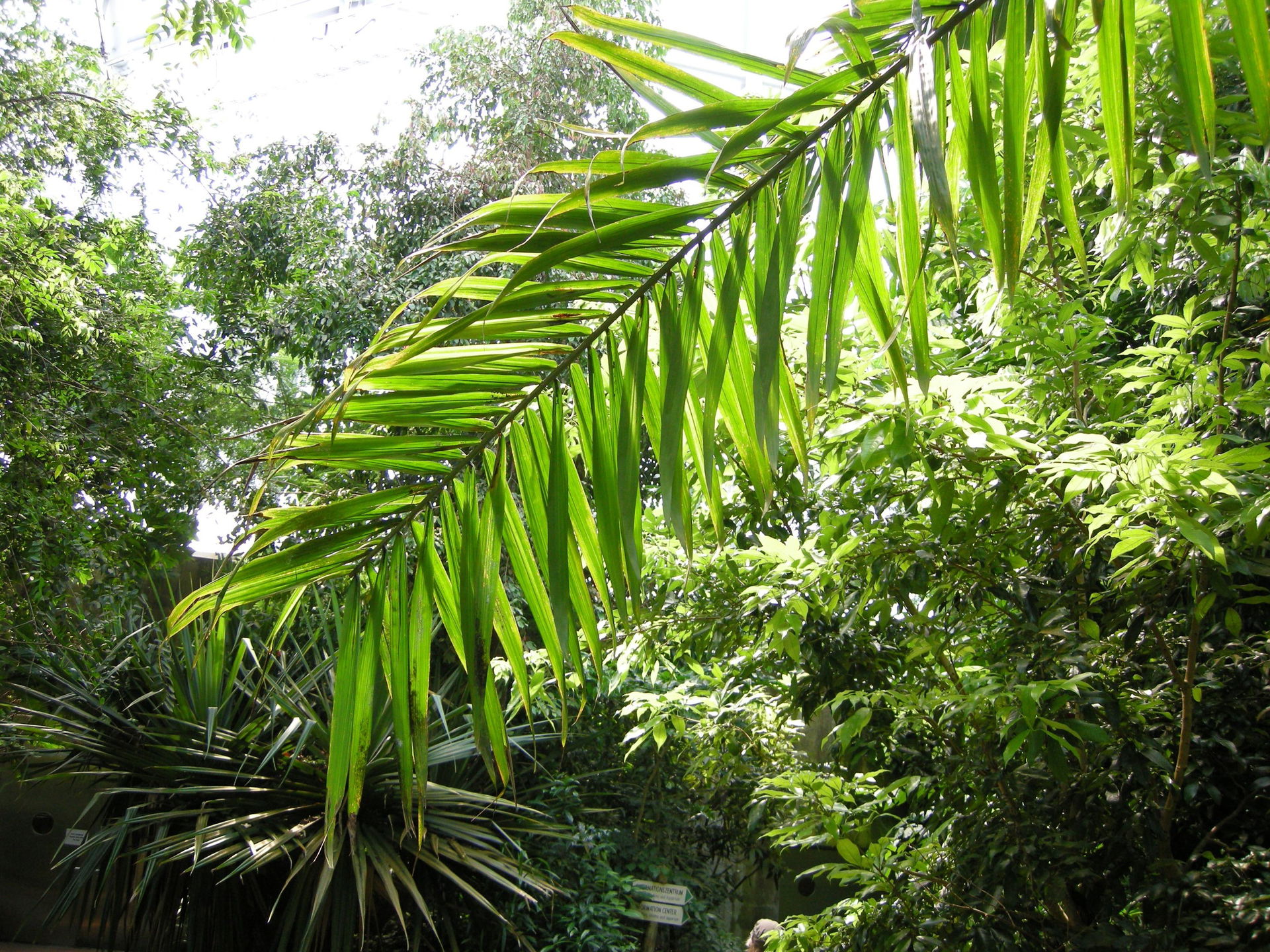
Afrikanische Ölpalme im Masoala Regenwald vom Zoo Zürich

African oil palm

Elaeis guineensis

Palm oil is extracted from the oil palm. It is found in countless products such as margarine, cooking fat, cleaning products and cosmetics.

LC

Red List
Least Concern

This palm, which can grow up to 30 metres tall, produces male and female flowers on separate inflorescences. Inflorescences bearing flowers of both sexes are rare.

The fruit clusters, which can weigh up to 25 kilograms, consist of between 1,000 and 4,000 orange-red drupes. The wild palm trees yield one tonne of drupes per hectare.

Thanks to the targeted selection of high-yielding varieties, yields per hectare now reach up to 6 tonnes. Around 80 per cent of the oil extracted comes from the pulp, and 20 per cent from the seeds.

Distribution

Central and West Africa; probably introduced to Madagascar

Taxonomy

American oil palm

Use

Palm oil is used in margarine, cooking fat, cleaning products and cosmetics. The oil cake is used as animal feed. The main growing regions are Malaysia and Indonesia.
Habitat at the zoo:

Masoala Rainforest
Distribution

Central and West Africa; probably introduced to Madagascar

Taxonomy

American oil palm

Use

Palm oil is used in margarine, cooking fat, cleaning products and cosmetics. The oil cake is used as animal feed. The main growing regions are Malaysia and Indonesia.

Habitat at the zoo:

Masoala Rainforest

Godparent

Support the plants of Zoo Zurich with your annual godparent sponsorship

African oil palm for CHF 800.–

Become a godparent

Godparent

Support the plants of Zoo Zurich with your annual godparent sponsorship

African oil palm for CHF 800.–

Become a godparent
Back to overview