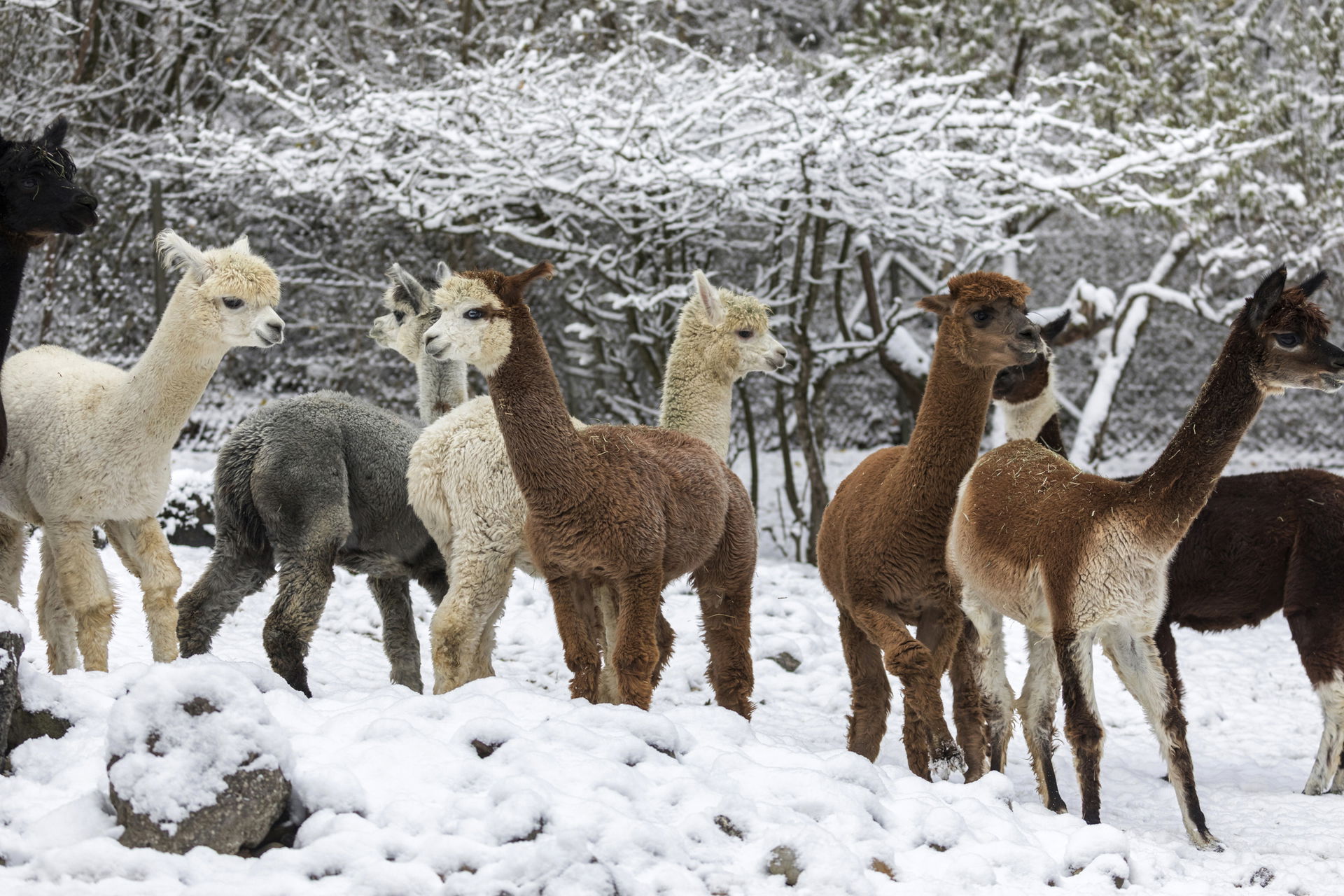
Alpakas (Vicugna pacos) im Zoo Zürich

Alpaca

Vicugna pacos

The alpaca has a long, thick coat. It is mainly used for wool production.

NE

Red List
Not Evaluated

For a long time, the alpaca was regarded, alongside the domestic llama, as the second domesticated form of the Guanaco. However, DNA analyses have shown that the alpaca is descended from the Vicuña.

Alpacas are shorn once a year. The wool yield is between 3.5 and 5 kilograms per shearing. Depending on the breed, the wool is coarser or finer. The wool exported from the approximately 3.3 million alpacas is a significant economic factor for Peru.

To ward off intrusive conspecifics and assert their place in the hierarchy, small camels spit out liquid stomach contents. In doing so, they demonstrate remarkable accuracy. Domestic llamas and alpacas rarely spit at people. The greenish ‘spit’ is foul-smelling but harmless.

Taxonomy

Camelidae, Vicugna (2 species)

Habitat

grasslands and semi-deserts from sea level up to 4,000 metres above sea level

Behaviour and ecology

diurnal, territorial

Social structure

small harem groups, young males in small groups, older males also living as solitary individuals

Taxonomy

Camelidae, Vicugna (2 species)

Habitat

grasslands and semi-deserts from sea level up to 4,000 metres above sea level

Behaviour and ecology

diurnal, territorial

Social structure

small harem groups, young males in small groups, older males also living as solitary individuals

Godparent

Support the animals of Zoo Zurich with your annual godparent sponsorship

Alpaca for CHF 500.–

Become a godparent

Godparent

Support the animals of Zoo Zurich with your annual godparent sponsorship

Alpaca for CHF 500.–

Become a godparent

Tierstimme

Back to overview