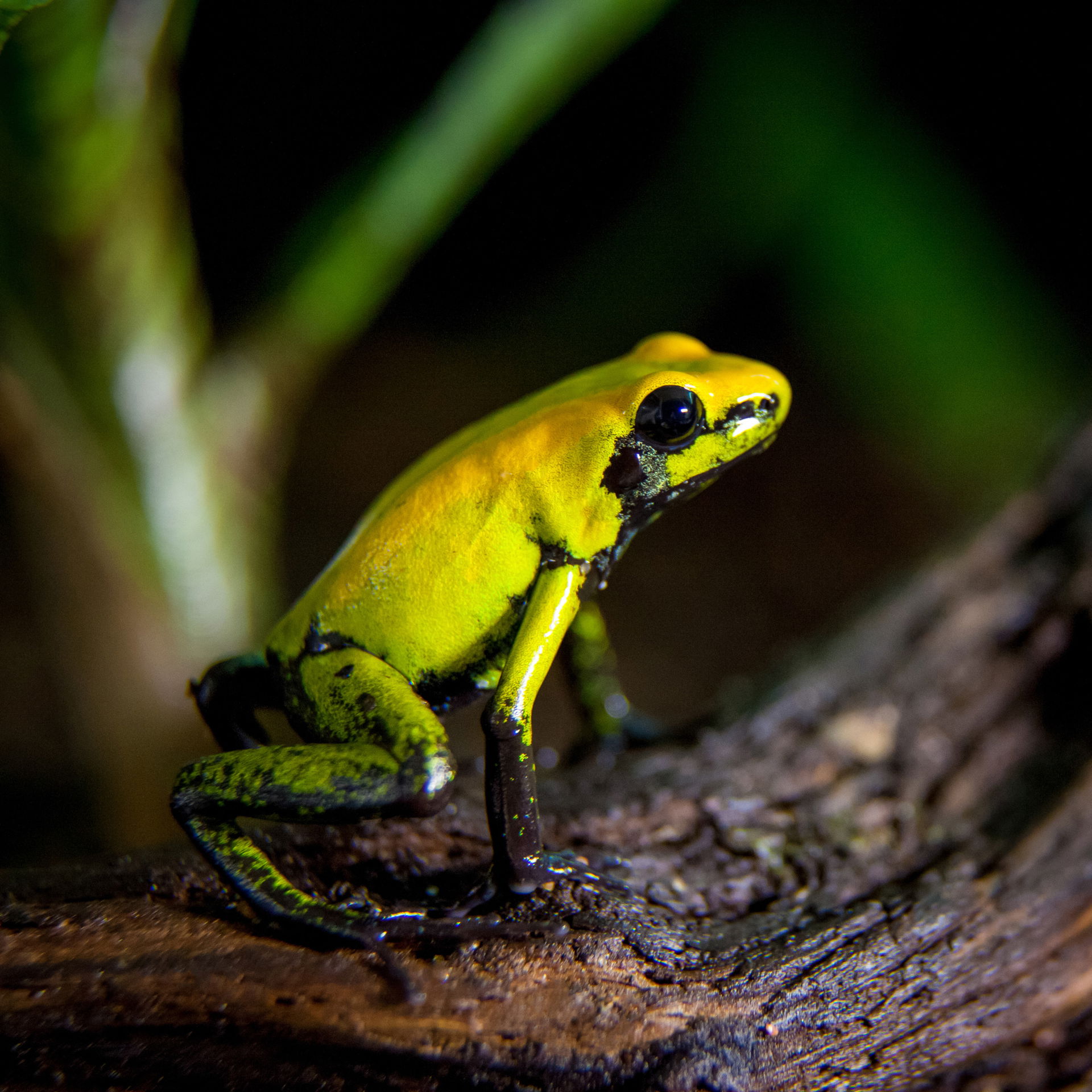
Zweifarbiger Pfeilgiftfrosch (Phyllobates bicolor) in der Forschungsstation des Zoo Zürich

Black-legged poison dart frog

Phyllobates bicolor

The black-legged poison dart frog usually lays between 4 and 30 fertilised eggs in damp spots. After they hatch, one of the parents carries the tadpoles on its back to a body of water, where they continue to develop.

EN

Red List
Endangered

The black-legged poison dart frog is one of three species used by the indigenous people of Colombia for hunting with poisoned arrows. All three species contain high concentrations of batrachotoxin. The golden poison frog is the most toxic. The other two species – the Black-legged poison dart frog and the golden-striped tree frog – are roughly equally toxic.

Poison-dart frogs raised in captivity lose their toxicity, as they absorb the toxins through their diet.

To this day, scientists are still unsure which species of prey provides the basis for the potent venom. However, they have narrowed down the possible ‘venom sources’ to the following invertebrates: ants, mites or even a small beetle from the family Melyridae.

Taxonomy

Dendrobatidae, Phyllobates (5 species)

Habitat

Colombia’s tropical, humid lowlands and rainforests

Behaviour and ecology

diurnal ground-dweller

Diet

small insects such as ants and other invertebrates

Taxonomy

Dendrobatidae, Phyllobates (5 species)

Habitat

Colombia’s tropical, humid lowlands and rainforests

Behaviour and ecology

diurnal ground-dweller

Diet

small insects such as ants and other invertebrates

Godparent

Support the animals of Zoo Zurich with your annual godparent sponsorship

Black-legged poison dart frog for CHF 150.–

Become a godparent

Godparent

Support the animals of Zoo Zurich with your annual godparent sponsorship

Black-legged poison dart frog for CHF 150.–

Become a godparent
Back to overview