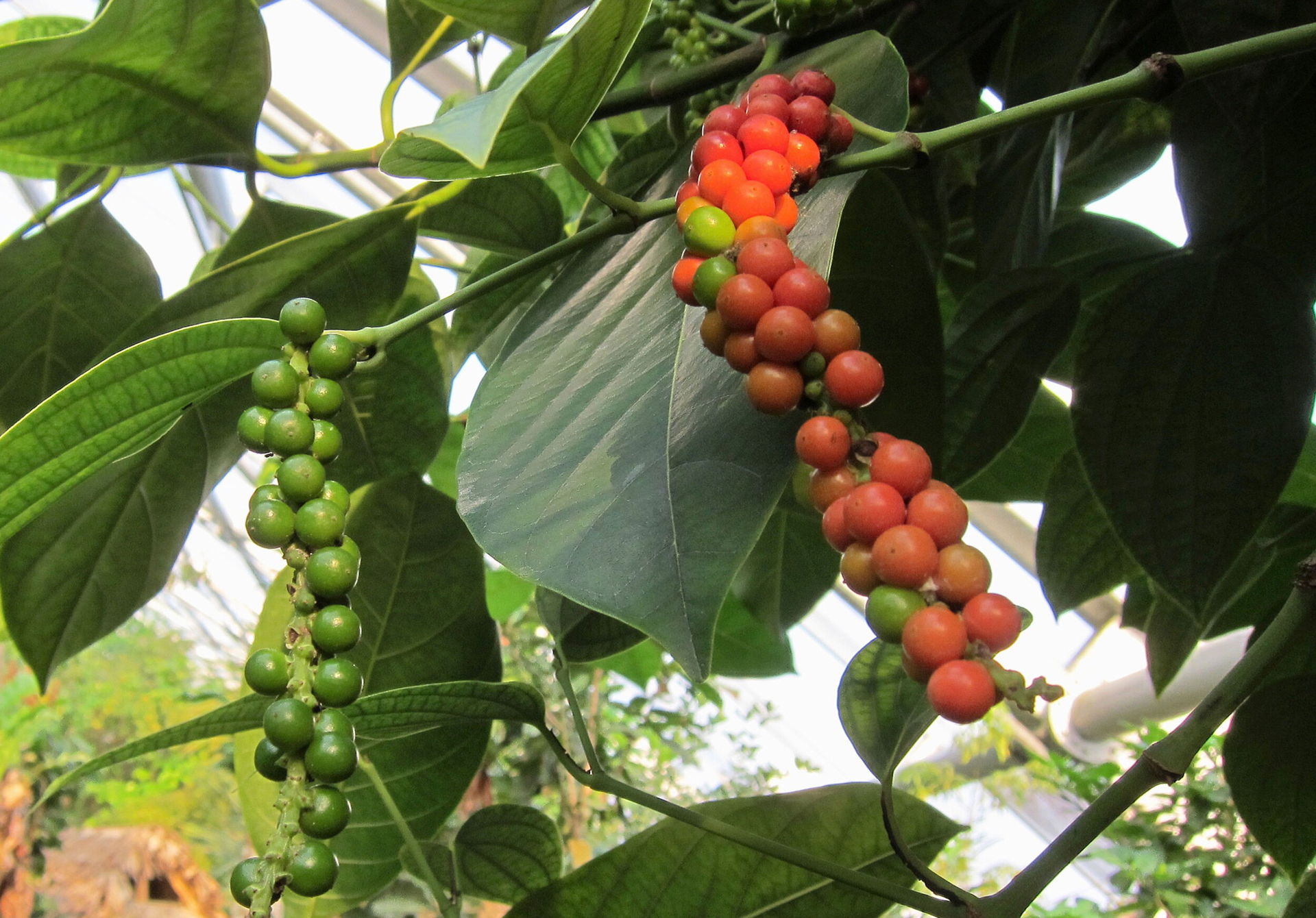
Black pepper is a vine that anchors itself to trees using adhesive roots. The drupes consist of a single seed, which is green when unripe and turns red when ripe. Around 50 fruits grow densely packed on long spikes. As the pepper plant prefers shady locations, it is often planted in mixed cultivation with large, shade-providing tree species, which also serve as climbing supports.
Black pepper is made from unripe green fruits. The whole spikes are picked and stored until the peppercorns have fermented and turned black. The peppercorns are then dried in the sun. To produce white black pepper, ripe fruits are picked and soaked in water for ten days until the skin has come away. Finally, the seeds are dried and ground.
White pepper is less aromatic than black pepper because it largely lacks the influence of the oils and resins found in the fruit’s skin.
Green black pepper must be stored in brine or oil immediately after harvesting, otherwise it will oxidise quickly and turn brown.
Distribution
South-west India; now cultivated throughout the tropics
Number of related species
over 1,000 (in the genus Piper)
Use
a spice used as a remedy for inflammation, rheumatism and headaches