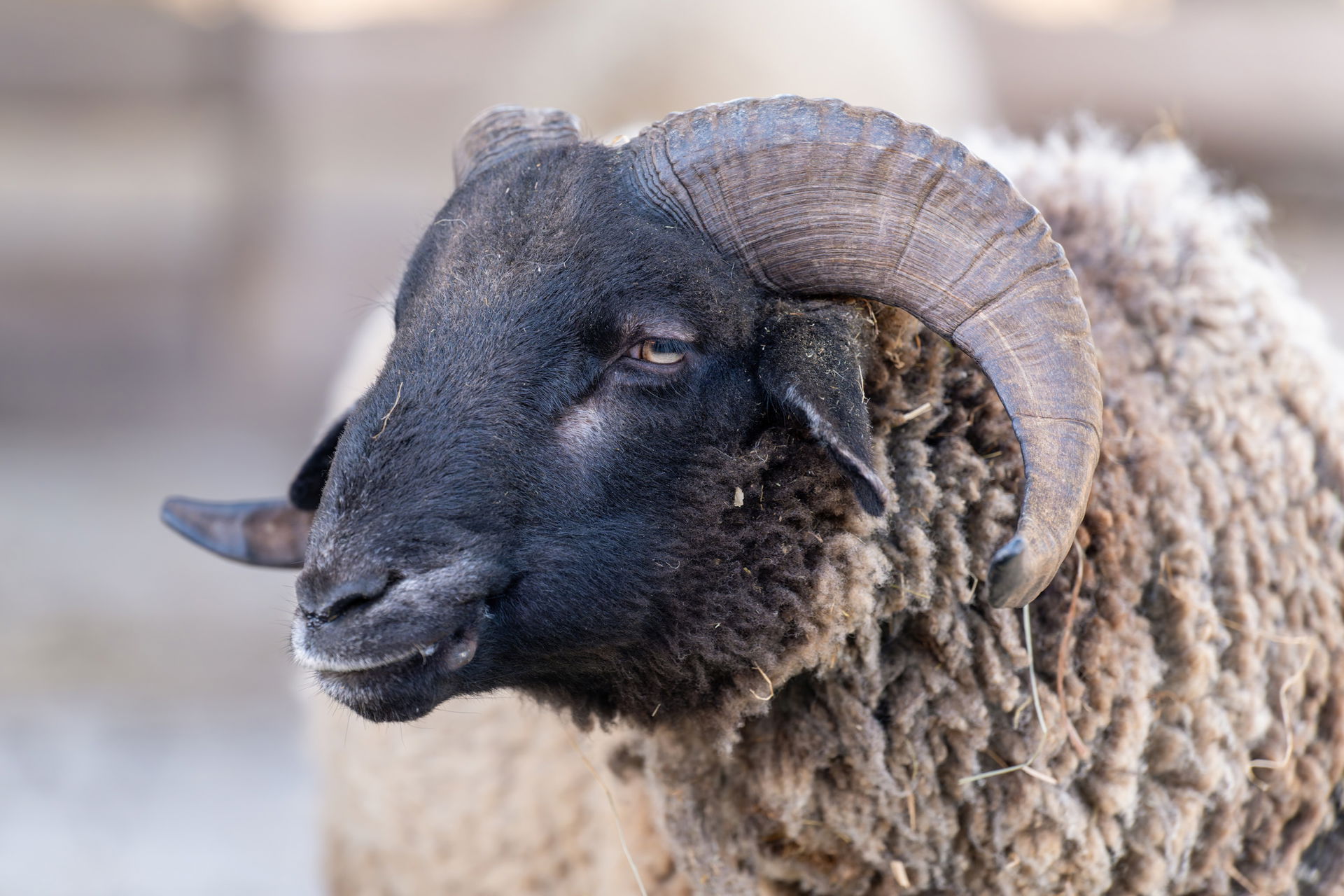
The roots of the Bündner Oberland sheep can be traced back to the Tavetsch sheep. This, in turn, is considered a direct descendant of the Torf sheep, which had already undergone extensive distribution in Central Europe during the Stone Age and is regarded as the progenitor of European domestic sheep. The Tavetscher sheep possessed many original characteristics. However, despite breeding efforts, this breed became extinct in the 1960s as a result of inbreeding problems.
However, the Bündner Oberland sheep carries on at least some of the characteristics of the Tavetscher sheep: in the 1980s, ProSpecieRara launched a conservation project for the Tavetscher sheep. A few surviving animals were saved. The Bündner Oberland sheep emerged from these and other sheep from various valleys in the Grisons.
This breed is characterised by a strong maternal instinct and a high level of alertness. Despite their slender build, Bündner Oberland sheep are remarkably robust and adaptable. Owing to their distribution, they are perfectly adapted to mountainous terrain and demonstrate exceptional sure-footedness. A typical feature of this breed is a wool-free head with delicate facial features, although various colour variations occur. Another characteristic feature is that the females of this breed also have horns – one of the exceptions amongst sheep breeds.
Taxonomy
Bovidae, genus Ovis (20 species)
Habitat
wild form in arid mountainous landscapes
Behaviour and ecology
diurnal
Social structure
herd animals, at least one male and three to six females