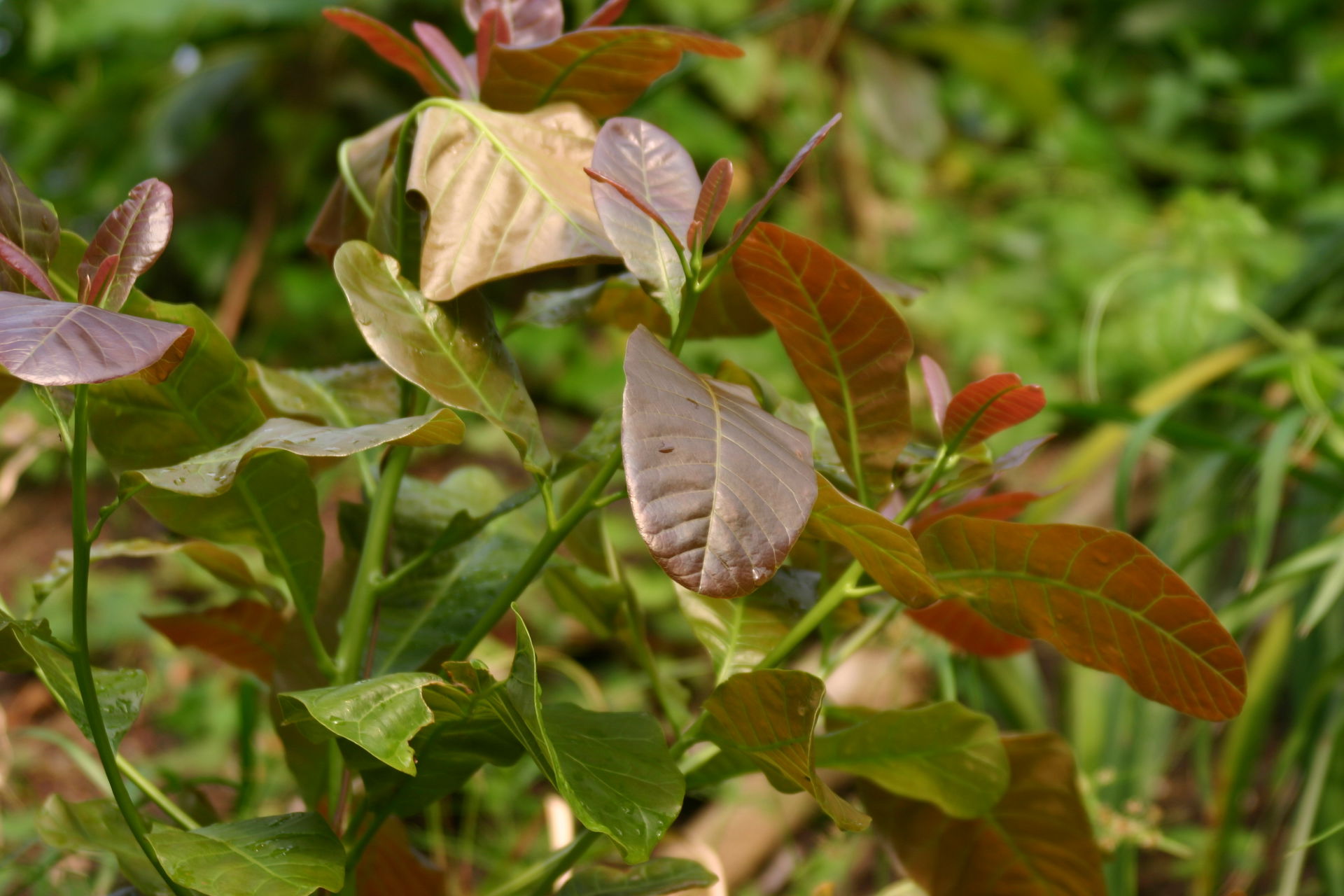
Kaschu- oder Cashewbaum (Anacardium occidentale) im Masoala Regenwald des Zoo Zürich

Cashew tree

Anacardium occidentale

The deep roots of the cashew tree protect the soil from erosion.

The fruit of the cashew tree is a pear-like structure, from the end of which hangs a single kidney-shaped nut. The nut kernel is enclosed in a hard, woody shell. The middle layer of the shell is porous and filled with toxic cashew nut shell oil. The harvested fruits are dried in the sun for a few days and can then be stored for six months. The shell is resistant to all insects and rodents! When the nuts are roasted, the shell catches fire. The burning temperature is kept high by the nut shell oil. After five minutes, the burning nuts must be extinguished with ash. The shells are finally cracked open using a wooden mallet and a great deal of skill. Undamaged nuts fetch the highest selling price.

The root system of this tree, which can grow up to ten metres tall, extends up to eight metres wide and 1.5 metres deep. This extensive root system therefore helps to stabilise the soil and prevent erosion. This is one of the reasons why the tree has been introduced to other continents, such as Asia and Africa. 

Distribution

Brazil, and today in many tropical regions

Number of related species

26 species

Use

Nuts as food; nut shell oil for ink; synthetic resin as a high-performance protective coating and lubricant; fruit stalks (‘apples’) as fruit and for use in drinks, jams, sauces and vinegar. Leaves to treat diarrhoea. Resin as bookbinding glue. The root system provides protection against soil erosion.

Habitat at the zoo:

Masoala Rainforest
Back to overview