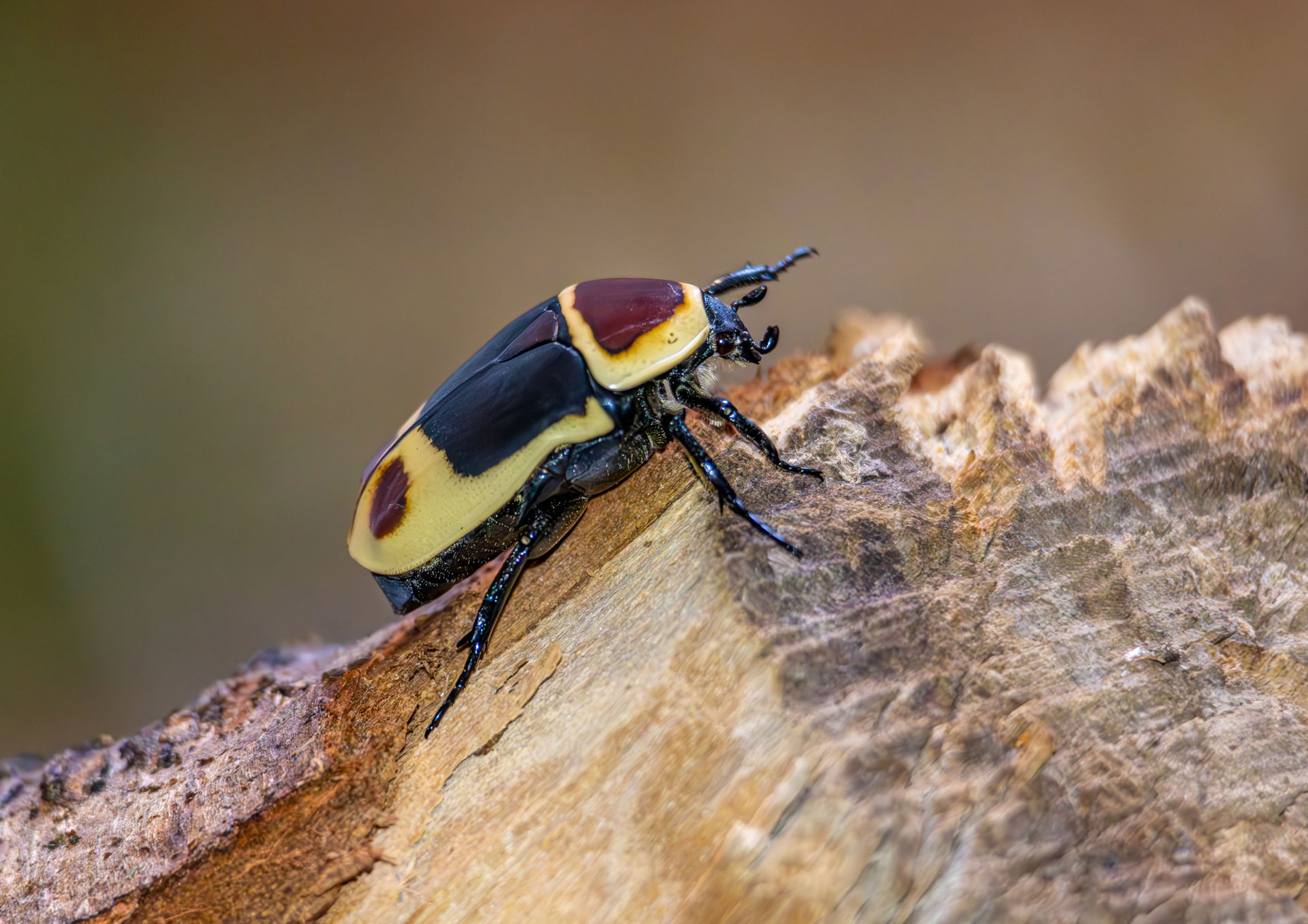
The Congo chafer is a strikingly colourful species native to the tropical regions of Africa. This species of beetle is known for its shiny carapace, which is usually patterned in yellow and black.
The Congo chafer takes about five months to develop from an egg into an adult beetle.
The females lay up to 178 eggs in the soil. The larvae (grubs) hatch from these after 3 to 4 weeks.
After about three months, the larvae pupate inside a cocoon made of soil particles and bodily secretions. The beetle emerges after five to eight weeks, leaves the cocoon and burrows its way out.
Taxonomy
Scarabaeidae, genus Pachnoda (almost 120 species)
Habitat
areas of Central and West Africa with an abundance of flowers
Behaviour and ecology
diurnal
Diet
pollen, nectar and fruit