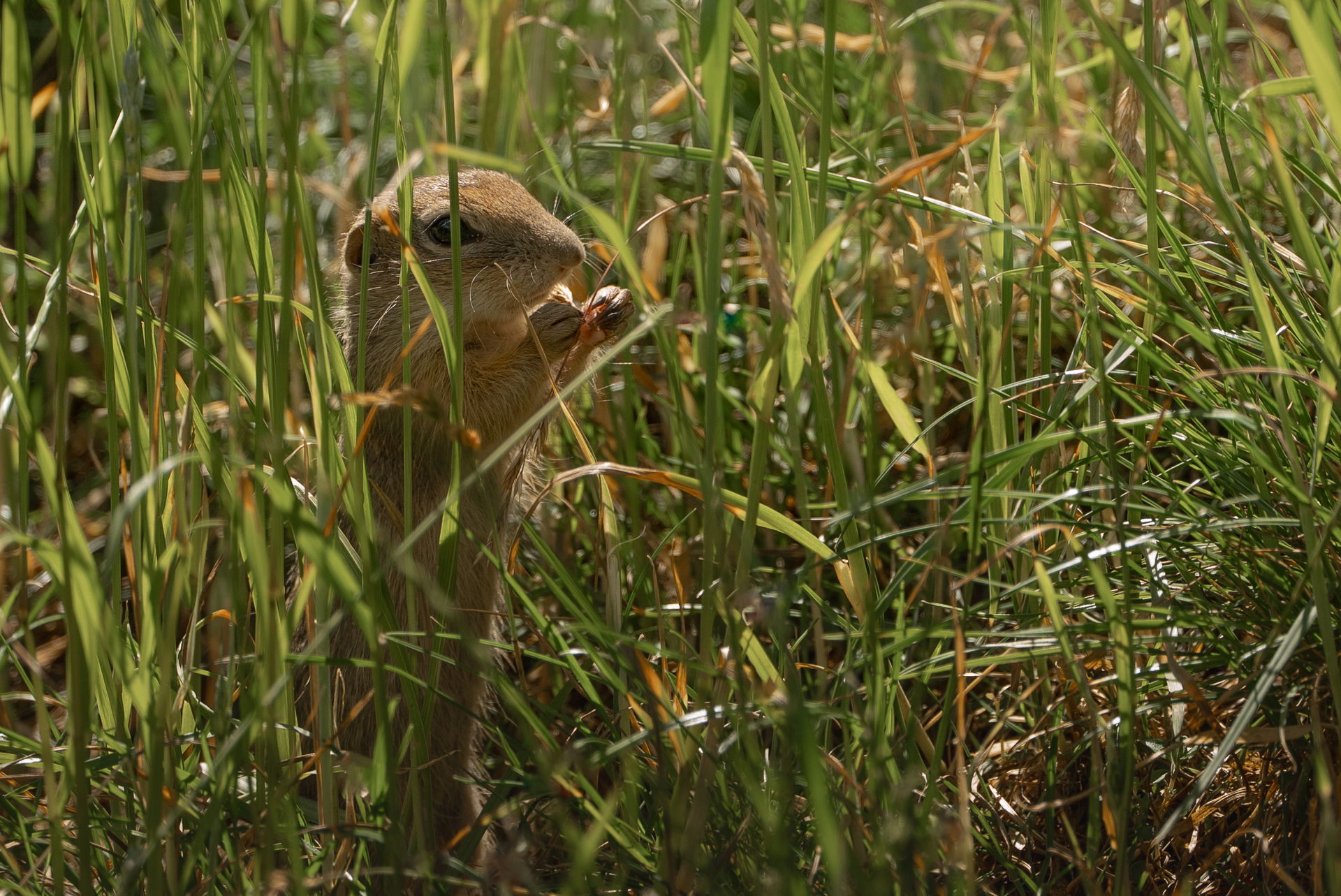
The European ground squirrel is a strictly diurnal mammal that digs burrows up to 1.5 m deep. On average, the animals emerge 4 hours after sunrise and remain active until around 3 hours before sunset. They spend just under 50 per cent of their daily activity underground in their burrows.
Although European ground squirrels live in colonies, they are not considered social animals. Each individual inhabits its own burrow and does not share it with neighbouring members of the colony.
They use their burrows for shelter from predators, to raise their juveniles, or for hibernation. Hibernation usually lasts around 180 days (from October to the end of March). The mating season begins shortly after they wake up in spring.
A typical behaviour of ground squirrels is to stand on their hind legs at the entrance to their burrow in order to get a better view and thus spot danger early. They communicate this danger to other ground squirrels through vocalisations.
There is a wide variety of calls. This variety enables them not only to signal threats, but also to indicate their severity. Eight types of call are currently known in the European ground squirrel: alarm calls, screams and chattering, as well as grunts, rapid grunts, growls, chirps and panting.
Taxonomy
Squirrels (Sciuridae), ground squirrels (Spermophilus, 18 species)
Habitat
Meadows and open woodland areas
Behaviour and ecology
diurnal soil-dwelling animals, living in colonies
Diet
Buds, fruits, seeds, insects