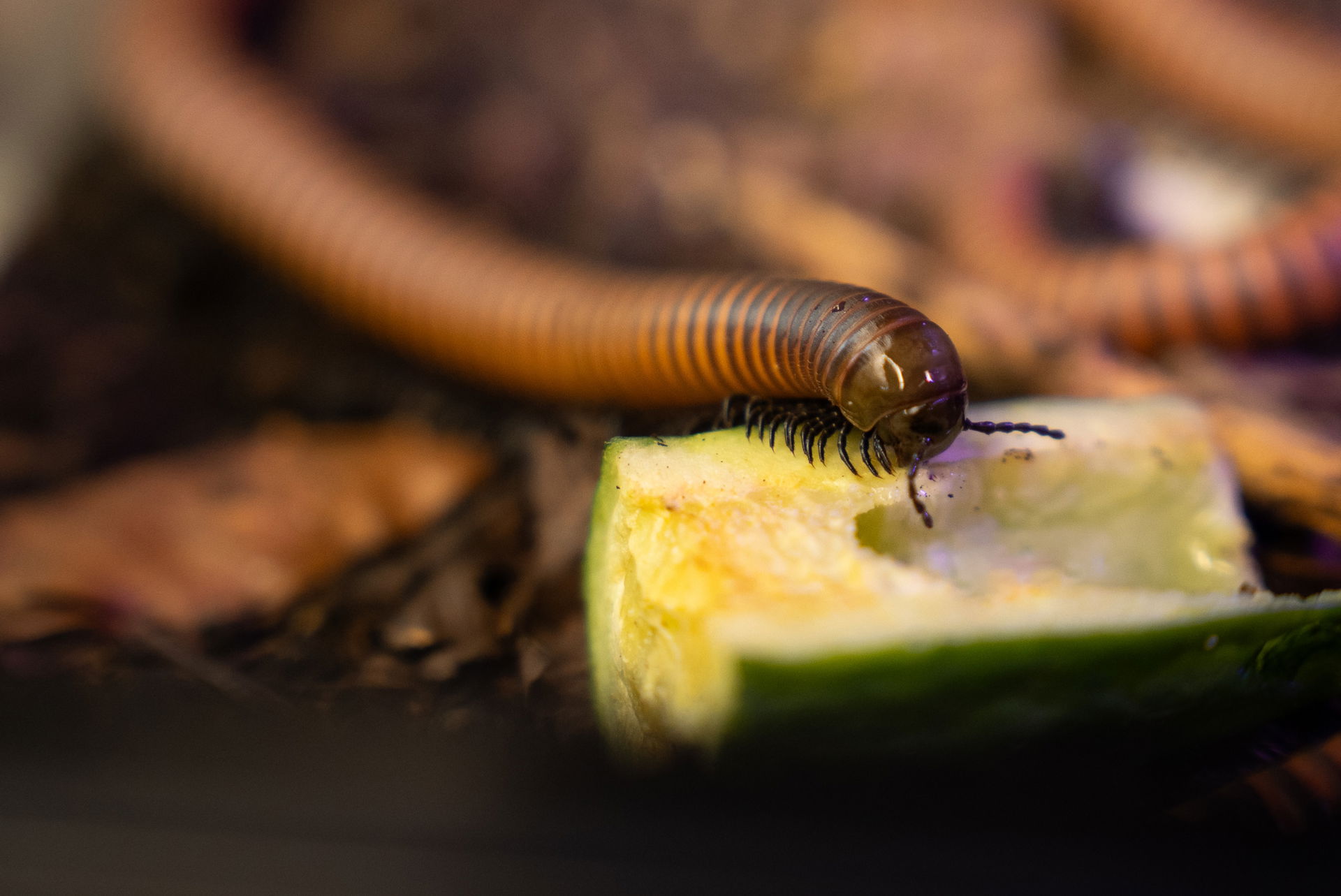
Not all millipedes are the same. Over 16,000 species have been described worldwide to date. However, it is believed that there are many times that number.
The species of giant millipede shown here, which is kept at Zoo Zurich, has not yet been scientifically described. This means that this species cannot be classified as any of the species known to date. Consequently, little is known about it.
The first species of the genus Sechelleptus was described in 1835. This millipede was found in the Seychelles – hence the name. Until 1992, it was assumed that this was a monotypic genus, i.e. a genus comprising only this one species.
In 1992, a group of researchers discovered that the taxonomy of this species was similar to that of millipedes in Madagascar. Later, species of this genus were also found on the African mainland.
Identifying these small creatures is no easy task, and new species are constantly being discovered. As a result of the new knowledge gained, the classification of the evolutionary relationships between the various species of millipedes is also constantly changing. This is therefore not a finished process, but one that must be continually revised.
This example illustrates just how crucial it is to protect habitats. It is the only way we can prevent animal species from becoming extinct before we have even discovered them.
Taxonomy
Giant millipedes (Spirostreptidae), genus Sechelleptus (32 species)
Habitat
rainforests, litter layer