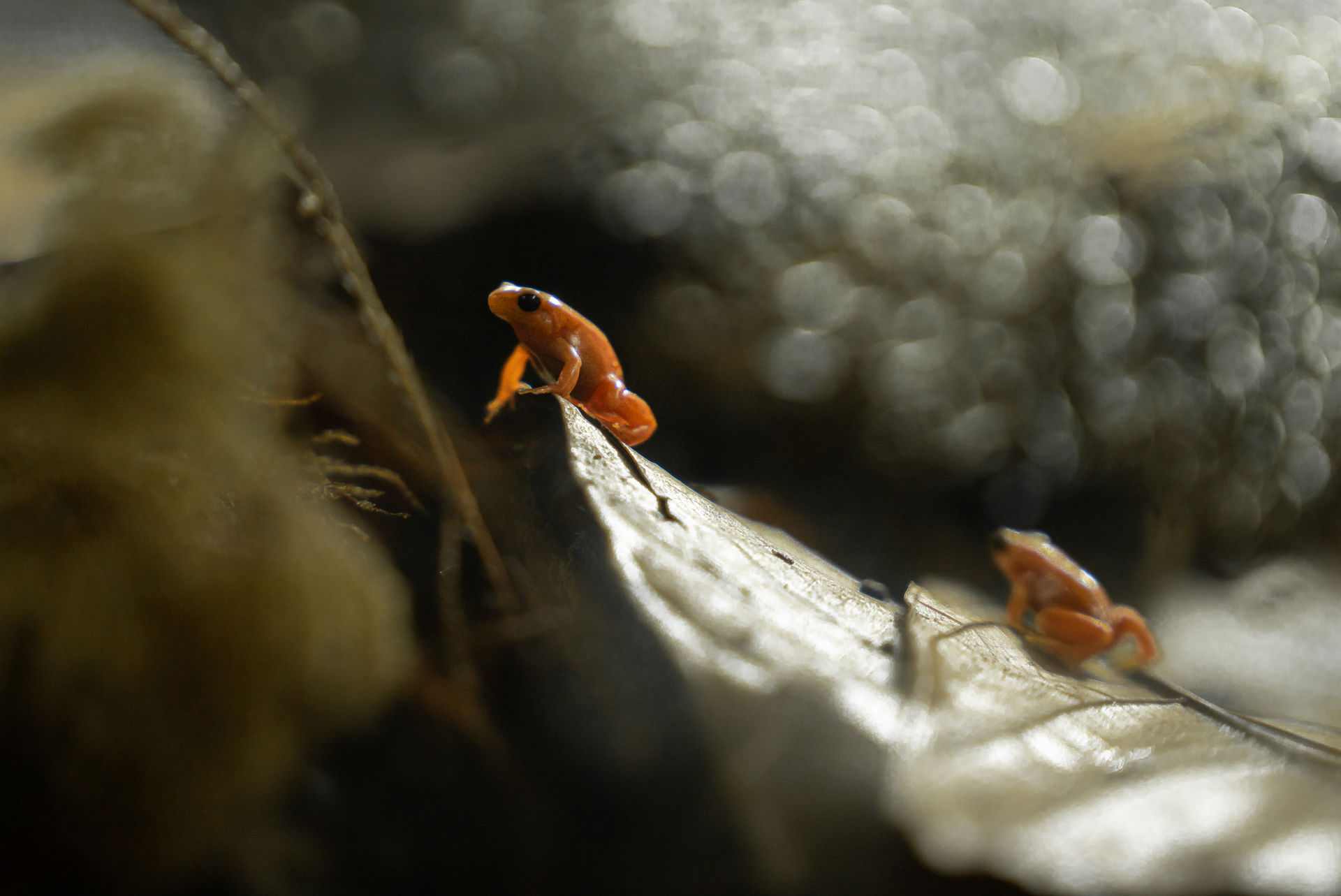
As is typical of tree-climbing frogs from South America, the Madagascan frogs of the family Mantellidae are also poisonous; this includes the wild golden mantella. It ingests the poison through its diet, particularly insects.
The toxin then accumulates in the skin. There, it is secreted by skin glands, thereby protecting the frogs from predators as well as from bacterial and fungal infections. The golden mantella signals its toxicity through its striking orange-yellow colouring, which serves as a warning signal to predators.
The golden mantella is found only in a limited area in eastern Madagascar. Due to increasing deforestation, it is losing its habitat, which is being destroyed and severely fragmented.
Given these threats, the golden mantella is a fitting ambassador for amphibian conservation and nature conservation in general in Madagascar.
Taxonomy
Madagascar frogs (Mantellidae), genus Mantella (16 species)
Habitat
open swamp forests with dense ground vegetation near streams and freshwater springs
Behaviour and ecology
diurnal, living on the ground and in trees, in small groups
Diet
small insects, ants, invertebrates