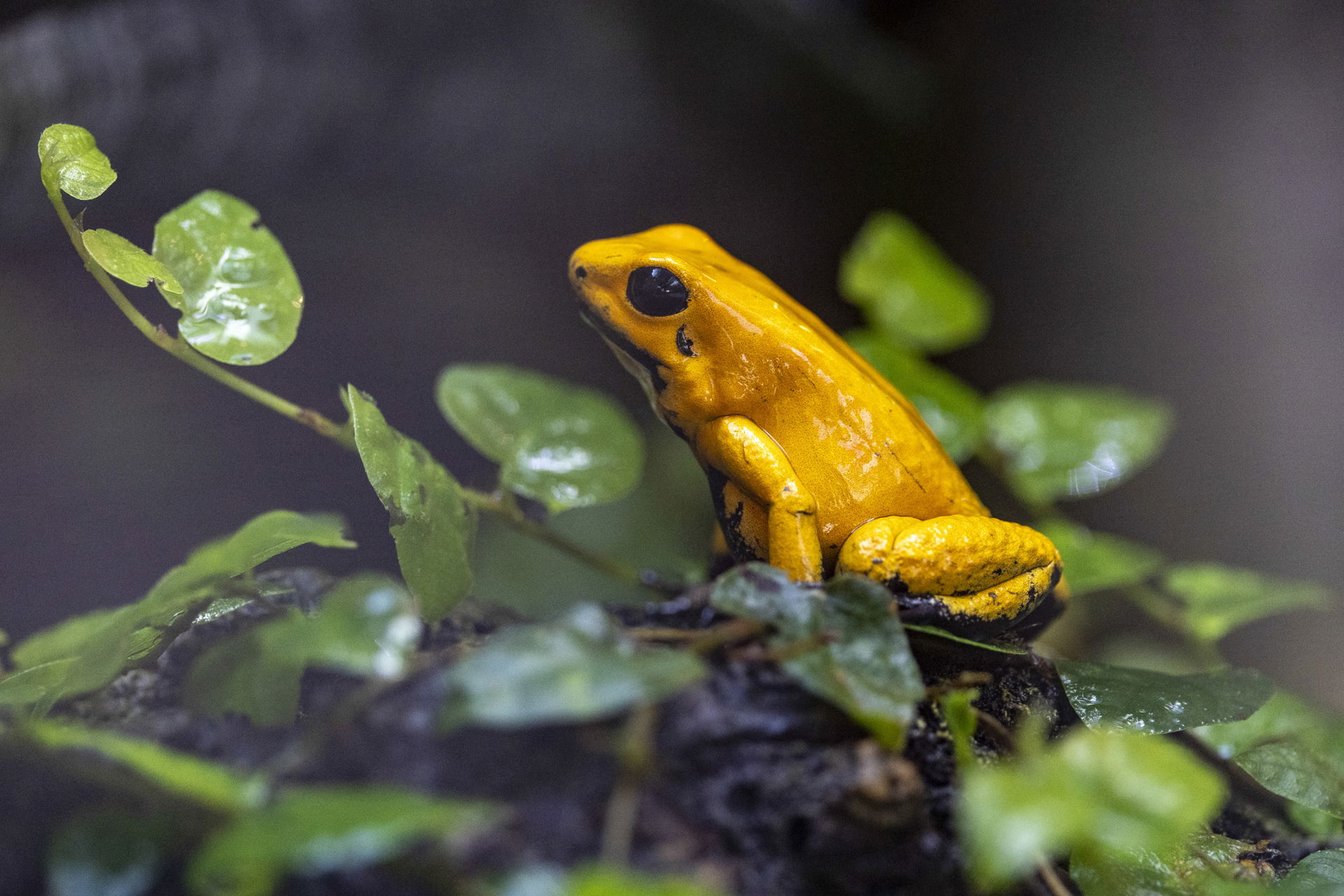
Goldener Pfeilgiftfrosch (Phyllobates terribilis) in der Forschungsstation des Zoo Zürich

Golden poison frog

Phyllobates terribilis

The golden poison frog is one of the most poisonous animals in the world.

EN

Red List
Endangered

Poison dart frogs use their bright, warning colours to signal that they are poisonous and inedible.

The golden poison frog secretes a skin secretion that contains one of the most potent animal venoms known. The frogs obtain the raw materials for their skin toxins from their diet (mites, ants and beetles). These toxins either remain unchanged in the frogs’ bodies or are converted into other toxic substances.

The skin secretion of some species, including the Golden poison frog, is so potent that indigenous peoples use it on their arrows for hunting.

Poison dart frogs exhibit a distinctive reproductive behaviour. The females lay their eggs in damp places on land. The male then takes over the care of the clutch. Once the tadpoles have hatched, the male carries the juveniles on his back to a suitable water source.

Taxonomy

Tree-climbing frogs (Dendrobatidae), leaf-climbing frogs (Phyllobates, 5 species)

Habitat

Rainforest up to 200 metres above sea level

Behaviour and ecology

diurnal, living on the ground and in trees

Diet

Ants, insects

Taxonomy

Tree-climbing frogs (Dendrobatidae), leaf-climbing frogs (Phyllobates, 5 species)

Habitat

Rainforest up to 200 metres above sea level

Behaviour and ecology

diurnal, living on the ground and in trees

Diet

Ants, insects

Godparent

Support the animals of Zoo Zurich with your annual godparent sponsorship

Golden poison frog for CHF 150.–

Become a godparent

Godparent

Support the animals of Zoo Zurich with your annual godparent sponsorship

Golden poison frog for CHF 150.–

Become a godparent
Back to overview