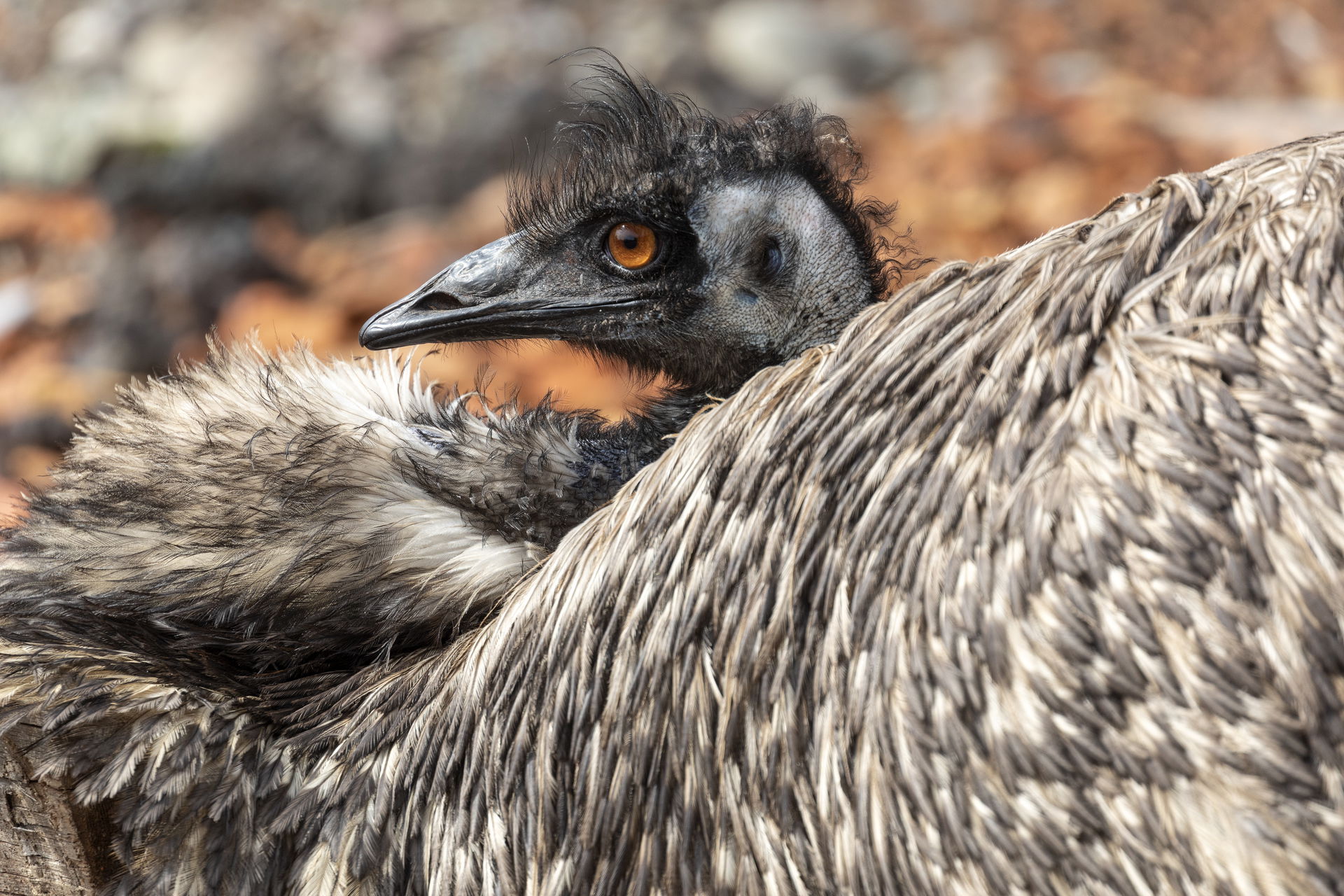
Grosser Emu im Lebensraum Australien des Zoo Zürich

Emu

Dromaius novaehollandiae

The emu is the second-largest living bird in the world after the African ostrich. Like the ostrich, the emu is flightless.

LC

Red List
Least Concern

Emus inhabit large parts of Australia across a wide variety of habitats: sparse woodlands, open grasslands, farmland, very arid areas as well as wetlands, from the coastal regions right up to the higher elevations of the highest mountains. As a national bird, it has the honour of appearing, alongside a kangaroo, as a shield-bearer on the Australian coat of arms.

As a flightless bird, the emu has legs that are highly developed for running. The plumage of flightless birds does not lie very closely and compactly against the body. The birds therefore look somewhat shaggy, as the fine branches of the feathers do not interlock very well.

In the case of the emu, it is the male who incubates the eggs. During the entire breeding season, he neither eats nor drinks. He draws his energy from the fat reserves he has built up beforehand. To ensure he does not have to leave the nest, he also refrains from defecating throughout the entire breeding season.

Taxonomy

Casuariidae, emus (Dromaius, 1 species)

Habitat

eucalyptus forests, scrubland and bushland; rarely found in deserts

Migratory behaviour

extensive foraging trips to suitable feeding grounds; unable to fly

Social structure

solitary or in pairs, very rarely in groups

Taxonomy

Casuariidae, emus (Dromaius, 1 species)

Habitat

eucalyptus forests, scrubland and bushland; rarely found in deserts

Migratory behaviour

extensive foraging trips to suitable feeding grounds; unable to fly

Social structure

solitary or in pairs, very rarely in groups

Godparent

Support the animals of Zoo Zurich with your annual godparent sponsorship

Emu for CHF 400.–

Become a godparent

Godparent

Support the animals of Zoo Zurich with your annual godparent sponsorship

Emu for CHF 400.–

Become a godparent

Tierstimme

Back to overview