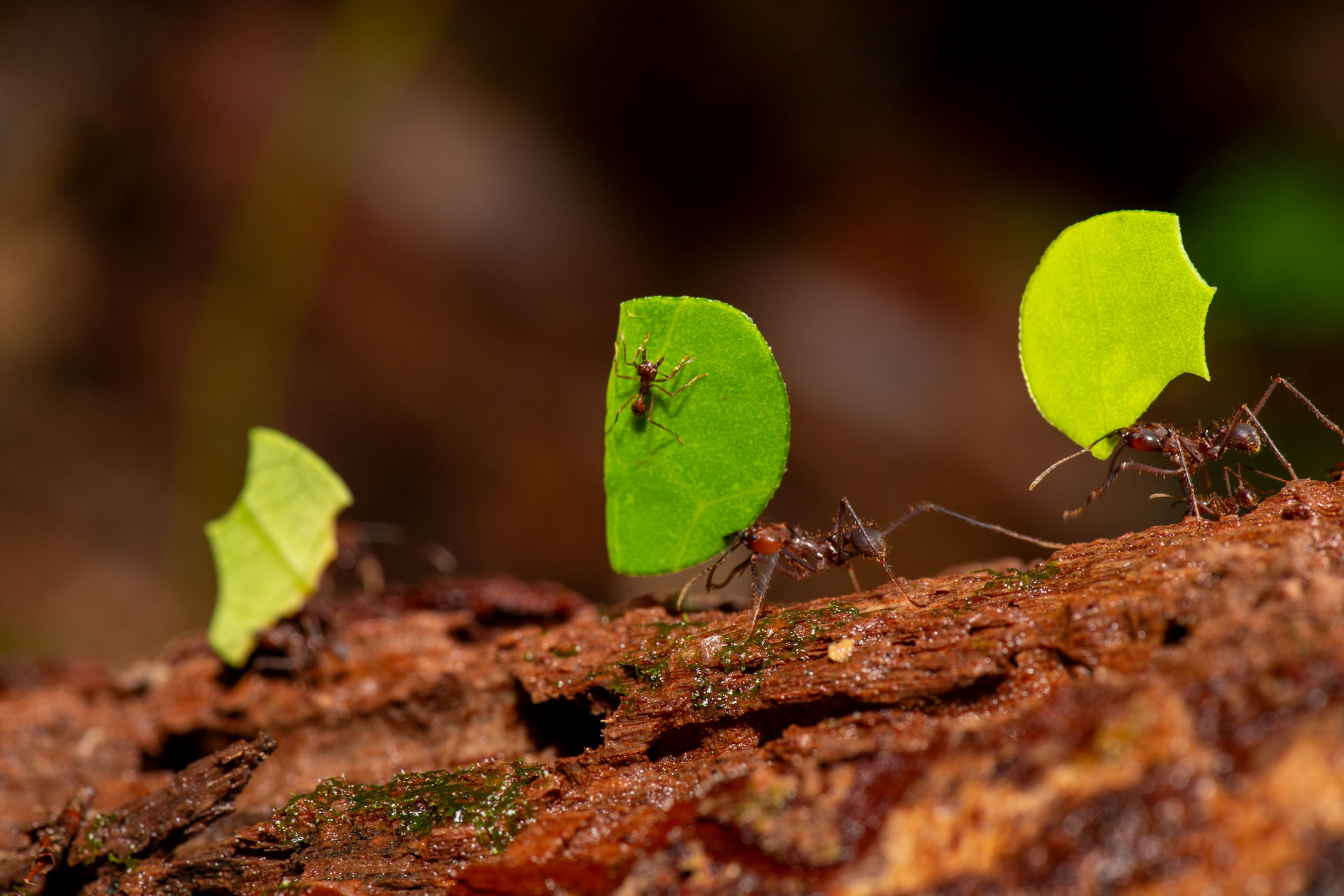
Blattschneiderameisen im Zoo Zürich

Hairy-headed leafcutter ant

Atta cephalotes

Leaf-cutter ants get their name from their ability to cut leaves and other plant material into pieces with their powerful jaws and carry them back to the nest. There, they do not use the material as food, but as a substrate for cultivating fungi, which they then eat as part of their diet.

NE

Red List
Not Evaluated

This species of leaf-cutting ant is found in the tropical regions of South and Central America. As its name suggests, it cuts small pieces from plants and is very efficient at doing so. It collects more plant material than any other animal in its habitat.

People therefore often regard the Hairy-headed leafcutter ant as a pest. Yet it plays an important role in maintaining the balance of ecosystems.

The leaf-cutter ants do not eat the leaves they collect. Instead, they use them to cultivate fungi, which are the ants' actual diet. Using their mandibles, they cut the leaves into small pieces and carry them back to their nest. There, they create ideal conditions for the fungus, which grows on the plant material and which the ants then feed on.

Complex social system

Leaf-cutter ants live in large colonies comprising up to five million ants. These colonies have a complex caste system with a queen and many workers who carry out various tasks.

The queen is the only female that lays eggs. Male ants have a short lifespan. Their sole purpose is reproduction with the queen.

The remaining females are divided into soldiers and workers. The soldiers defend their colony and have strikingly large mouthparts. The workers’ tasks include cutting and carrying the leaf fragments, tending the mushroom gardens, and caring for the queen and the larvae.

Taxonomy

Formicidae, genus Atta (17 species)

Habitat

tropical rainforest in South and Central America

Behaviour and ecology

live in large underground nests

Social structure

a caste system with different roles for worker bees and a queen

Taxonomy

Formicidae, genus Atta (17 species)

Habitat

tropical rainforest in South and Central America

Behaviour and ecology

live in large underground nests

Social structure

a caste system with different roles for worker bees and a queen

Back to overview