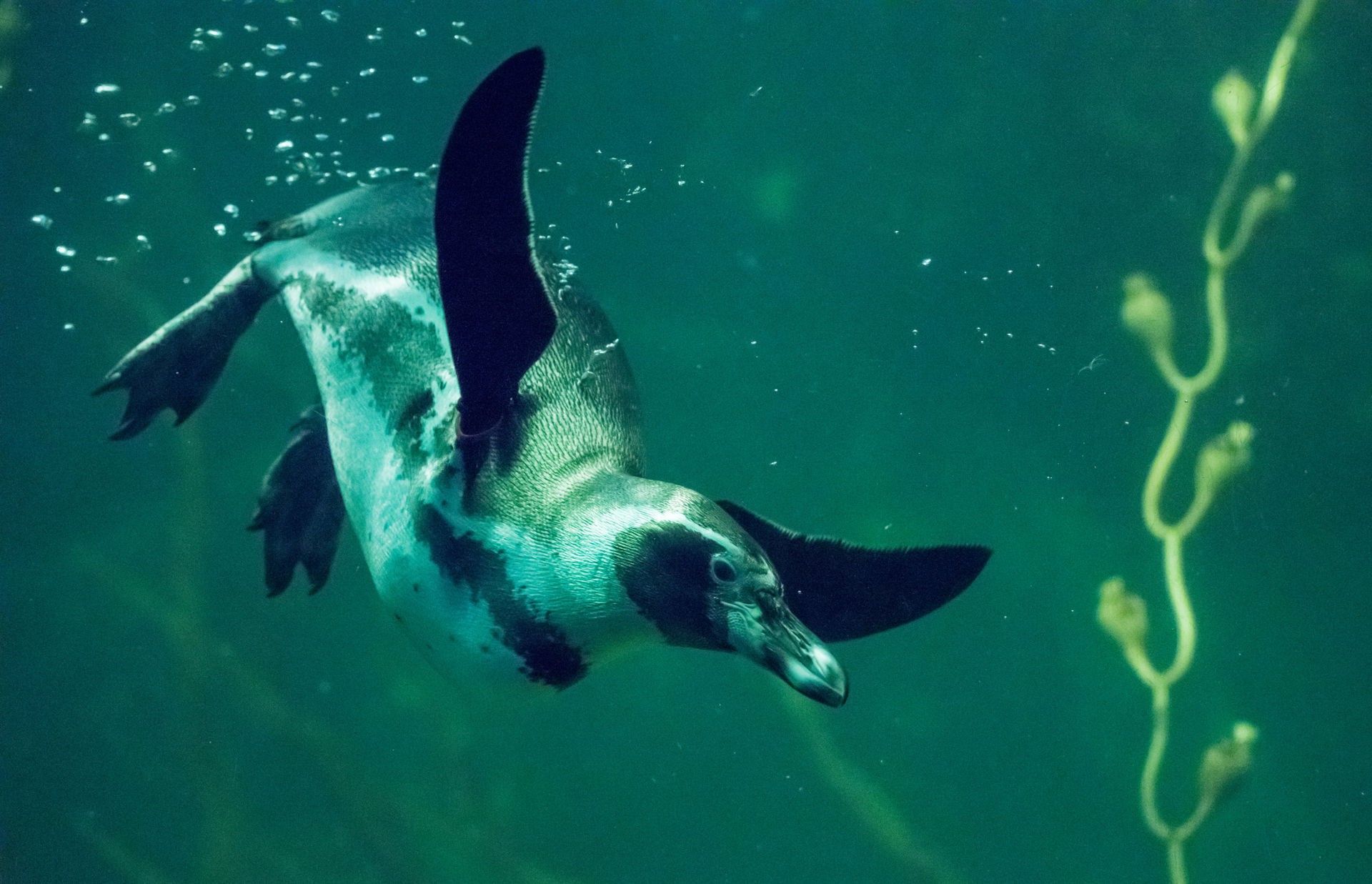
Humboldtpinguin (Spheniscus humboldti) im Zoo Zürich

Humboldtpinguin

Spheniscus humboldti

Humboldt penguins are vulnerable in their natural habitat. Their population is declining. The main threats include fluctuations in food supply, climate change and fishing.

VU

Red List
Vulnerable
Breeding programme

Penguins breed in colonies of varying sizes. All species are flightless, live on sea shores and feed on marine fish and larger invertebrates.

No other bird is as closely tied to the water as the penguin. Some species spend up to three quarters of their lives in the sea. Their wings have evolved into stiff, paddle-like flippers. This enables them to reach top speeds of 24 kilometres per hour and dive to depths of over 50 metres.

Taxonomy

Spheniscidae, genus Spheniscus (4 species)

Habitat

the open sea, barren sea shores and offshore islands

Migratory behaviour

from Peru to northern Chile (700 km), by swimming

Social structure

monogamous, changing partners from time to time, breeding in colonies

Taxonomy

Spheniscidae, genus Spheniscus (4 species)

Habitat

the open sea, barren sea shores and offshore islands

Migratory behaviour

from Peru to northern Chile (700 km), by swimming

Social structure

monogamous, changing partners from time to time, breeding in colonies

Godparent

Support the animals of Zoo Zurich with your annual godparent sponsorship

Humboldtpinguin for CHF 500.–

Become a godparent

Godparent

Support the animals of Zoo Zurich with your annual godparent sponsorship

Humboldtpinguin for CHF 500.–

Become a godparent

Tierstimme

Back to overview