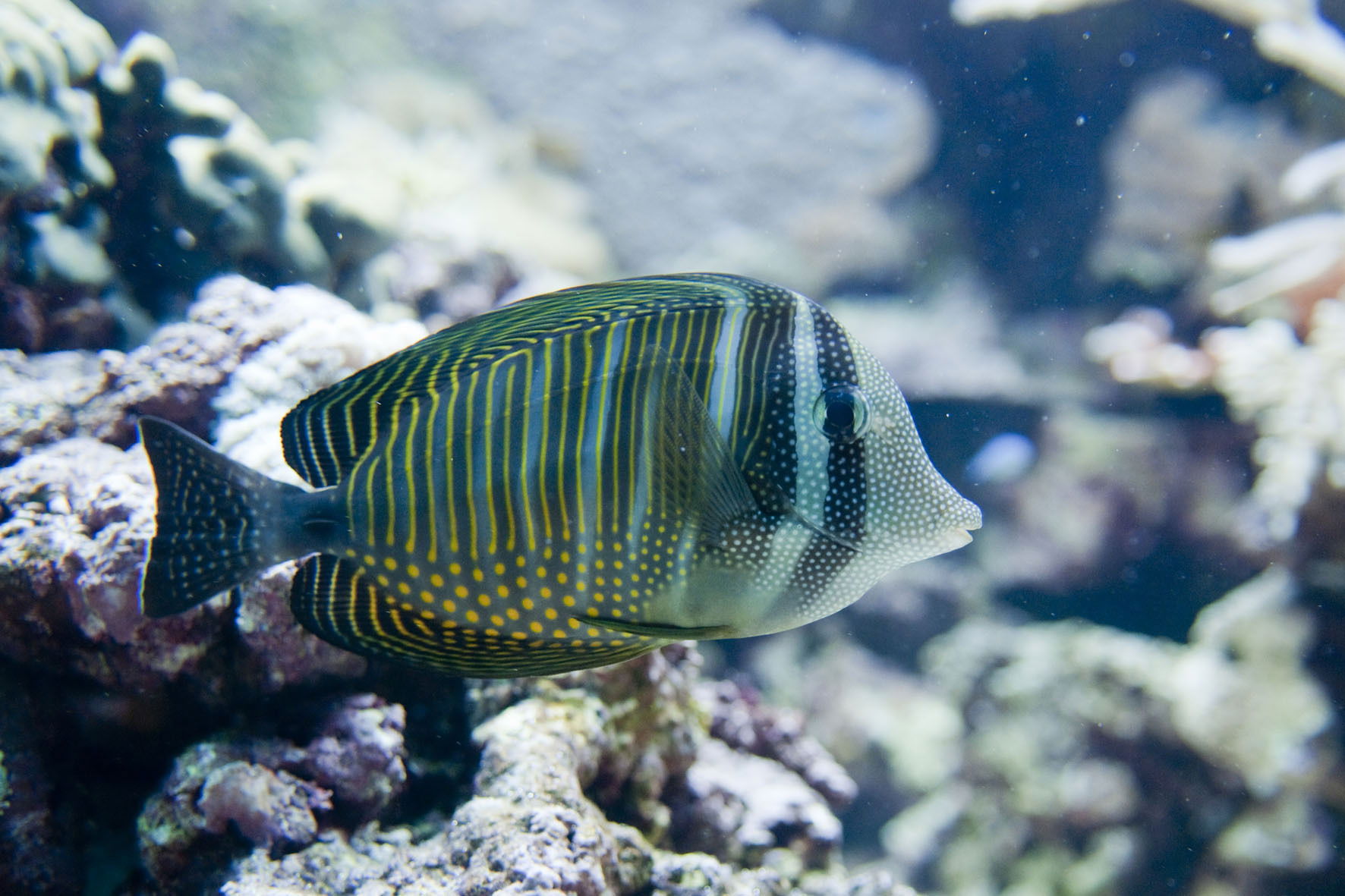
Indischer Segelflossen-Doktorfisch im Aquarium im Zoo Zürich

Indian sail-fin surgeonfish

Zebrasoma desjardini

Typisch für diese Fischart sind die scharfen, dornartigen Hornplatten an der Schwanzwurzel, die auch «Skalpelle» genannt werden.

LC

Red List
Least Concern

With its small, protractile mouth and sharp teeth, the Indian sail-fin surgeonfish grazes on algae growing on hard substrates, helping to prevent algae from overgrowing the corals.
With the spine-like horn plates at the base of its tail, the Indian sail-fin surgeonfish can defend itself against predators and conspecifics. The sheath of these spines is strikingly black. To impress others, the fish erect their large dorsal and anal fins. This makes them appear larger.
Males and females look very similar. However, males usually grow slightly larger and display more vivid colors during the breeding season. In particular, the light and dark stripes on their heads become more prominent at that time.

Taxonomy

Surgeonfish (Acanthuridae), sailfin surgeonfish (Zebrasoma, 7 species)

Habitat

Lagunes and reefs rich in coral (up to 30 meters deep)

Behaviour and ecology

Adults are usually found in pairs, while juveniles often live alone in sheltered areas within the reefs.

Diet

algae, and occasionally small invertebrates

Back to overview