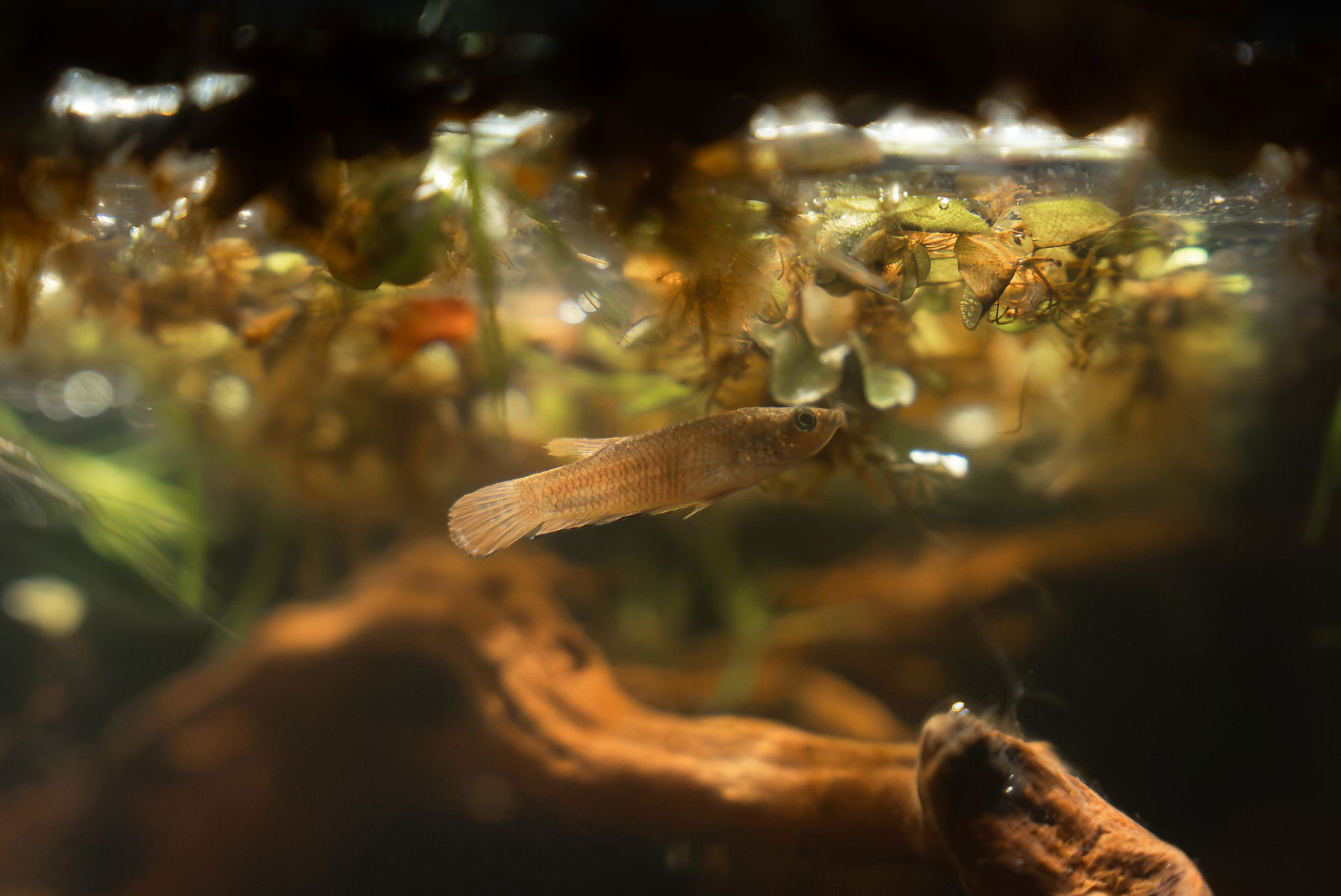
The Krabi mouth-brooding betta, Betta simplex, belongs to the genus Betta and originates from the Krabi region in southern Thailand. Betta simplex is one of the mouth-brooding betta species. After mating, the male takes the fertilized eggs into his mouth and cares for the brood there. He protects the eggs and later the fry until they are able to survive independently. During the mouth-brooding phase, the male largely refrains from normal feeding.
Like many representatives of the genus Betta, Betta simplex possesses an additional respiratory organ known as the labyrinth organ. This allows the fish to take in atmospheric air at the water’s surface and to utilize oxygen even under conditions where the water contains relatively little dissolved oxygen.
The name “Betta” encompasses different species with very different lifestyles. In German they are called “fighting fish”. Many first would think of the Siamese fighting fish, Betta splendens. The males of this species are highly territorial. When they encounter a rival, they display characteristic threat behaviors: they spread their fins and gill covers, position themselves sideways toward their opponent, and may attack the rival.
This natural aggressiveness was deliberately exploited in Thailand over many generations for fish fighting. Male betta splendens were selected and bred for their fighting ability. Scientific studies show that breeding lines specifically selected for fighting success do in fact respond more aggressively than wild forms.
Taxonomy
Family Osphronemidae, genus Betta (approx. 78 species)
Habitat
Karst springs and wetlands, nestled among the vegetation near the shore
Behaviour and ecology
diurnal; stays among aquatic plants and other hiding places; in addition to breathing through its gills, Betta simplex takes in air at the water's surface
Social structure
in groups