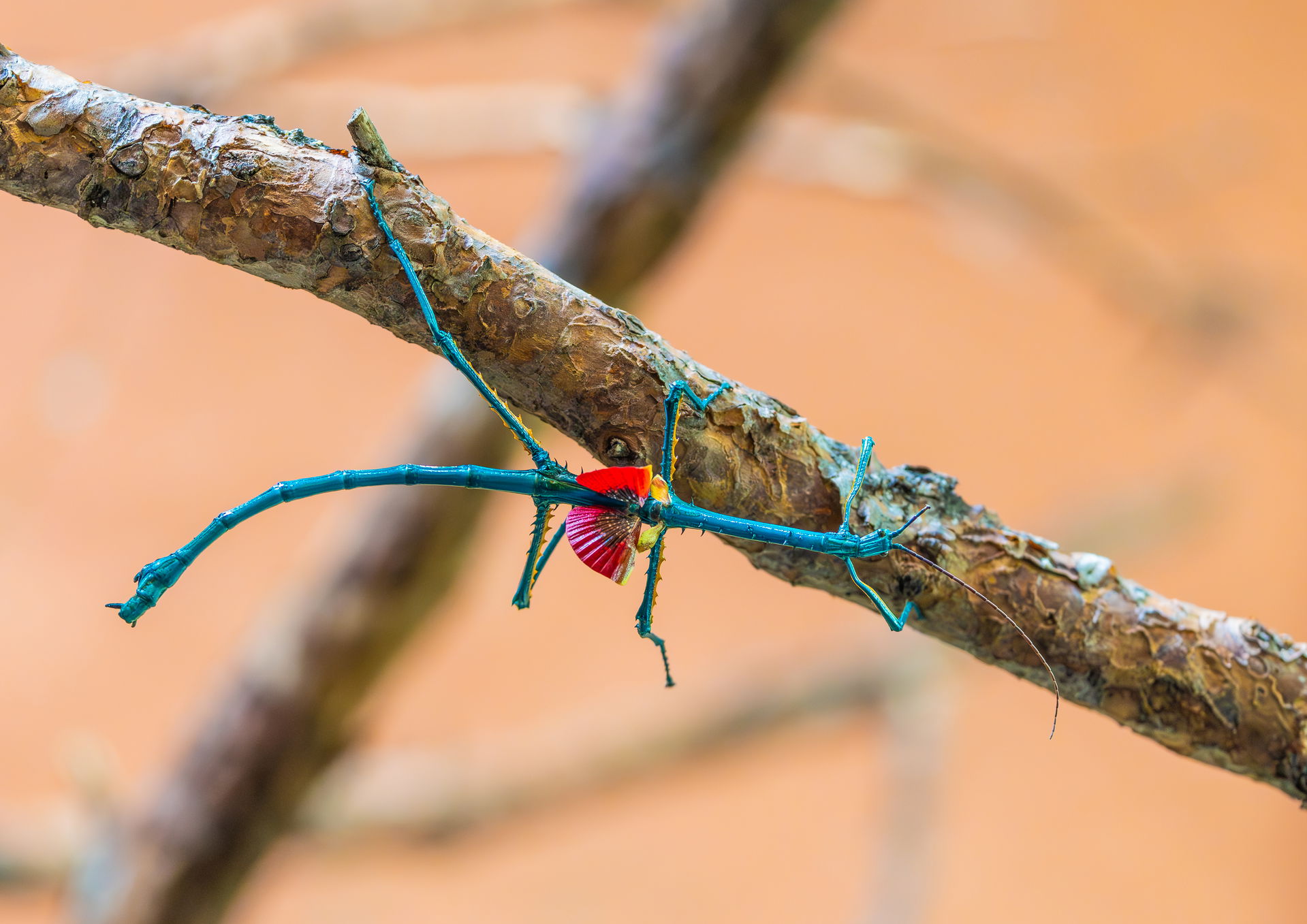
Like other stick insects, the Madagascar blue stick insect is well camouflaged due to its resemblance to branches. This is particularly true for the inconspicuous brown-colored females of this species; the males, on the other hand, tend to stand out due to their striking turquoise-blue coloration. The purpose of this striking coloration remains unclear. There is debate as to whether it is intended to attract females or to deter potential predators by signaling supposed toxicity.
Both sexes have reddish wings. When threatened, they spread their wings, producing a loud, distinctive rustling sound to confuse and deter predators. However, the Madagascar blue stick insect cannot fly.
Unlike many other stick insect species, Madagascar blue stick insects do not have a seasonal breeding period but reproduce year-round. Females lay 40 to 50 eggs, from which the larvae hatch after about 4 to 5 months. These larvae reach sexual maturity after another 4 to 6 months.
The Madagascar blue stick insect is endemic to Madagascar, where it inhabits a limited area in the north of the island. The species was not scientifically described until 2019. Previously, it had been classified as Achrioptera fallax. The two species exhibit external similarities, although the males of A. fallax are green rather than blue in color. There are also other morphological differences; however, it was only through genetic analyses that the two species were definitively distinguished from one another.
Taxonomy
Family Phasmatidae, genus Achrioptera (13 species)
Habitat
dry, deciduous forests in northern Madagascar
Behaviour and ecology
nocturnal