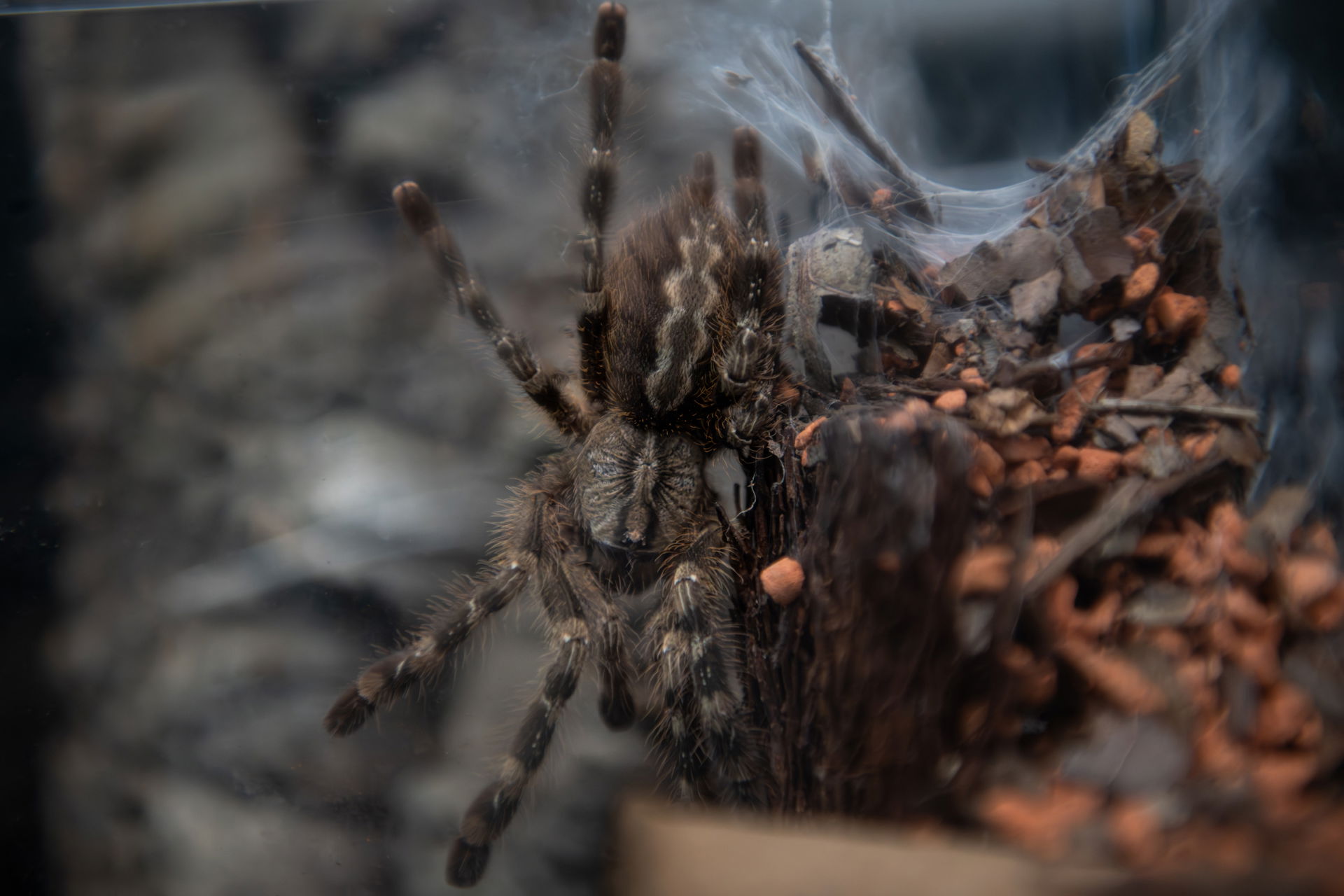
The Rameshwaram ornamental spider is a tree-dwelling species of spider native to Asia. Thanks to its light and dark brown stripes, it is superbly camouflaged against tree bark.
The species was discovered in 2004 on the island of Rameshwaram near the Hanumavilasum Temple in southern India, which also explains its name. In addition to its original range in southern India, the species was also recorded in northern Sri Lanka in 2015 and, in 2017, further west in the Western Ghats in the Indian state of Kerala.
The natural habitat on the island of Rameshwaram – thorny, dry scrubland and woodland – has now declined significantly, as the island is increasingly dominated by plants cultivated for commercial purposes. The species therefore now lives predominantly in habitats influenced by humans, such as tamarind, palm, coconut and casuarina plantations. There, it uses tree hollows, cracks in the bark or areas beneath loose bark as refuges.
As dusk falls, she becomes active and usually goes hunting near the entrance to her burrow. Her prey consists mainly of insects and other arthropods, which she paralyses using her neurotoxic venom. It then secretes digestive enzymes into the prey so that it can absorb the nutrients ‘in dissolved form’.
Although tarantulas of the genus Poecilotheria are among the most venomous in the world, they do not pose a serious threat to humans. This is because they are not particularly aggressive and usually retreat to their shelter when faced with threats.
Females show a marked tendency to remain in the same location and inhabit the same shelter for several years, provided they are not disturbed. This shelter is usually occupied by a single individual.
Once a year, the female lays her eggs in a cocoon – a protective casing made of silk – which she guards. It also seals the entrance to the burrow with a thick layer of silk. A female can produce several dozen juveniles, though many of them do not survive due to cannibalism or natural predators.