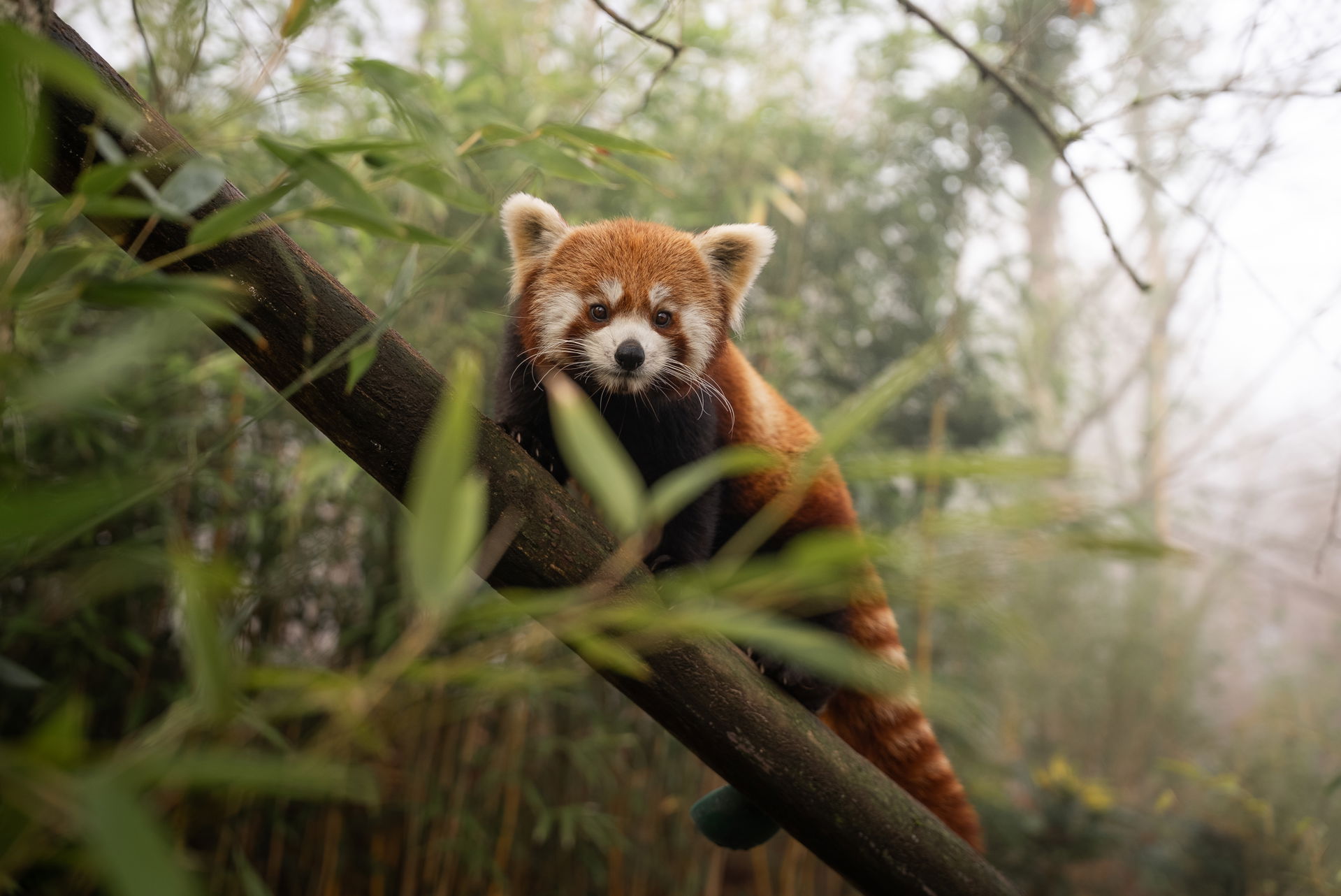
Kleiner Panda im Zoo Zürich

Red panda

Ailurus fulgens fulgens

Thanks to an extra ‘finger’, the red panda can grasp its food more easily. The red panda has an extra ‘finger’: an enlarged bone in its wrist acts as a gripping aid and makes it easier for it to hold on to its food.

EN

Red List
Endangered
Breeding programme

The red panda feeds mainly on bamboo and other plants. An elongated wrist bone, which functions like a proper thumb, acts as a sixth finger. This enables the animals to strip the leaves from the bamboo easily and grasp fruit more effectively. 

To drink, the red panda dips its paw into a puddle or a stream and then licks the water off its paw. It grooms its fur just like a cat. It ‘washes’ its fur with its paws, which are wet with saliva from licking them.

The way the offspring are reared is also unusual. The red panda builds a nest, just like a bird. The juveniles remain in it for up to three months after birth. 

Taxonomy

Ailuridae, Ailurus (2 species)

Habitat

evergreen forests with bamboo and rhododendrons up to the tree line at 4,000 metres above sea level

Behaviour and ecology

active at dusk and at night; forages in trees, less frequently on the ground

Social structure

solitary, less commonly in pairs or small groups

Habitat at the zoo:

Panthera

Godparent

Support the animals of Zoo Zurich with your annual godparent sponsorship

Red panda for CHF 1'000.–

Become a godparent

Godparent

Support the animals of Zoo Zurich with your annual godparent sponsorship

Red panda for CHF 1'000.–

Become a godparent
Back to overview