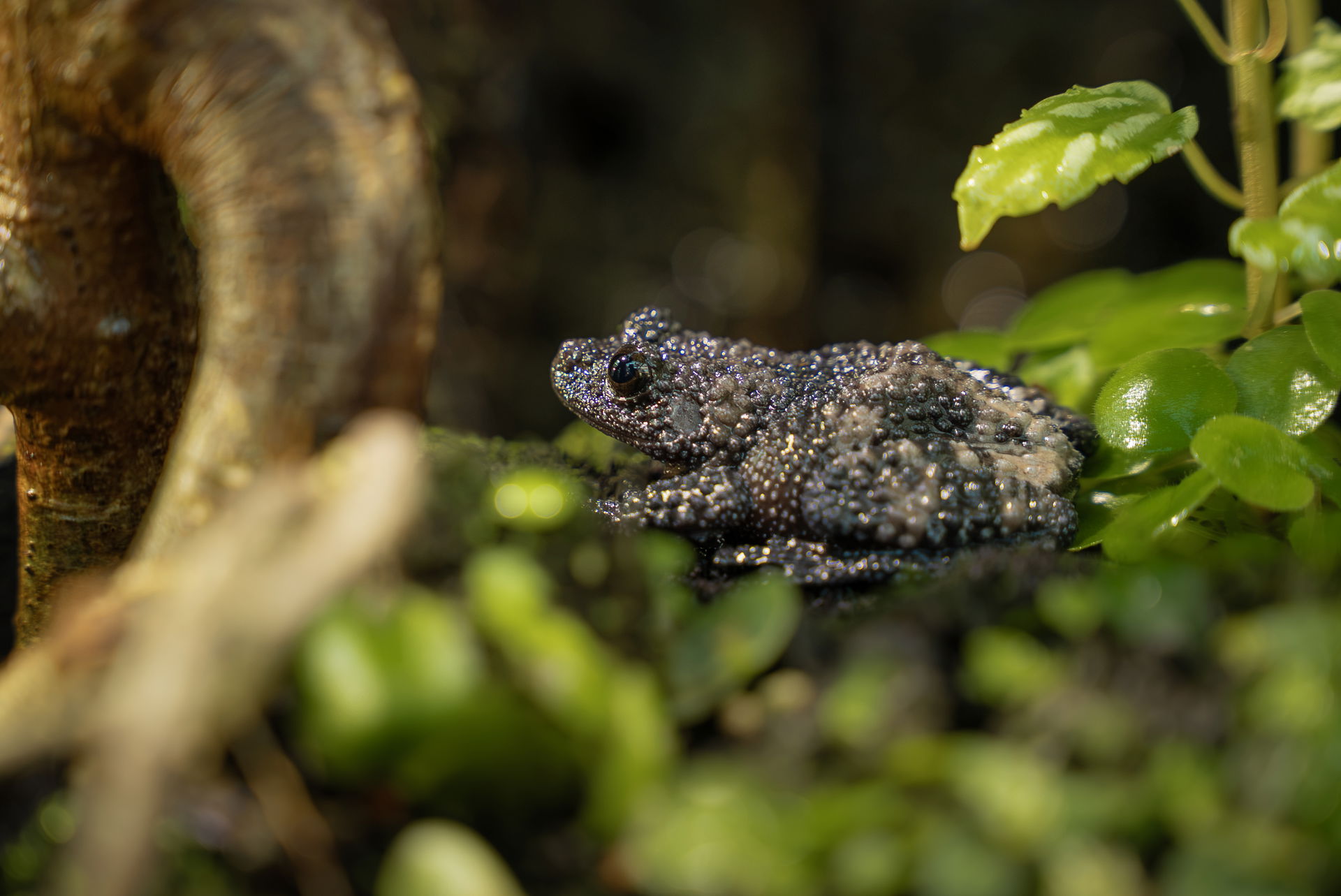
Ryabov’s bug-eyed frog is a small, nocturnal tree frog with a compact body and strikingly large eyes with horizontal pupils. Its skin has an irregular texture and is heavily patterned, making it virtually indistinguishable from lichen, moss, or tree bark. This unusual camouflage also protects it from predators. During the day, it usually remains well hidden in tree hollows, forked branches, or among dense moss. At night, it becomes active and moves slowly and cautiously to its next hiding place. Its nearly invisible and motionless way of life is particularly remarkable. Its coloration, consisting of shades of brown, gray, and green, also helps it remain virtually undetected as it blends into the colors of the vegetation.
This species lives almost exclusively in trees and bushes near damp, shady areas. The eggs are usually laid in small pools of water inside tree hollows. These tiny, temporary pools provide the eggs with good protection from predators. After a few days, the larvae hatch and continue to develop in these sheltered micro-bodies of water until, once metamorphosis is complete, they climb onto land. Their diet consists mainly of small insects and other invertebrates that they find in the forest.
The range of Ryabov’s bug-eyed frog is limited to moist forest areas in the central highlands of Vietnam. The species is highly dependent on its habitat and is extremely sensitive to deforestation and forest destruction. The loss of its habitat and the fragmentation of forests threaten the species’ survival. On the Red Lists, Ryabov’s lichen frog is classified as critically endangered because intact, moist forest ecosystems are becoming increasingly rare. Protecting these forests is therefore essential to ensure the species’ continued survival.
Taxonomy
family Rhacophoridae, genus Theloderma (approx. 30 species)
Habitat
Central Vietnam, endemic
Behaviour and ecology
lichens and bark
Diet
insects and Other Invertebrates