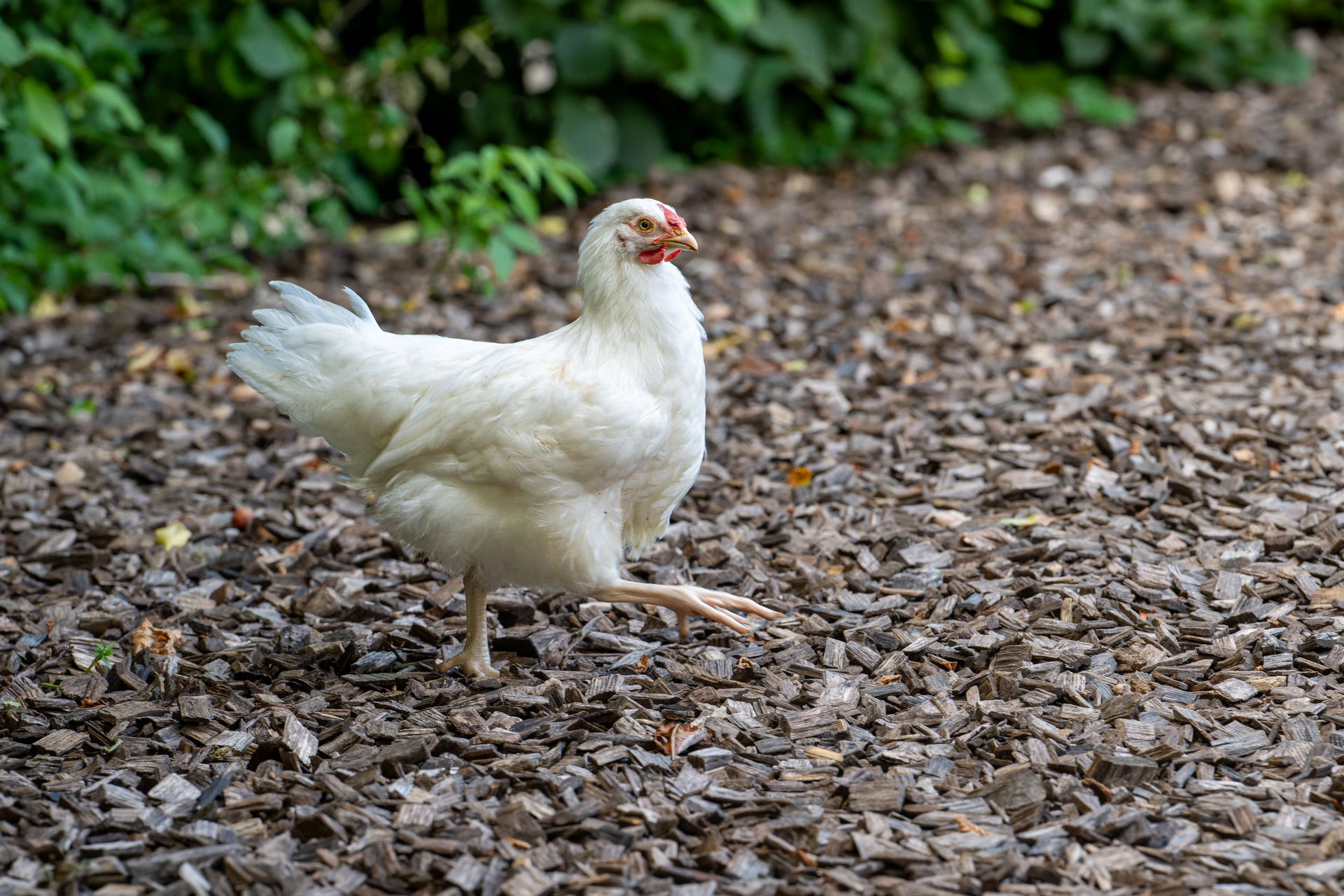
From a distance, the red-and-white Schweizer chicken could easily be mistaken for the modern, white, high-yield laying hens. But on closer inspection, it becomes clear that this is a distinct breed.
A distinctive feature is the dark red, beaded rose comb, which tapers towards the back like thorns. This contrasts with the jagged upright comb typical of many other chicken breeds. The Schweizer chicken’s compact rose comb is frost-resistant. As well as its tolerance to the cold, it has another important function: a large, well-perfused comb indicates that the bird is healthy and hardy, and is an advantage when choosing a mate.
The Schweizer chicken is described as calm and trusting. The birds are stocky and relatively heavy. They are neither good flyers nor particularly keen on flying. They are hardy and long-lived birds that can withstand even frosty nights.
The breed was developed in the early 20th century by crossing white Orpingtons with American Wyandottes and was officially recognised in 1905. Various sources name Alfred Weiss from Amriswil in the canton of Thurgau as the breeder who developed the breed. At that time, self-sufficiency was the norm in Switzerland, and great importance was attached to the hardy Schweizer chicken.
The Schweizer chicken is known for its high egg-laying performance; it matures early and begins laying eggs relatively soon. Furthermore, the Schweizer chicken is also ideally suited to meat production.
Towards the end of the 20th century, the breed was almost extinct. There were just 50 birds left when, in 1991, ProSpecieRara, together with dedicated breeders, launched a campaign to save this valuable breed of chicken. Today, Schweizer chickens are once again being bred more frequently, and their population is growing at a pleasing rate.
Taxonomy
Phasianidae, Gallus (4 wild species)
Social structure
groups of hens with one cockerel, fixed pecking order
Diet
grains, worms, insects