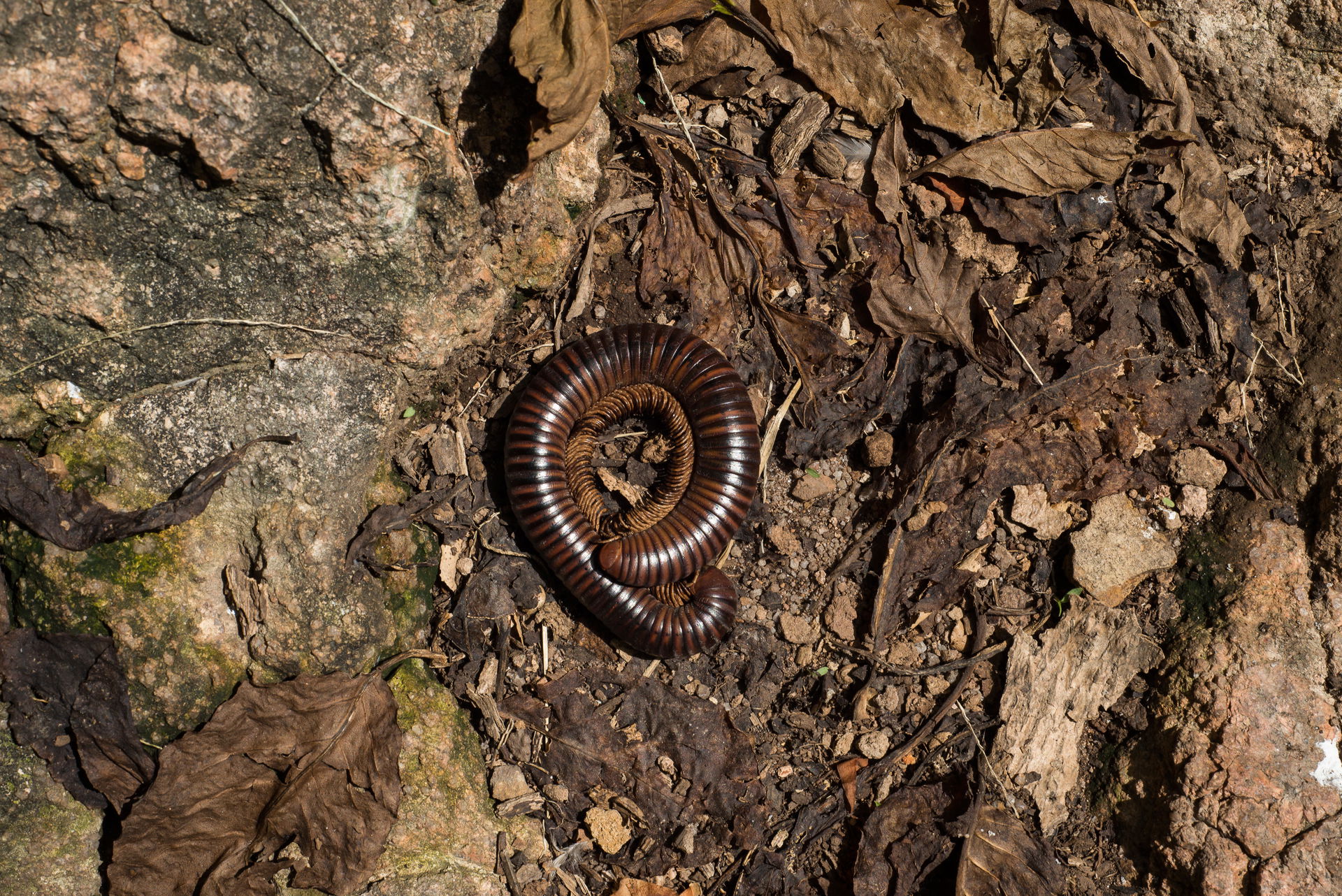
As its name suggests, the Seychelles giant millipede is found only in the Seychelles. It lives in damp woodland areas, where it feeds on dead organic matter, such as fallen leaves. This activity returns nutrients to the soil, which improves soil fertility and supports the entire ecosystem.
The Seychelles giant millipede avoids heat and drought by hiding in foliage, in the soil or under stones. The species protects itself from predators using chemical deterrents.
The Seychelles giant millipede is classified as endangered. The main causes are invasive plant species, which are altering its habitat and thus its food supply, as well as climate change, which is leading to longer dry seasons. This is also causing a parasitic fly, which particularly affects adult specimens, to spread more widely.
Between 2000 and 2005, the population fell by more than half. The species has already disappeared from the islands of Mahé and Praslin; this is thought to be because a species of mammal introduced from Madagascar – known as tenreks – preyed on them.
Taxonomy
giant millipedes (Spirostreptidae), genus Sechelleptus (32 species)
Habitat
rainforests, litter layer
Body length
often over 15 cm (up to 24 cm)