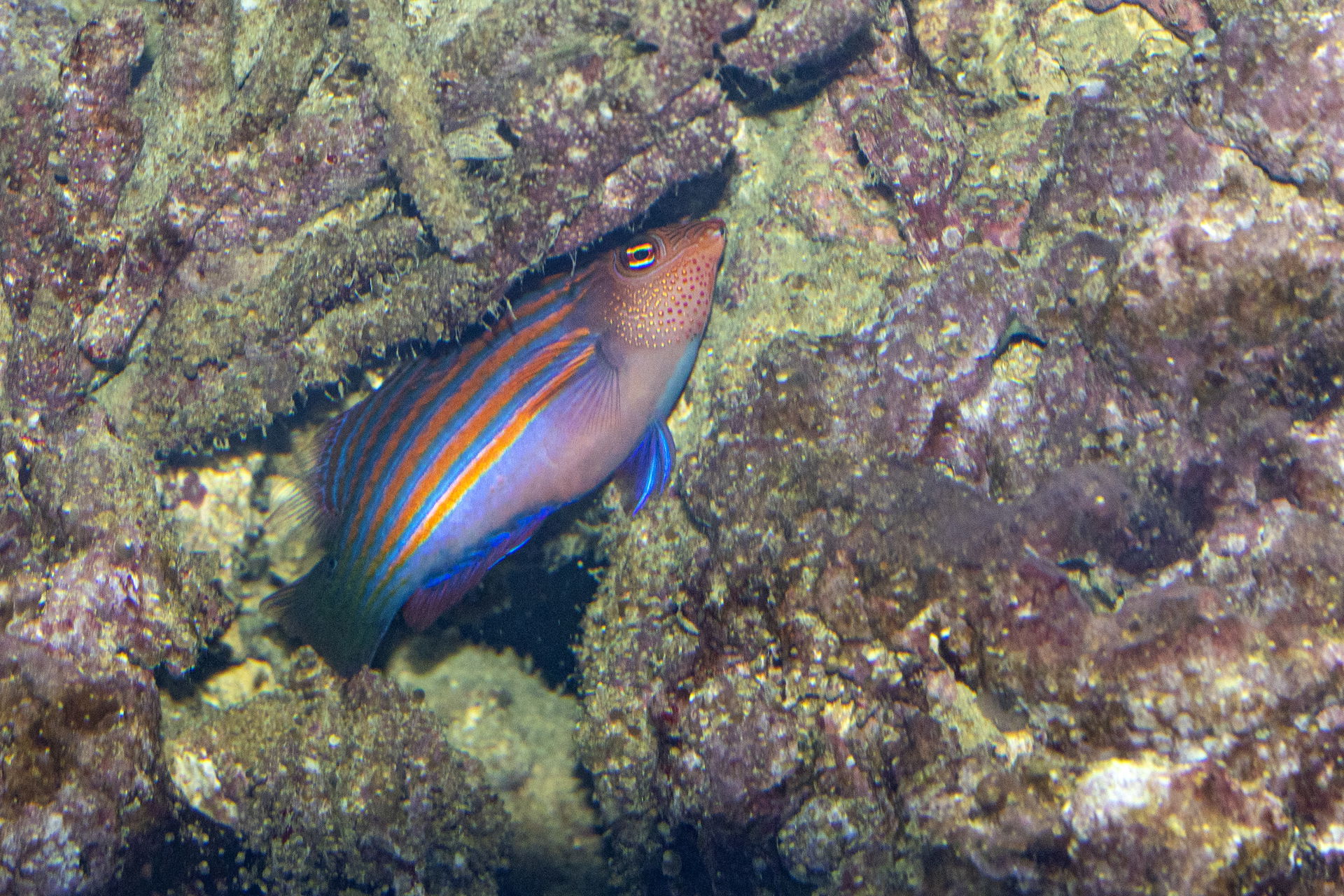
Some wrasse form a cocoon at night out of mucus they produce themselves, in which they sleep. Among other things, the mucus coating may protect them from nocturnal parasites; it may also make it more difficult for predators to track down the sleeping fish.
LC
Red List
Least Concern
Taxonomy
Wrasse (Labridae), genus Pseudocheilinus (7 species)
Habitat
outer reefs at depths of 2 to 35 metres, hidden behind branching corals
Behaviour and ecology
diurnal, solitary, also found in harem groups with a dominant secondary male (former females that have transformed into males)
Diet
small crustaceans, mussels, fish eggs, snails, crab larvae