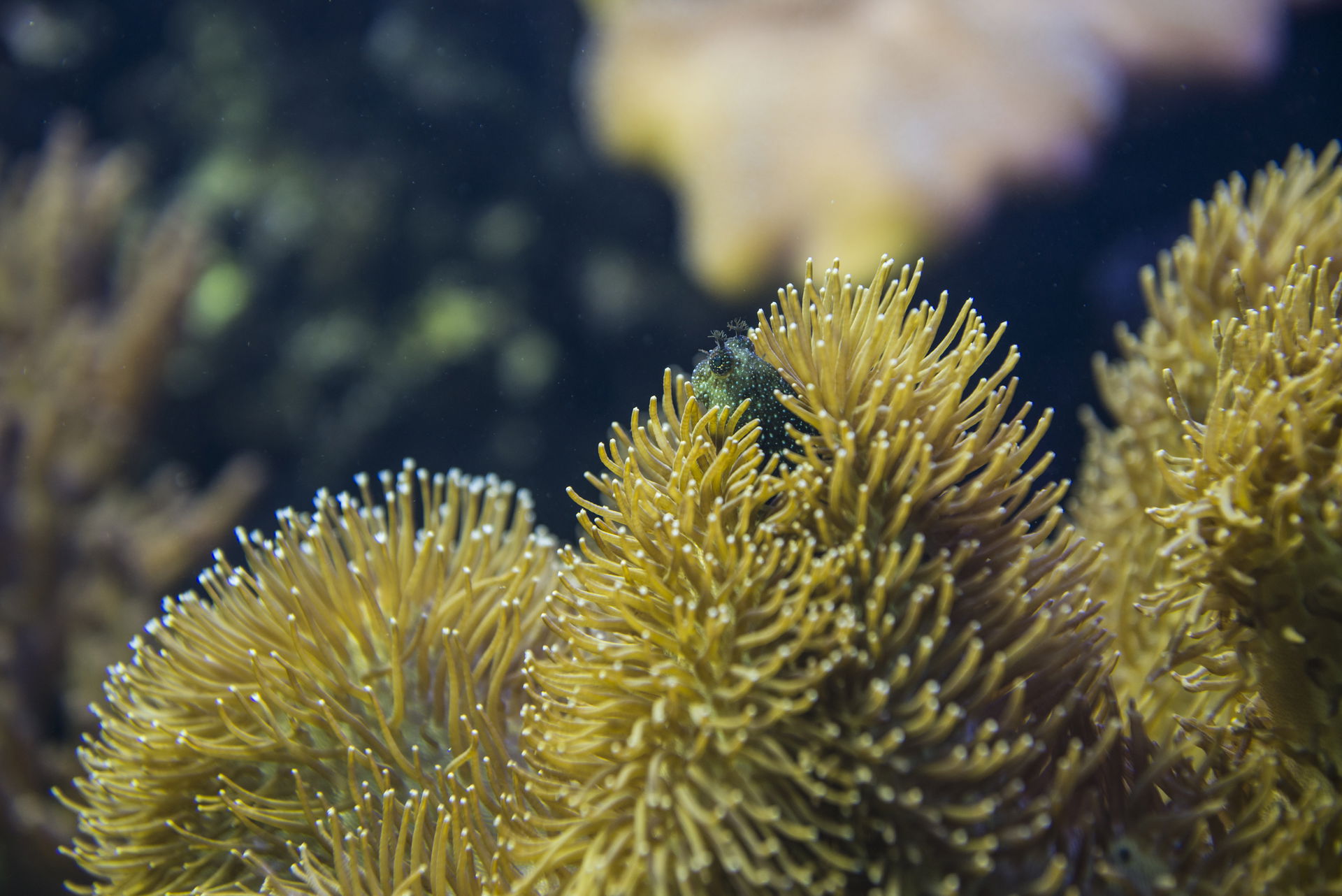
Unlike stony corals, soft corals do not have a solid calcareous skeleton. However, many species of soft coral have small calcareous spicules in their bodies, which give them a certain degree of rigidity.
NE
Red List
Not Evaluated
Taxonomy
Anthozoa, Soft corals (Alcyonacea, over 3,700 species)
Habitat
Found in all the world’s oceans. Common in shallow-water inner reefs; tolerant of fluctuations in temperature and salinity. There are also species found in the deep sea and the Antarctic Ocean.
Behaviour and ecology
in colonies comprising thousands of individual polyps
Social structure
branched, tree-like, crusty, finger-like, no skeleton, can contract