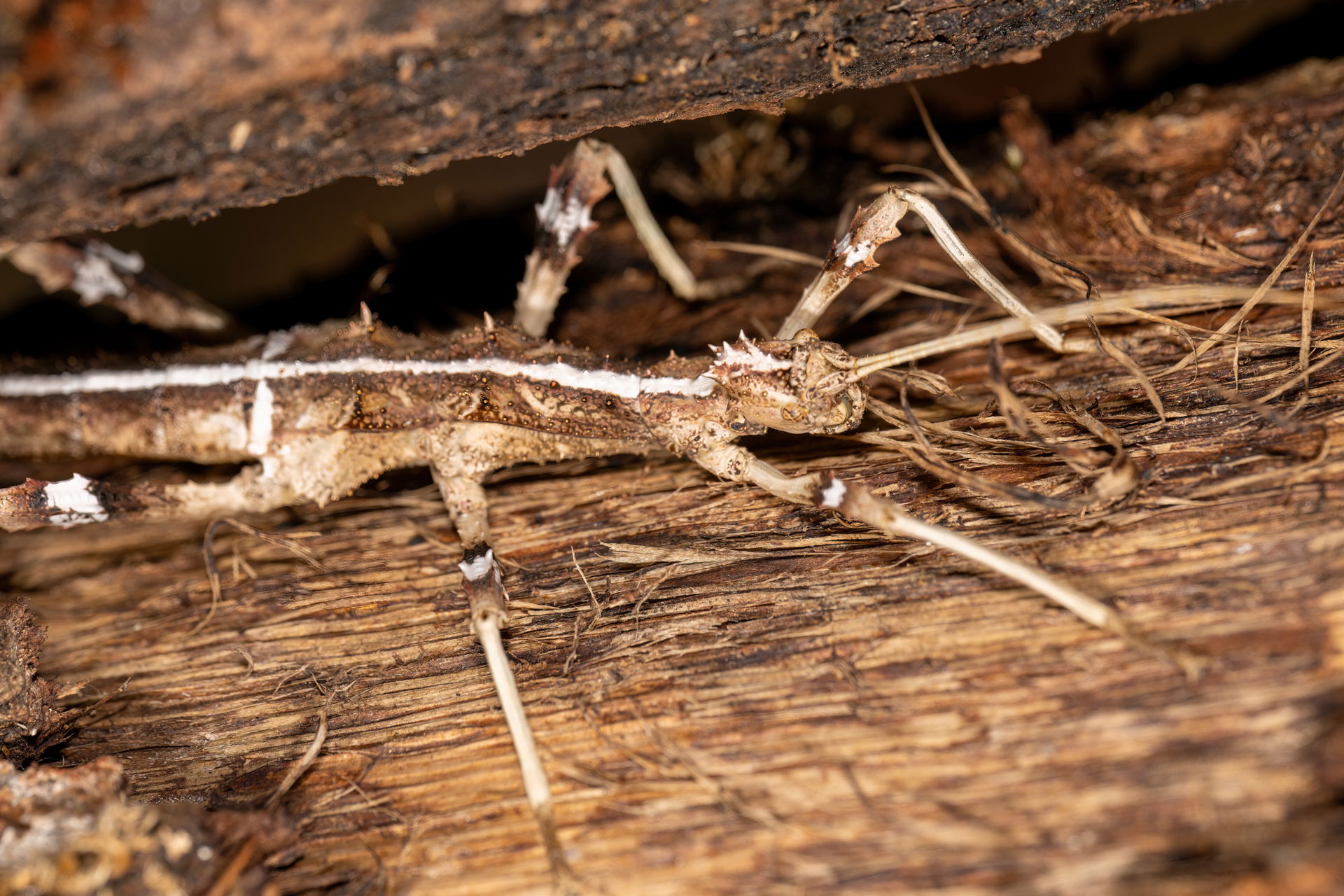
As with many species in this order of insects, the sunny stick insect exhibits pronounced sexual dimorphism. Females reach a body length of around 8 centimetres and are also broader in build than the males, which remain smaller at around 6 centimetres.
The body colouration of both sexes varies across different shades of brown to black and displays various patterns. This colouration is influenced by both environmental factors and the mode of reproduction – depending on whether the animals were produced through sexual or asexual reproduction.
Sunny stick insects reproduce predominantly sexually. However, in the absence of males, the females are able to carry out reproduction through parthenogenesis (virgin birth).
To lay their eggs, the females have an ovipositor (egg-laying tube) at the rear end of their bodies, which they use to deposit their eggs into the soil. The incubation period lasts around 4 to 5 months, after which the juveniles, measuring around 2 centimetres, hatch.
Taxonomy
Heteropterygidae, genus Sungaya (5 species)
Habitat
on bushes and trees in tropical forests in the Philippines
Behaviour and ecology
active at dusk and at night; during the day, they rest, camouflaged amongst the branches