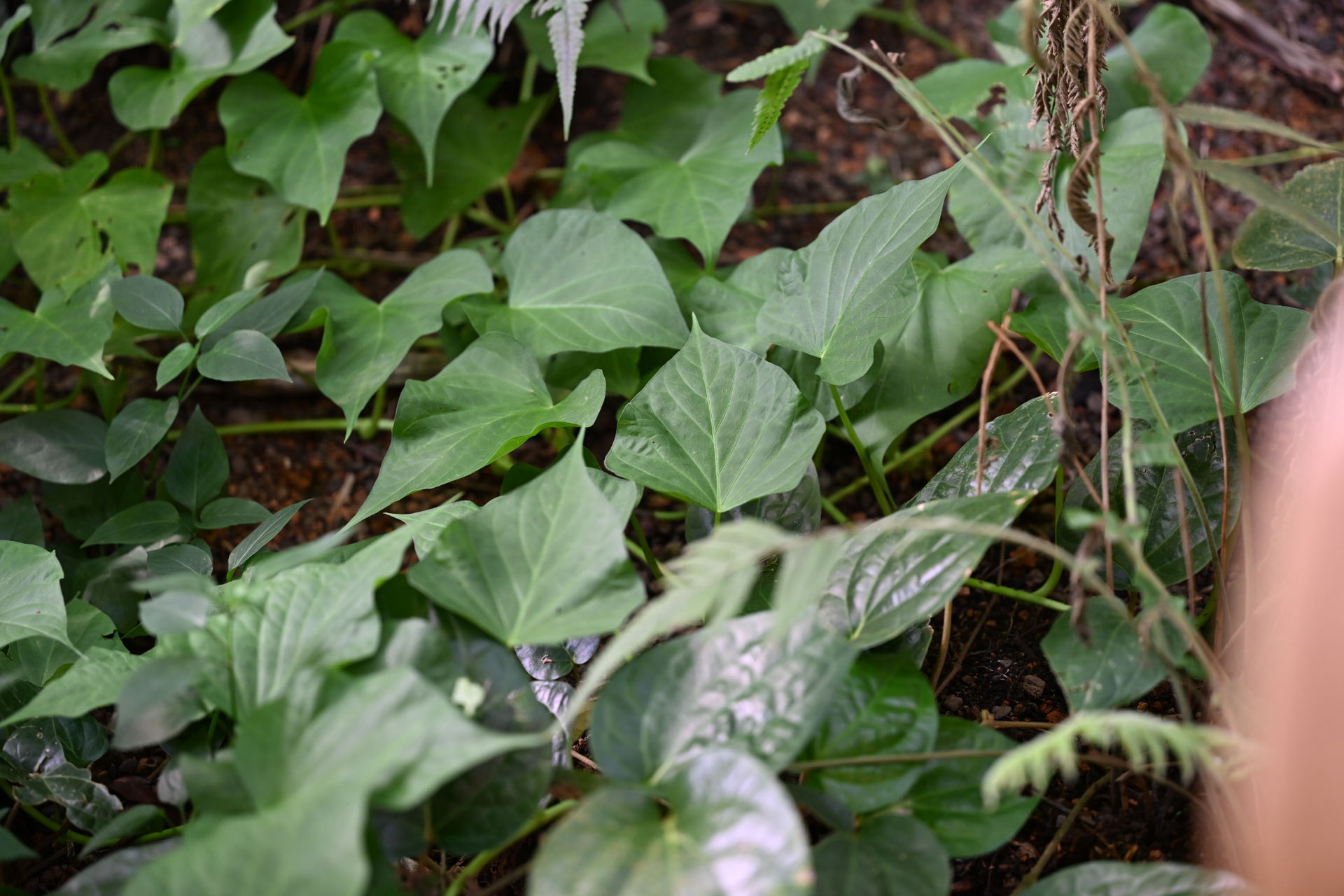
As is typical of vine plants, the sweet potato plant cannot support itself. Its shoots, which can grow up to six meters long, crawl along the ground.
Distribution
Northern South America, Central America, and Mexico; today cultivated worldwide in all tropical regions
Use
The sweet potato is a staple food in many tropical regions. It has a higher carbohydrate content than the potato. In addition to the tubers, the leaves are also edible and are eaten as a vegetable. The non-edible parts of the plant are fed to livestock. Over 80 percent of the sweet potatoes produced worldwide are harvested in China.