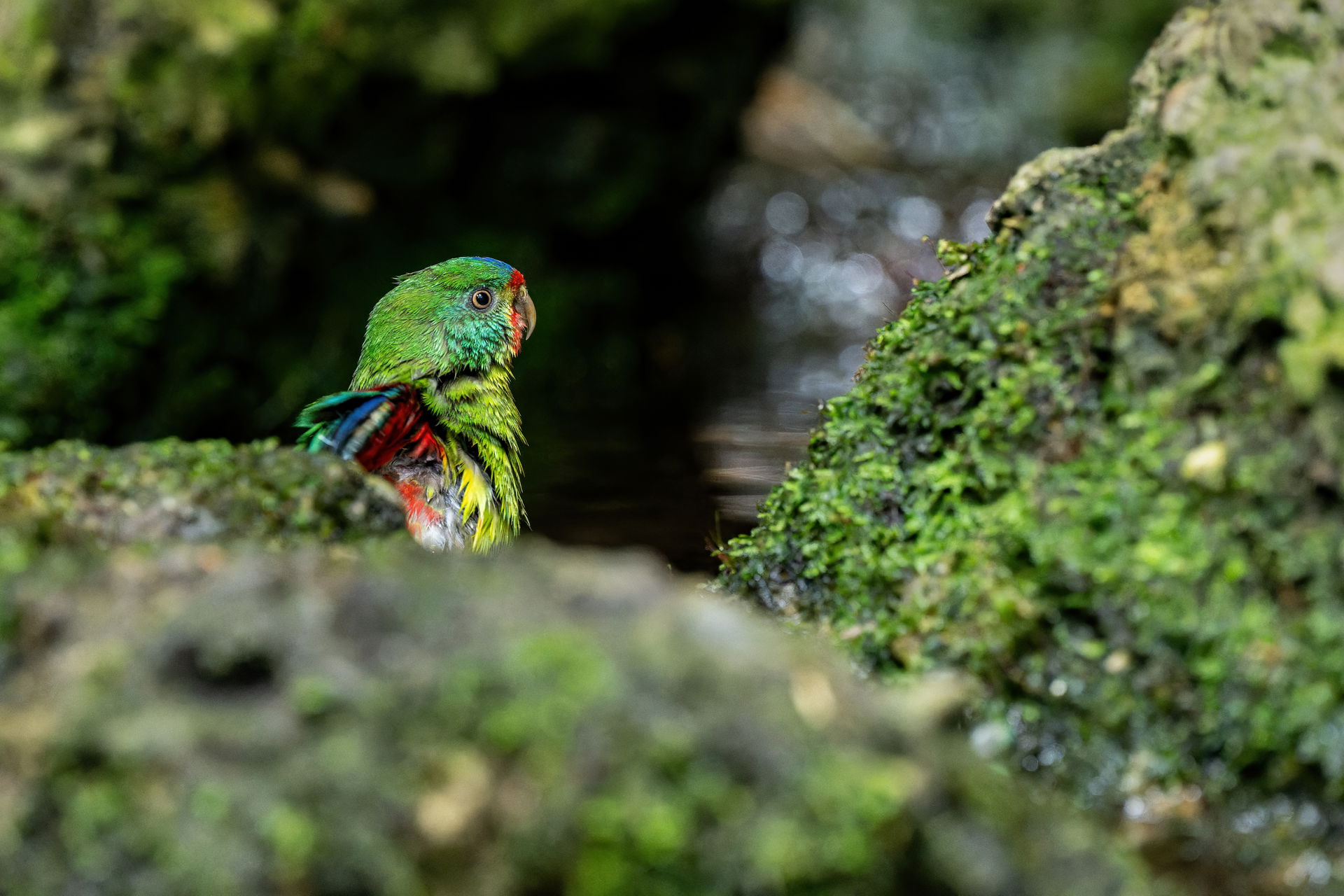
The swift parrot is a fascinating species of parrot that catches the eye at first glance with its iridescent plumage. Its plumage is predominantly bright green, complemented by striking blue and red accents. Whilst males and females are generally very similar in appearance, the females are duller.
But it is not just its appearance that makes this bird special: the swift parrot is one of the few parrots that migrate over long distances. Every year, its journey takes it from Australia to Tasmania, where it nests in the hollows of eucalyptus trees between October and January. This time of year is perfect for breeding, as the trees are in full bloom and provide the birds with nutrient-rich nectar.
As soon as the chicks are fledged, the swift parrot sets off on its impressive return journey, during which it once again covers up to 2,000 kilometres – a distance that makes it the long-distance record holder amongst parrots. Its agile flight is reminiscent of the elegance of swallows, which is also where it gets its name.
However, the swift parrot is on the brink of extinction, as its habitat is shrinking rapidly due to deforestation. Even greater threats are posed by introduced species, foremost among them the short-headed glider. This small marsupial, which was originally native to Australia and New Zealand, has also spread to Tasmania since its introduction in the 19th century.
The short-headed gliding possum feeds on the sweet sap of eucalyptus trees, which it extracts by biting into the bark. Whilst searching for this sap, it climbs into the nests of swift parrots and licks the sweet sap from the chicks’ beaks. It then bites through the young birds’ crops to get at the nectar that has already been fed to the chicks.
Taxonomy
Psittaculidae, Lathamus (1 species)
Habitat
dry forests and savannahs in southern Australia and Tasmania
Migratory behaviour
breeding in Tasmania, wintering in south-eastern Australia
Diet
pollen, nectar, insects and their larvae, and eucalyptus leaves