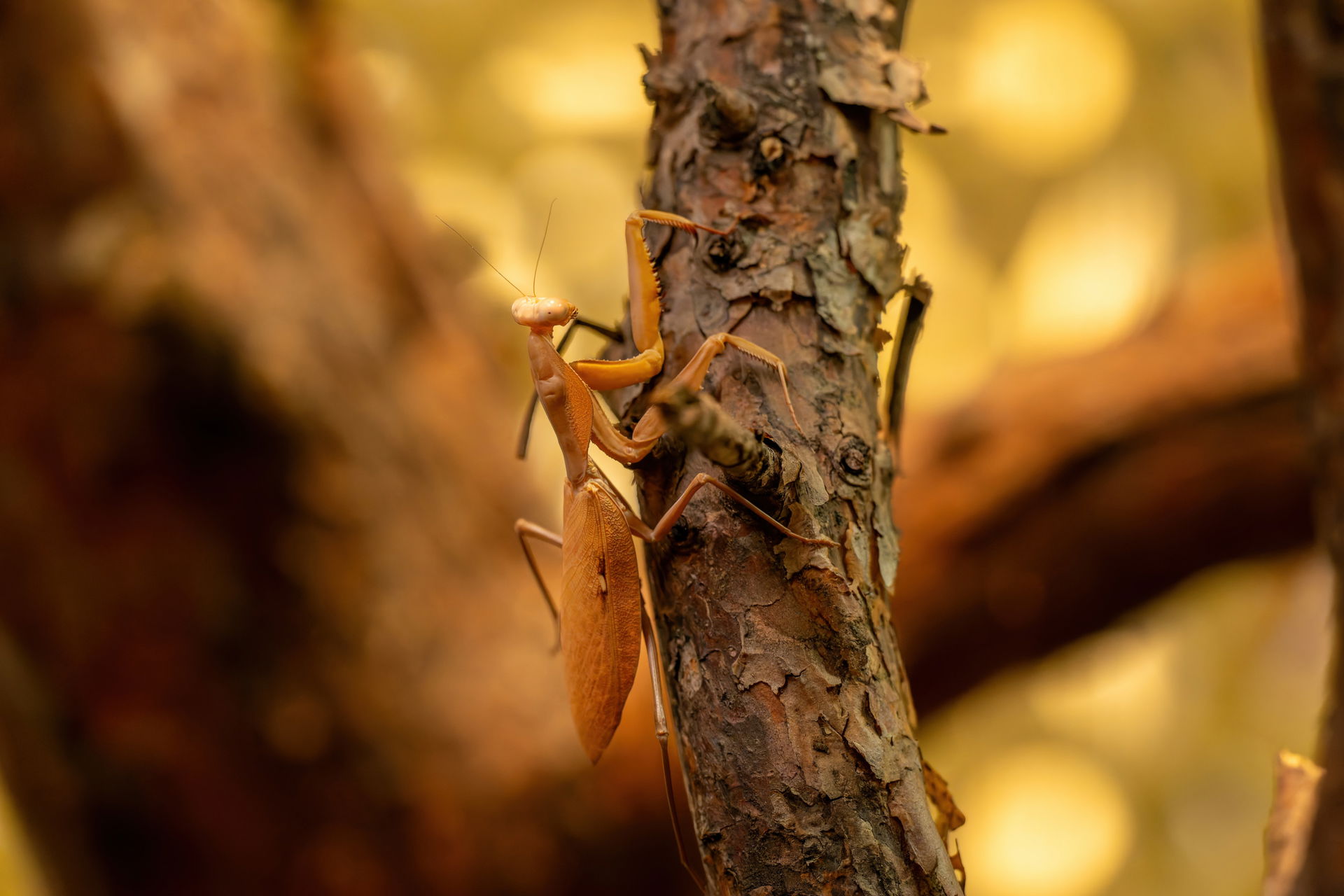
Riesenschildmantis im Insektenwald des Zoo Zürich

Timor shield mantis

Rhombodera kirbyi

Female Timor shield mantises may eat their mates after mating – but this cannibalism is by no means the norm.

NE

Red List
Not Evaluated

Praying mantises are a highly diverse order of insects. They are easily recognisable by their characteristic antennae and triangular head. Their large, widely spaced compound eyes give them excellent vision. Often, only the males are capable of flight. The eggs are laid in large egg cases (known as oothecae).

The range of mantises extends across almost every continent and a wide variety of habitats. The appearance of the different species is as diverse as their habitats. In Switzerland, there is one species that is found mainly in Ticino and Valais: the European praying mantis (Mantis religiosa). This species is protected throughout Switzerland.

Most mantises are ambush hunters, which means they need perfect camouflage in their habitat so as not to be spotted by their prey (or predators). Mantises catch anything that flies or crawls into the path of their catching legs. Their diet ranges from flies, moths and bees, through grasshoppers and cockroaches, to small reptiles or even mammals.

Taxonomy

Praying mantises (Mantidae), shield mantises (Rhombodera, approx. 20 species)

Habitat

on bushes and shrubs; endemic to the island of Timor (Indonesia)

Behaviour and ecology

active by day, lying motionless in the bushes

Diet

flies, cockroaches, crickets, grasshoppers; rarely small reptiles or birds

Habitat at the zoo:

Panthera
Back to overview