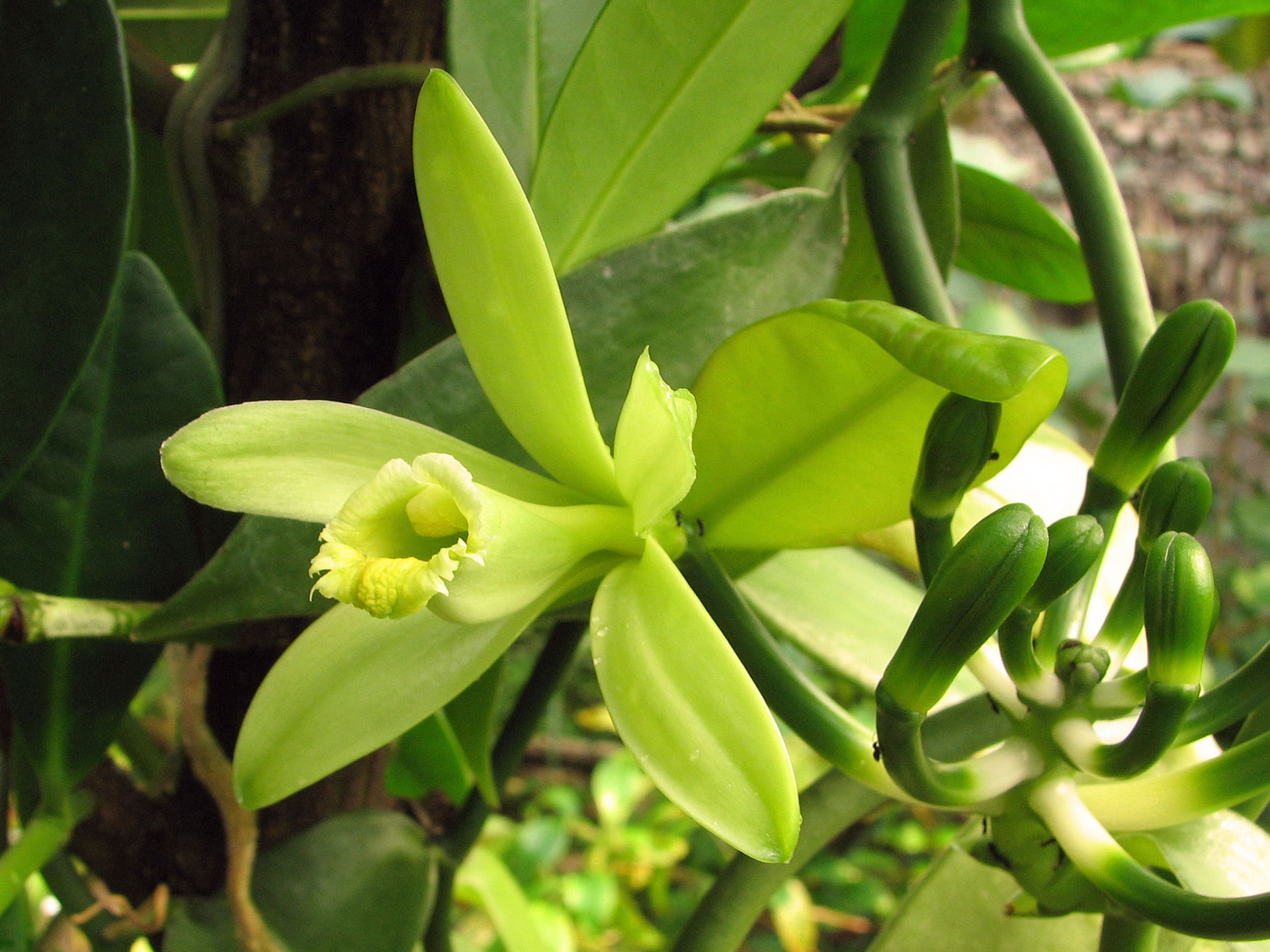
The flowers bloom for only a few hours in the morning. They must be pollinated during this time; otherwise, the flower will fall off and no pod will form. The climbing vanilla plant needs a support tree. This orchid prefers humus-rich soil covered with vegetation at its base and a cooling canopy of shade overhead. It cannot tolerate wind at all, so vanilla is usually planted in wooded, wind-protected areas. Processing the green pods (fruits) into the fragrant, sweet spice is a very labor-intensive process. The proverbial calmness of the Malagasy people, epitomized by the local saying “Mora, mora” (“take it easy”), suits the vanilla processing very well. Vanilla needs time and warmth to ferment. About five days after harvest, the green vanilla is steamed over a wood fire. The pods are stored overnight in wooden crates wrapped in woolen blankets. The next morning, the stems are brown. For two weeks, they are dried in the sun for three hours a day. In between, the pods rest in the dark, wrapped in cloths. After sun-drying, a few more weeks of shade-drying are needed until, after two months of care, the “queen of spices”—now reduced to one-fifth of its original volume—exudes its beguiling fragrance with a rich, glossy sheen.
Distribution
originally from Central America and Mexico