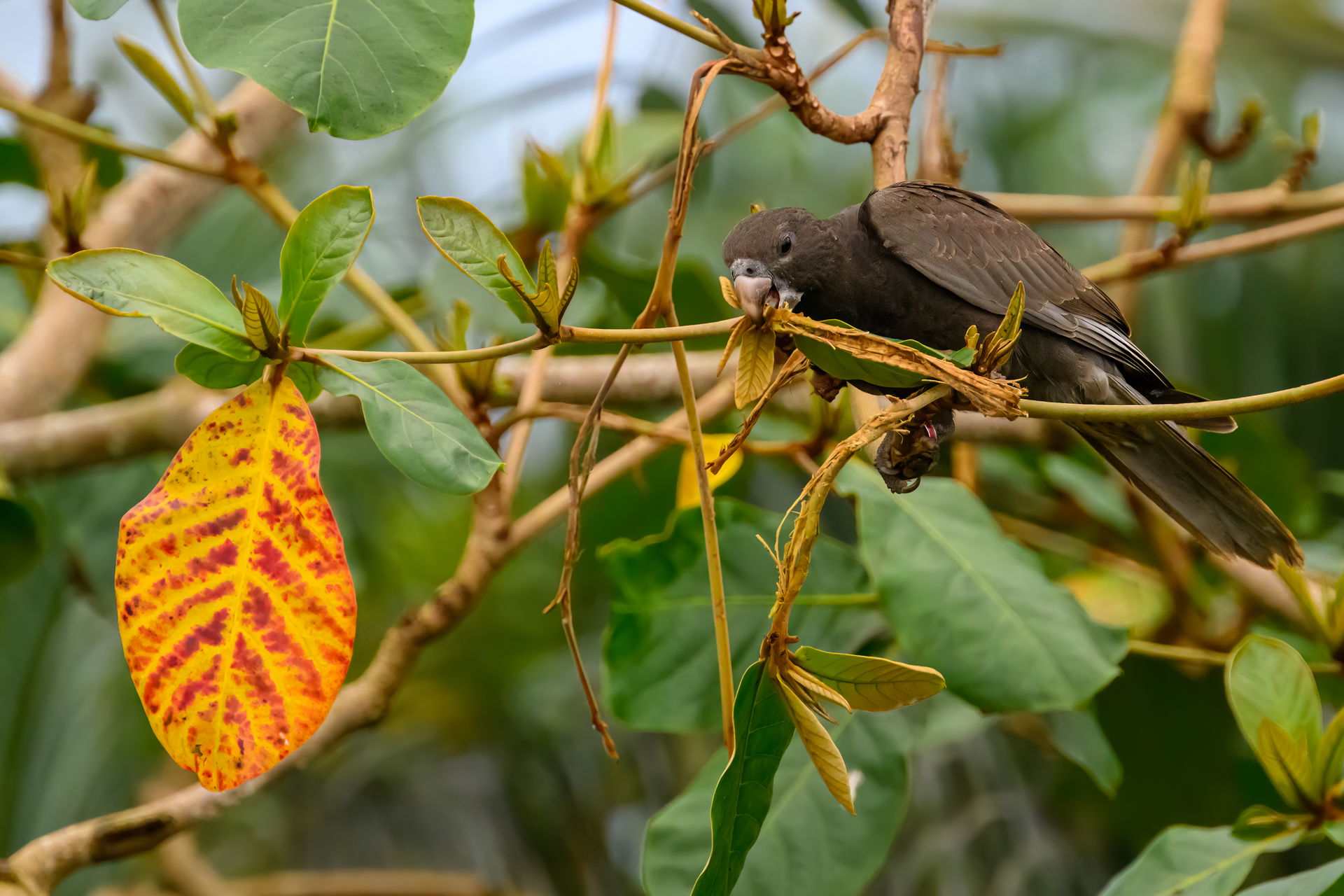
The vasa parrot measures around 50 centimetres from the tip of its tail to its head. In the wild, it is often seen travelling in groups of three to eight birds.
The vasa parrot has a wide distribution in Madagascar and the Comoros. It inhabits all types of woodland, savannahs and other open landscapes. It can also be found near settlements and in parks. However, it is absent from the entire central highlands of Madagascar at altitudes above 1,000 metres.
The birds are most active in the early morning and late afternoon. The parrots fly about, screeching loudly, in search of fruit. Even on clear, moonlit nights, the birds’ loud calls can be heard.
The song and calls of the Vasa parrot are less melodious to human ears than those of the lesser vasa parrot. The vasa parrot lays two to three eggs in holes in tree branches and trunks.
Taxonomy
Psittaculidae, genus Coracopsis (4 species)
Habitat
tropical rainforest up to 1,500 metres above sea level
Social structure
in groups of 3 to 15 animals