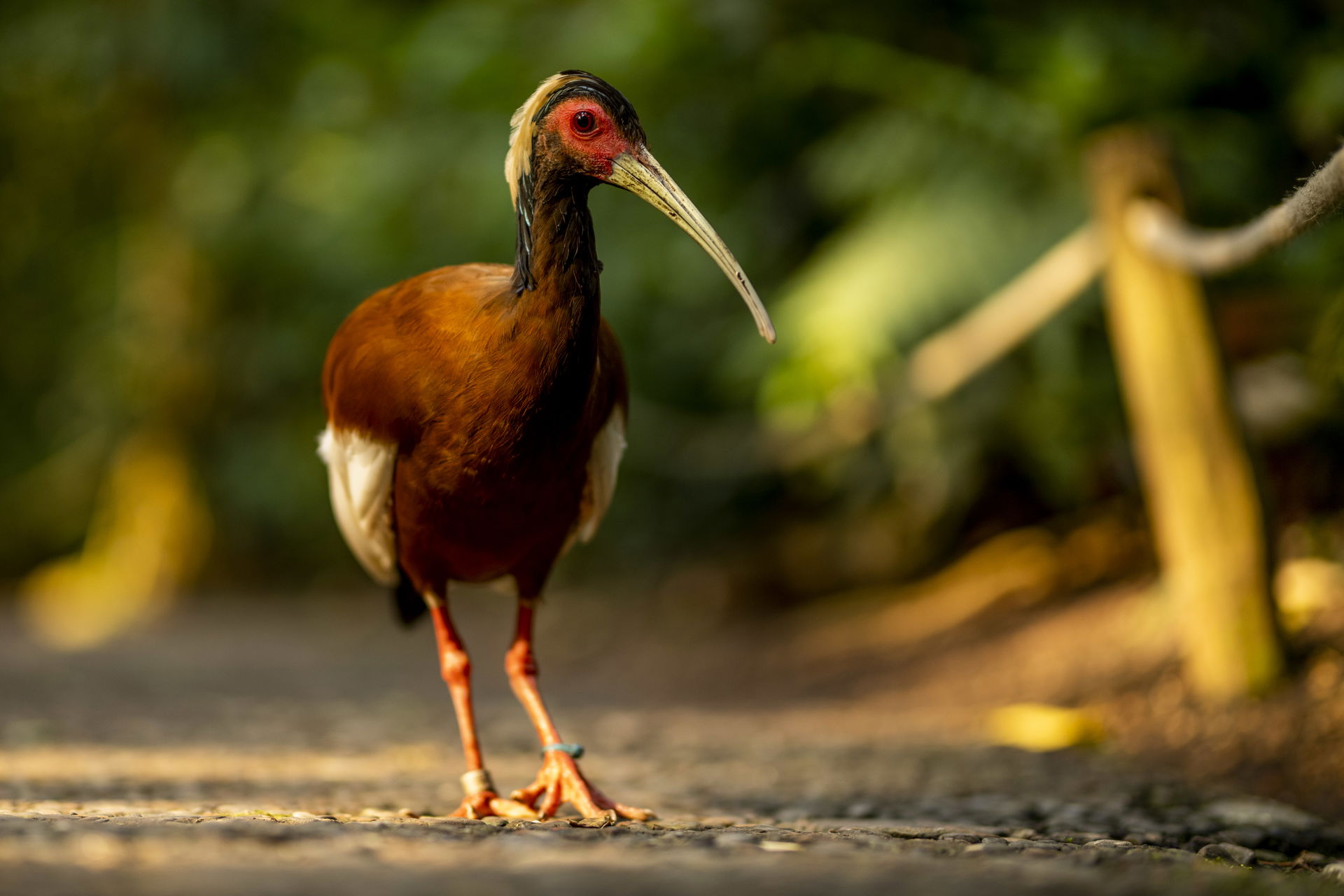
The white-winged ibis inhabits forests throughout virtually the whole of Madagascar.
Like all ibises, it has a long, curved beak. It tirelessly probes the forest floor with it, searching for insects, insect larvae, worms, spiders and snails. If disturbed or threatened, it flies away noisily and perches on a branch near the treetops.
The white-winged ibis builds its nest, which can be up to 70 centimetres in diameter, on the lowest branches of trees. Both the female and the male incubate the two to three eggs.
Taxonomy
Threskiornithidae, Lophotibis (1 species)
Habitat
wet and dry forests up to 2,000 metres above sea level
Migratory behaviour
generally sedentary
Social structure
in pairs or in small groups