20.09.2026 — Mithelfen
Guide: Planting wildflowers
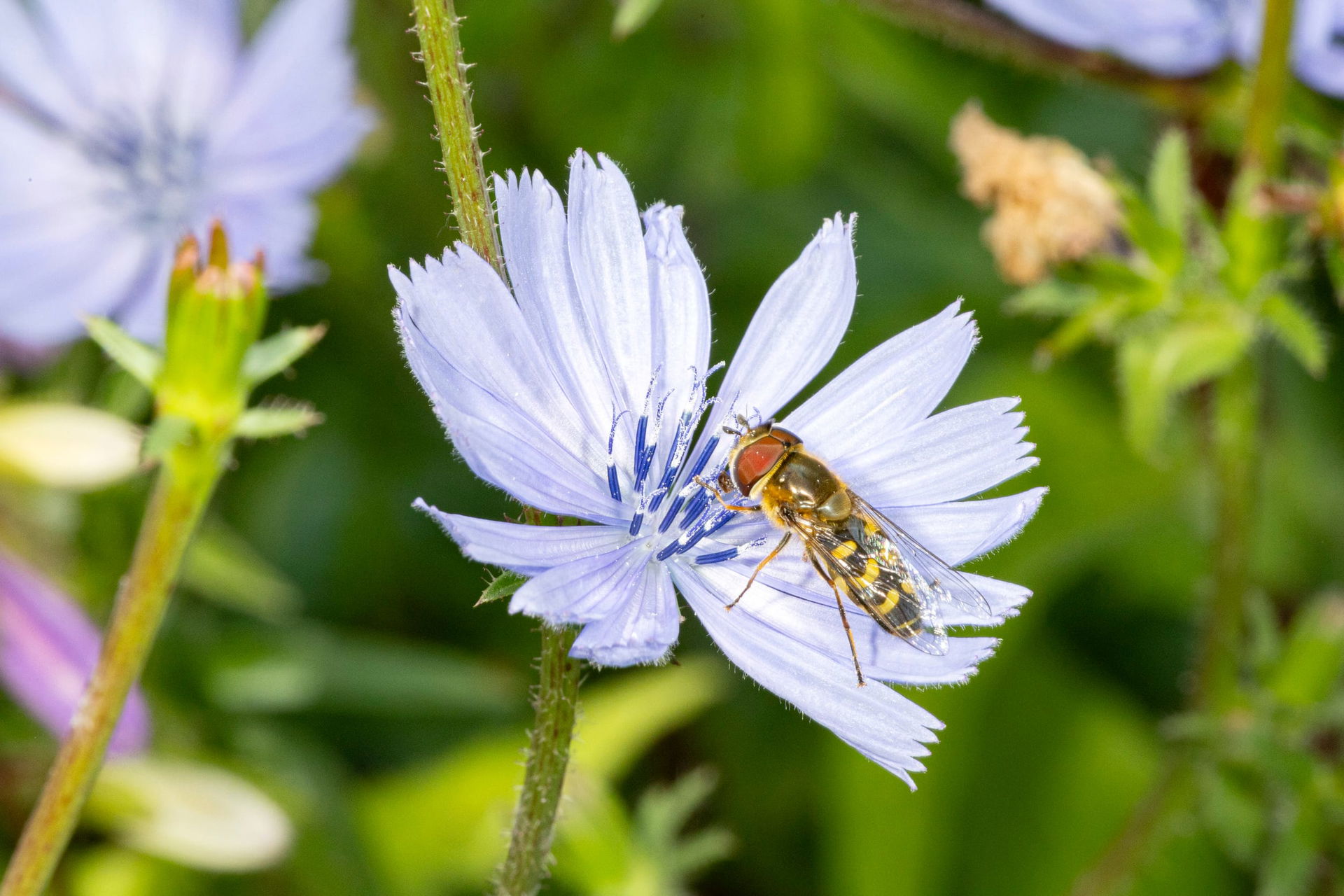
To support bees and butterflies, you can intentionally plant valuable wildflowers. This will create new feeding areas for insects.
Flower boxes or pots
Commonly grown balcony plants, such as geraniums and petunias, hold absolutely no interest for wild bees or nearly all other native insect species. Instead, plant annuals, wild herbs, or perennials in balcony planters or patio pots. This way, a wide variety of plant species will bloom from April through October. Thanks to their varying bloom times, this also adds visual variety.
The following species are suitable for sowing:
Cluster-flowered Bellflower Campanula glomerata
Hanging Cushion Bellflower Campanula poscharskyana
Round-leaved Bellflower Campanula rotundifolia
Rock Stonecrop Sedum rupestre
Sharp Stonecrop Sedum acre
Wild Thyme Thymus serpyllum
Mountain Mint Calamintha nepeta
Blue Cushion Aubrieta deltoidea
Rock Aurinia Aurinia saxatilis
Round-headed Leek Allium sphaerocephalon
Mountain Leek Allium lusitanicum
Garden soil mixed with a little sand makes for a good growing medium. From time to time, you can enrich the soil with organic fertilizer.
Flower Meadows
for dry, warm locations
Transforming an existing lawn into a species-rich flower meadow by mowing less frequently usually yields only moderate success due to root competition from the grasses. It is easier to completely remove the existing vegetation from small areas and plant wildflower meadows there.
The following species are suitable for sowing:
Common Bird's-foot Trefoil Lotus corniculatus
Sow Esparset Onobrychis viciifolia
Hedge Vetch Vicia sepium
Meadow Vetch Lathyrus pratensis
Gamander Speedwell Veronica chamaedrys
Meadow sage Salvia pratensis
Creeping bugle Ajuga reptans
Widow's flower Knautia ssp.
Pigeon scabious Scabiosa columbaria
Round-leaved bellflower Campanula rotundifolia
Bulbous Buttercup Ranunculus bulbosus
Wild Carrot Daucus carota
Hairy Hawkweed Leontodon hispidus
Meadow Knapweed Centaurea jacea
Small wildflower meadows require care and patience. However, they can be expanded each year.
If you mow the rest of the lawn only three or four times a year, the existing flowers—such as daisies, creeping bugle, meadow dandelions, sharp buttercups, white clover, and speedwell—will at least have a chance to bloom. This, too, is already an improvement for insects.
- Education
- Research
- Species Conservation
 HabitatsWe protect nature – locally and globally