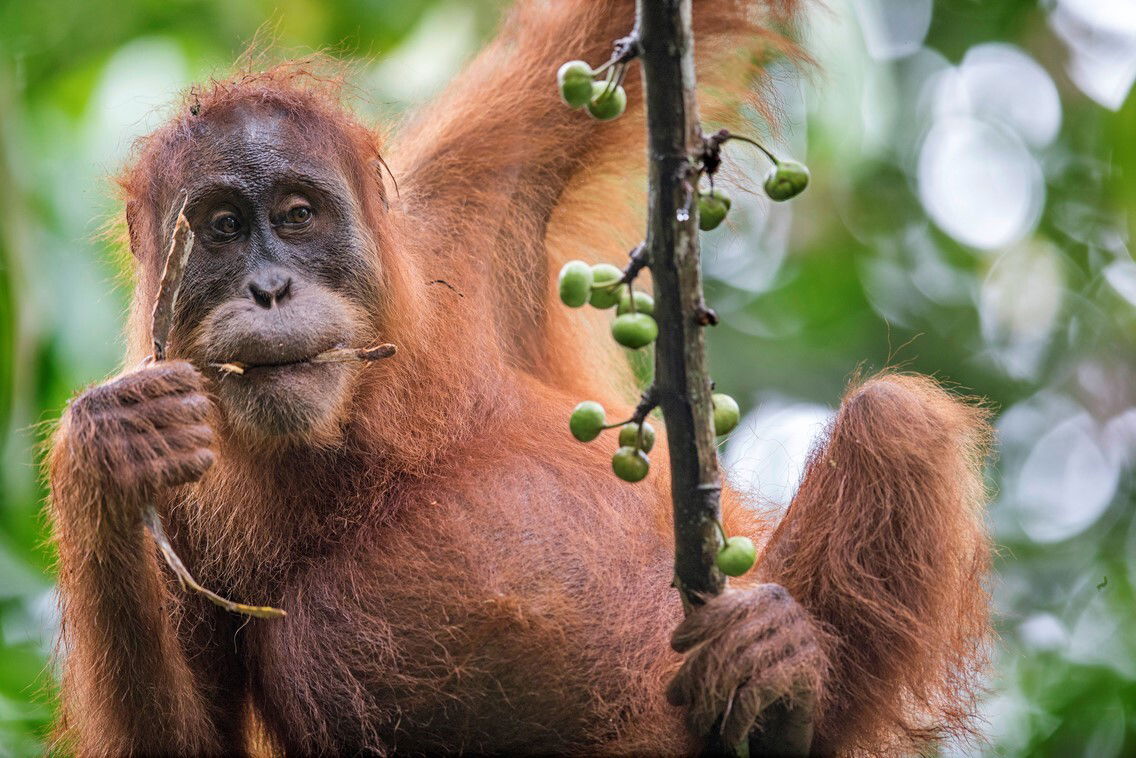
20.09.2026 — Lebensraumschutz
The long road back
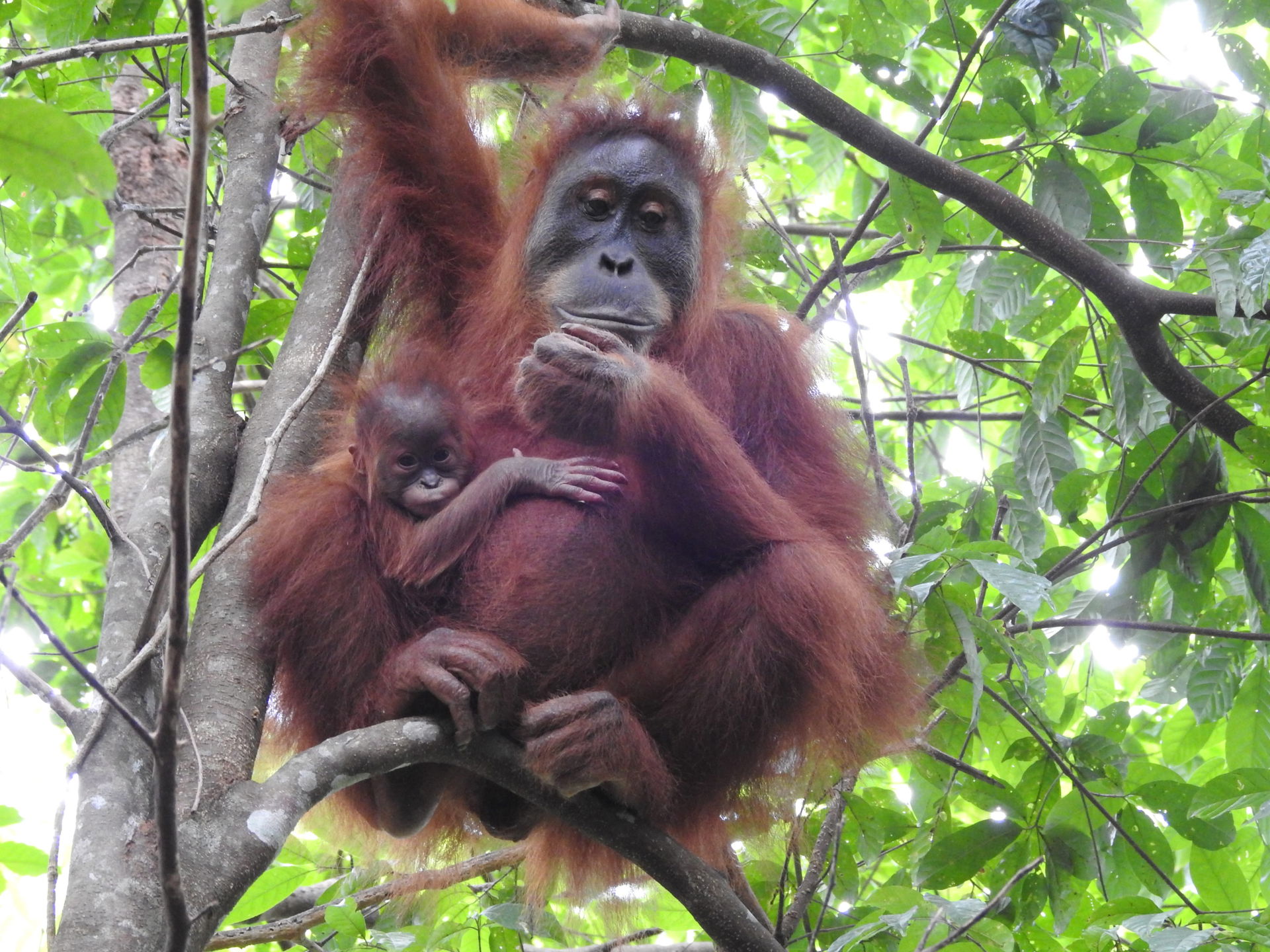
About ten years ago, the team working on our Paneco conservation project in Sumatra successfully reintroduced the female orangutan Wenda into the rainforest. Now we’ve spotted Wenda with a young orangutan—a huge success!
Orangutan infants have one of the longest relationships with their mothers in the animal kingdom. For up to nine years, they learn from their mothers all the behaviors they need to live independently. During this crucial phase, however, human interference is a recurring problem in Sumatra, with mothers being killed and the young illegally kept as pets under the most adverse conditions. The PanEco Foundation, our conservation partner in Indonesia, is addressing this issue: It rehabilitates the rescued young orangutans and prepares them for release back into the wild. With success—as recent observations in the rainforest show.

Wenda with her second infant, photographed on Sumatra in July 2026. Image: PanEco Foundation, SOCP
A joyful discovery
It is July 2026. Citrakasih (Citra) Nente, a PanEco employee and nature conservation ambassador for Zoo Zurich, is making her way through the towering treetops of the Jantho rainforest in northern Sumatra. Suddenly, she spots a familiar face amid the dense greenery: Wenda, a female orangutan. More than ten years ago, Wenda was released back into the wild here in the conservation area. Since then, she has been living independently in the rainforest and is regularly monitored by local staff from the conservation project.
As Wenda turns slightly high in the treetops, Citra suddenly notices something else—and her heart skips a beat: Wenda is holding an infant in her arms!
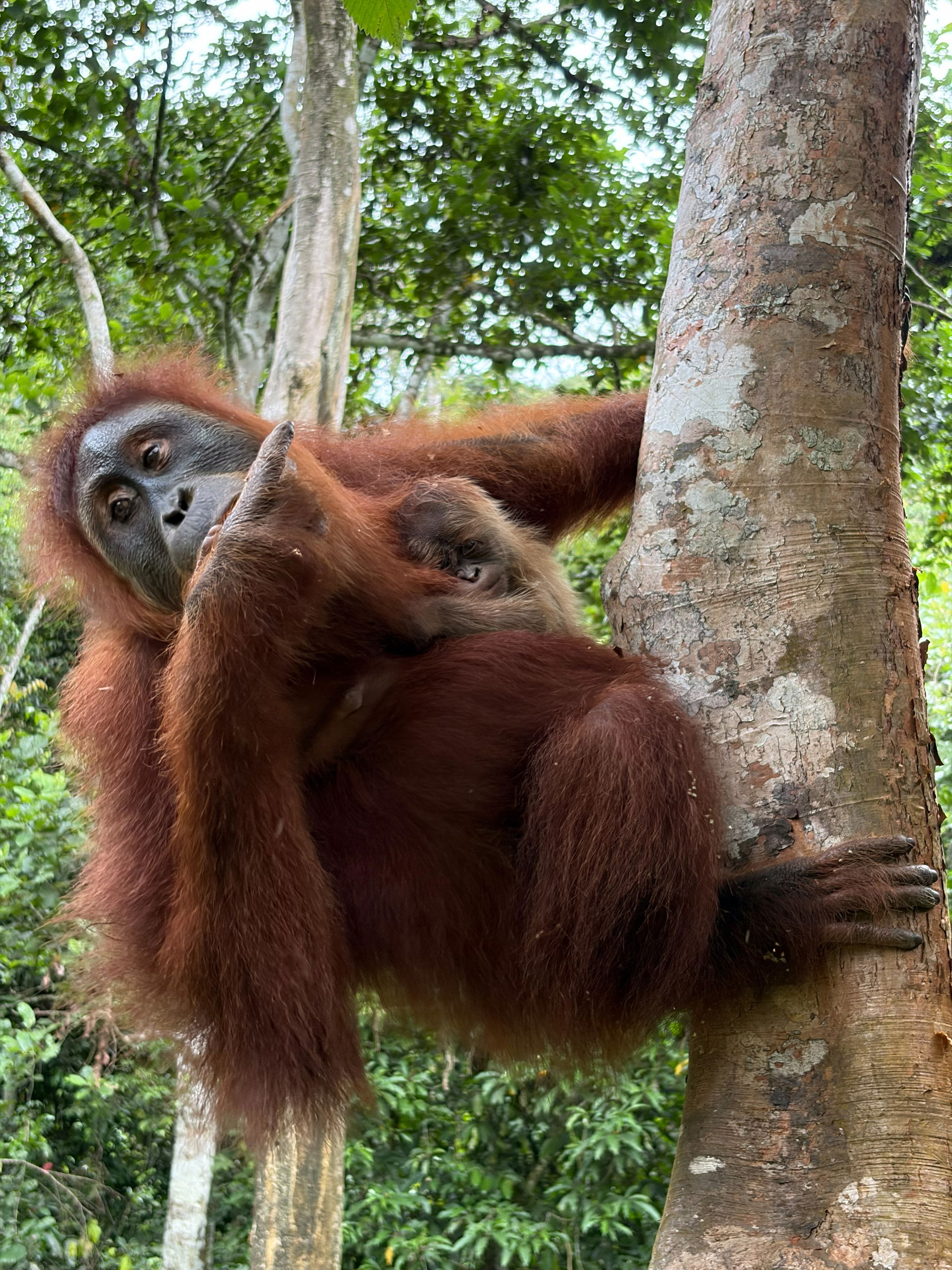
Young orangutans stay with their mothers for a very long time. Image: PanEco Foundation, SOCP
Wenda's Story
We look back to the year 2009. At about one year of age, the malnourished Wenda arrives at the PanEco Foundation’s rescue and rehabilitation center in Batu M’Belin. Over the next four years, the young orangutan is nursed back to health and, step by step, prepared for an independent life.
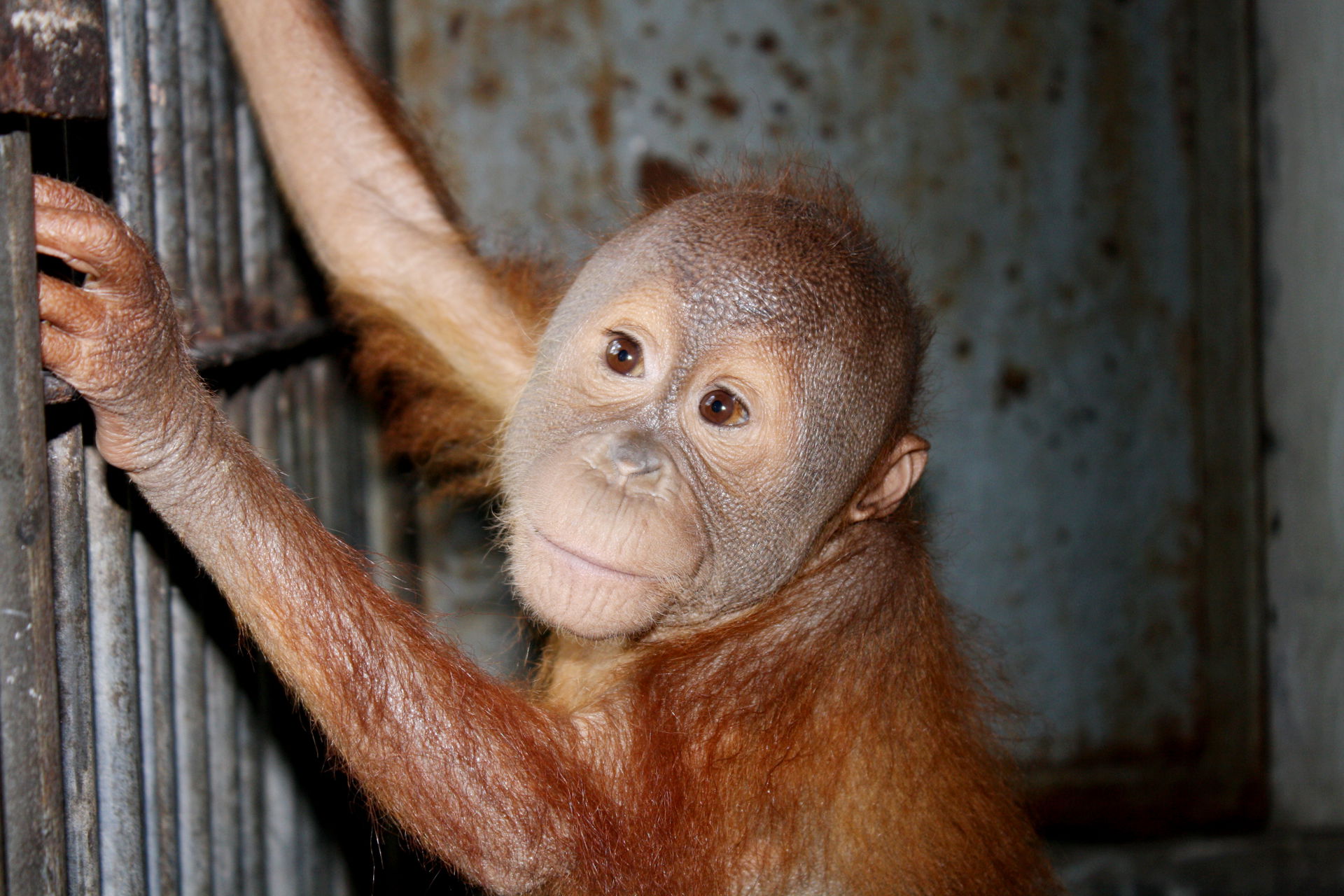
2009: Wenda upon arrival at the rescue and care centre. Image: PanEco Foundation, SOCP
Rainforest School
An important part of this is what’s known as the “rainforest school.” Here, Wenda interacts with other orangutans and explores forested areas with real trees. In the process, she acquires important skills she needs for life in the rainforest: she learns to move safely through the treetops, find natural food, and build sleeping nests in the trees.
In 2013, when the staff at the Wenda Shelter and Care Center determined that the residents were ready for the next step, the next phase of their journey back to independence began.
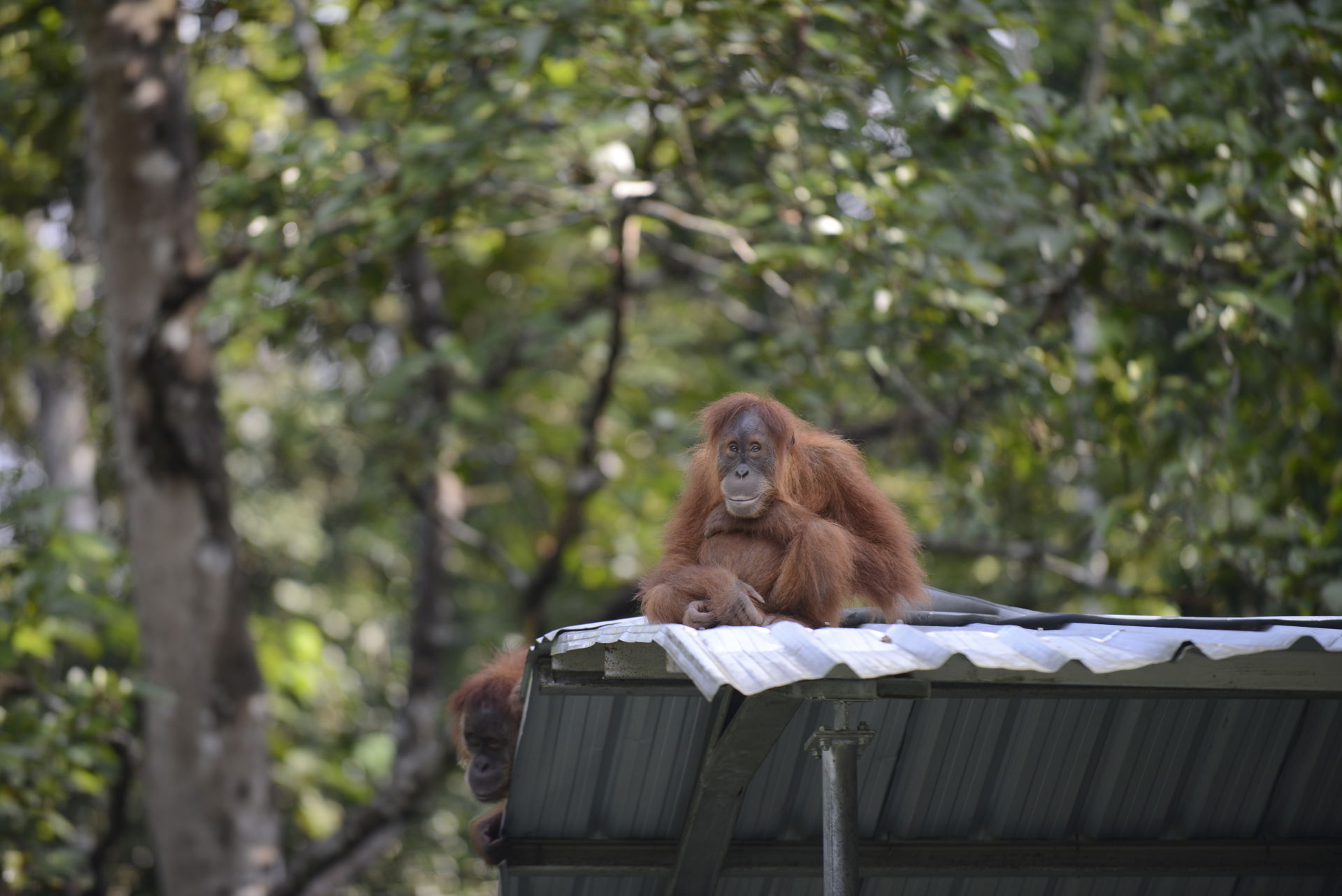
Wenda at the reintroduction station. Image: Zoo Zurich, Claudia Rudolf von Rohr
Reintroduction Center
Wenda’s next stop is the reintroduction center in Jantho. That’s where the “high school” phase of Rainforest School begins, so to speak. In a setting that remains protected, she goes on independent excursions into the rainforest, refines her skills, and, in particular, learns about the local food sources.
During this phase as well, Wenda’s behavior is closely monitored and her progress documented. Only when the team is convinced that she is ready for an independent life does the decisive step follow: her actual release into the Jantho rainforest.
At the rehabilitation center, Wenda is already living largely on her own. At the same time, she still has the option of returning from the rainforest to her caregivers if she needs their help.
Wenda learns how to find food independently in the rainforest. Image: PanEco Foundation, SOCP
Setback
Even after her release into the wild, Wenda won't simply be left to fend for herself. That's why the staff on site continue to closely monitor how she's adjusting to life in the rainforest.
This monitoring effort takes a decisive turn in July 2015: The team discovers that Wenda has fallen from a tree and broken her ankle. She is taken back to the rescue and rehabilitation center, where she undergoes successful surgery.
After about half a year of rehabilitation, Wenda is getting a second chance at an independent life in the Jantho rainforest.
2024: Wenda with her first infant. Image: PanEco Foundation, SOCP
Young Talent
Over the next eight years, Wenda lives on her own in the Jantho rainforest, where she repeatedly encounters other orangutans—including males. In 2024, a special milestone occurs: Wenda gives birth to her first baby, which the observation team spots for the first time in the middle of the year.
After that, Wenda retreats deeper into the rainforest with her young and is only spotted occasionally. When staff members spot her again in January 2026, her first cub is no longer with her. Since a cub of that age would normally still be staying close to its mother, we must assume that it has died in the meantime. At the same time, Wenda’s noticeably rounder belly suggests that she might be pregnant again. This suspicion is confirmed a few months later: In July 2026, Wenda appears with a new cub.

2026: Wenda is carrying another infant. Image: PanEco Foundation, SOCP
Further achievements
Wenda’s story is not an isolated case in the PanEco Foundation conservation project. To date, more than 190 rehabilitated Sumatran orangutans have been released into the wild in Jantho.
There was already cause for celebration in May this year: Bulan, another female orangutan released into the wild, was spotted in the rainforest with her first infant. With Wenda’s infant born in July, a total of eleven births among reintroduced orangutans have now been documented.
These births are an important sign of the conservation project’s long-term success: they show that rehabilitated orangutans can fend for themselves in the rainforest, reproduce and help establish a new population.
Back to Citra, Zoo Zurich’s nature conservation ambassador and head of the reintroduction projects. She is still watching Wenda and her infant in the trees of the Jantho rainforest. What she sees is the result of a long journey: thanks to the tireless work of the local team, a once helpless, rescued orangutan infant has grown into an independent mother.
For Wenda’s infant, this journey has only just begun. Over the coming years, it will hopefully learn everything it needs from its mother to live independently in the rainforest.

Bulan, another reintroduced female, also had her first infant in 2026. Image: PanEco Foundation, SOCP
Protecting orangutans in Sumatra
Long-term commitment is essential to make success stories such as those of Wenda and Bulan possible. Since 2007, Zoo Zurich has supported the PanEco Foundation and its efforts to protect orangutans and their habitat in Sumatra. This includes the work of Citra and her team, who accompany rehabilitated orangutans on their journey back to the rainforest and monitor the released animals over the long term.
Get involved
You too can help protect orangutans: your donation to our conservation project will support our long-term work on the ground and give critically endangered Sumatran orangutans a future.

- Education
- Research
- Species Conservation
 HabitatsWe protect nature – locally and globally
Donate for the orangutans
