Aldabra-Riesenschildkröten (Geochelone gigantea) im Masoala Regenwald des Zoo Zürich

Aldabra giant tortoise

Aldabrachelys gigantea

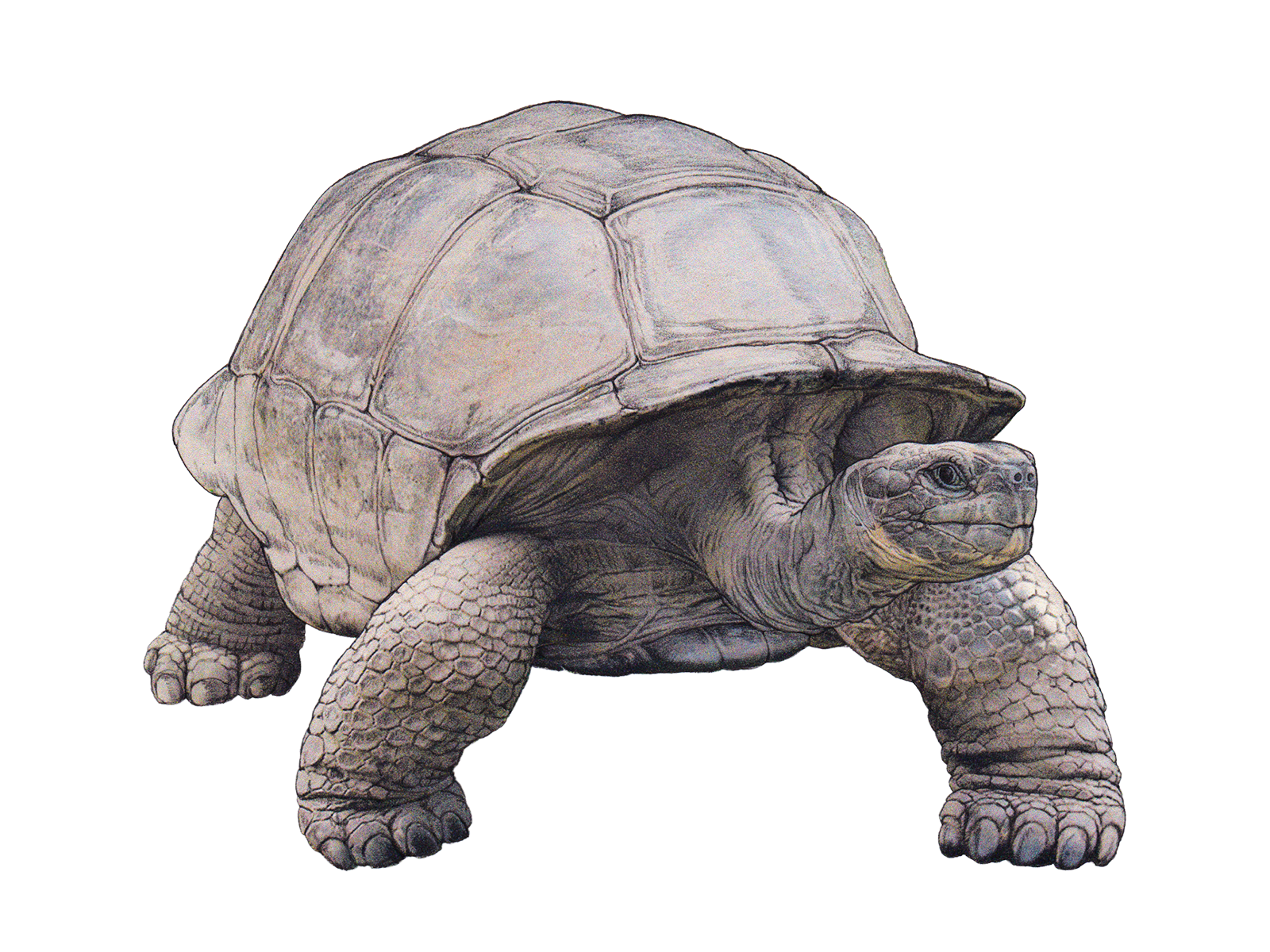
The aldabra giant tortoise is the second-largest species of tortoise in the world.

VU

Red List
Vulnerable
Breeding programme

The aldabra giant tortoise can weigh up to 250 kilograms and have a carapace length of up to 120 centimetres. Today, it is found only on the Aldabra Atoll in the Seychelles, situated north of Madagascar.

The tortoises prefer shady bushes to escape the midday heat. To cool off, they often head for ponds to have a dip.

Aldabra giant tortoises eat plants and aren’t fussy about what they eat. They even eat the dry leaves of the Coconut palm.

The female lays between 4 and 14 spherical eggs in holes she has dug herself in the sand. Depending on the incubation temperature, the juveniles hatch after 98 to 200 days.

Galápagos and Aldabra giant tortoises are most easily distinguished from one another by their neck shields. The aldabra giant tortoise has a small neck shield, whereas the Galápagos giant tortoise does not.

Taxonomy

Testudinidae, Aldabrachelys (1 species)

Habitat

coastal areas and open scrubland with grasses and sedges

Behaviour and ecology

diurnal, migrations to egg-laying sites

Social structure

large herds
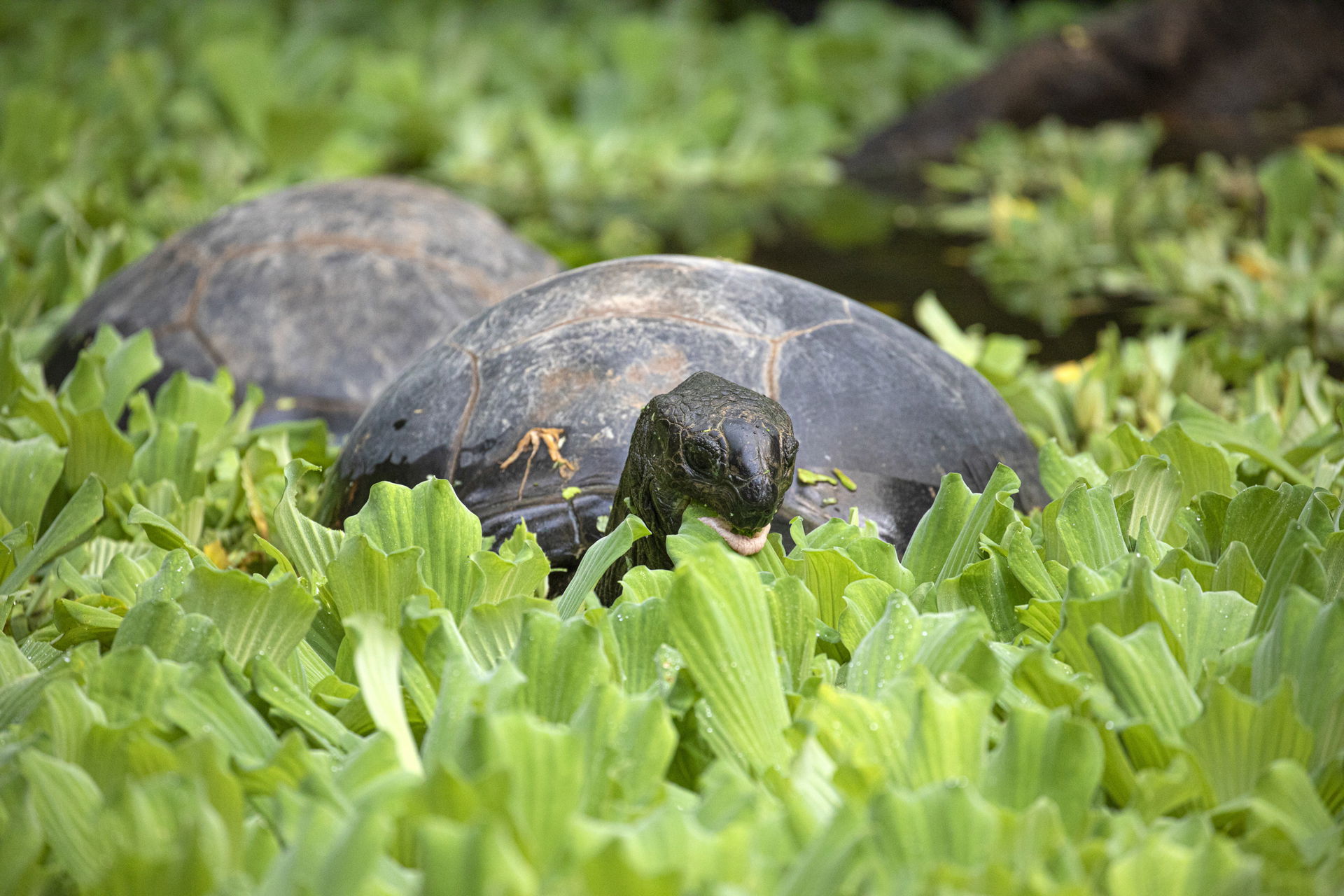
Habitat at the zoo:

Masoala Rainforest
Taxonomy

Testudinidae, Aldabrachelys (1 species)

Habitat

coastal areas and open scrubland with grasses and sedges

Behaviour and ecology

diurnal, migrations to egg-laying sites

Social structure

large herds
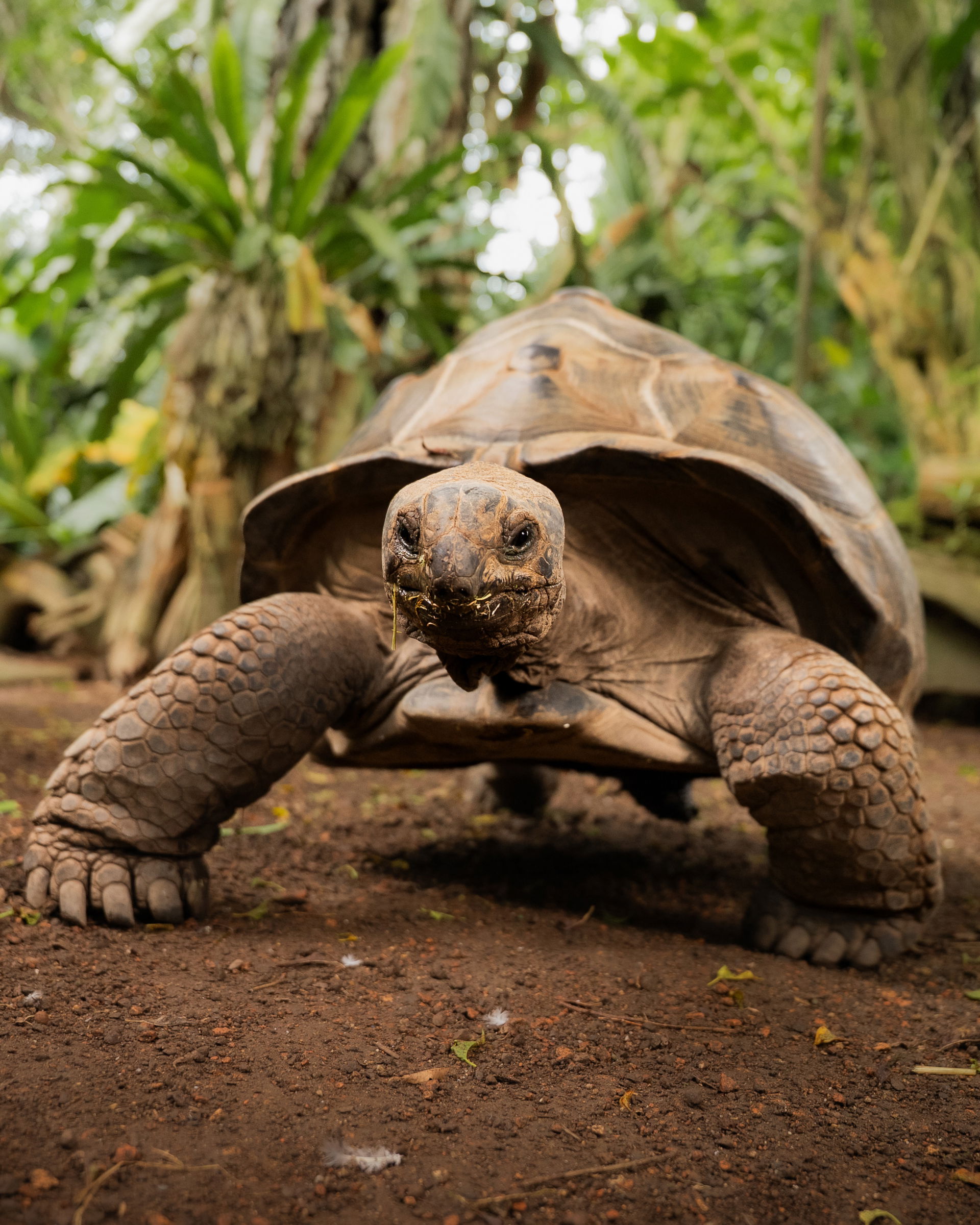
Habitat at the zoo:

Masoala Rainforest

Godparent

Support the animals of Zoo Zurich with your annual godparent sponsorship

Aldabra giant tortoise for CHF 1'000.–

Become a godparent

Godparent

Support the animals of Zoo Zurich with your annual godparent sponsorship

Aldabra giant tortoise for CHF 1'000.–

Become a godparent
Aldabra-Riesenschildkröte (Geochelone gigantea) im Masoala Regenwald des Zoo Zürich.

Aldabra-Riesenschildkröten sind die zweitgrössten Landschildkröten der Welt. Foto: Zoo Zürich, Tim Benz

Riesenschildkröten auf kleinen Inseln?

Die Frage, wieso es ausgerechnet auf dem kleinen Galapagosarchipel und den Seychellen im Indischen Ozean die grössten Landschildkröten der Erde gibt, ist nicht geklärt.

Einerseits gibt es die Vermutung, dass die Besiedlung durch kleinere Schildkrötenarten vom umliegenden Festland (Afrika, Südamerika) ausging. Die Tiere könnten auf Treibgut wie schwimmenden Baumwurzeln auf verschiedene kleine Inseln angeschwemmt worden sein. Im Verlaufe der Evolution haben sie sich dort zu Riesenformen entwickelt. Für diese Theorie spricht, dass die Köhlerschildkröten Südamerikas mit den Riesenschildkröten auf den Galapagosinseln eng verwandt sind.

Eine andere Ansicht ist, dass es sich bei den Aldabra- und Galapagos-Riesenschildkröten um die letzten Überlebenden einer einst weltumspannenden Artengruppe handelt. Die heutigen Riesenschildkröten wären in dieser Theorie nur Zwergformen einer Schildkrötengruppe mit einst gigantisch grossen Tieren.

Tierstimme

More zoo residents

Back to overview