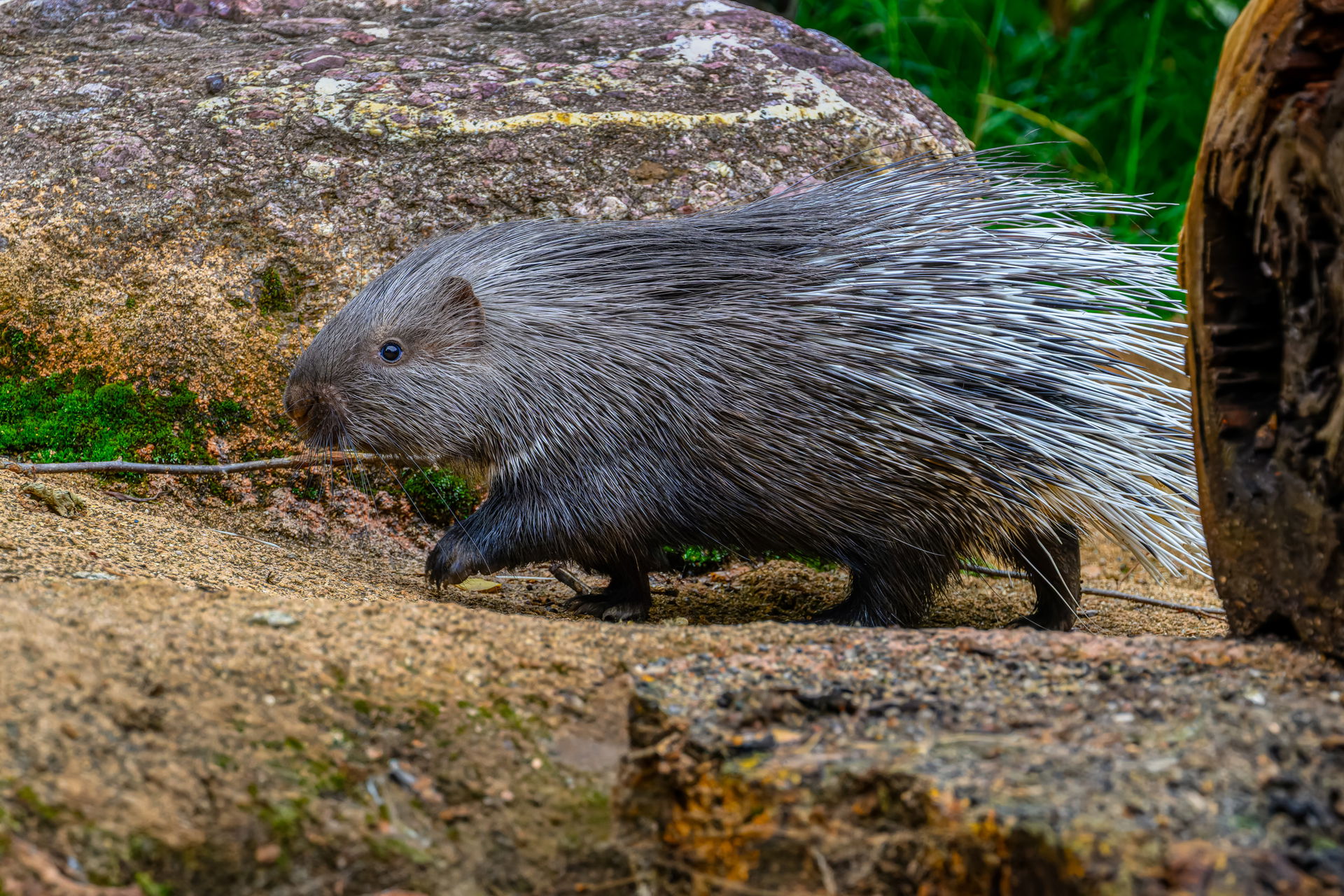
After birth, young Indian crested porcupines have only a faint ring of soft quills. This prevents them from hurting their mother when they seek shelter beneath her or feed. The quills begin to develop at around ten days old.
At the age of six to seven months, the juveniles go out with their mother at dusk to forage for food. As strict vegetarians, they do not shy away from cultivated crops either. For this reason, farmers regard them as crop pests and hunt them.
When threats emerge, the Indian crested porcupine raises its quills to appear larger and more menacing. It does this by rattling the hollow quills on its tail, hissing and stamping its hind legs. In a situation of extreme peril, the rodent charges backwards at its enemy and rams its quills into its body.
Taxonomy
Hystricidae, Hystrix (3 species)
Habitat
rocky slopes, tropical and temperate scrub, grasslands, woods, forests, farmland and gardens
Behaviour and ecology
nocturnal; during the day it seeks shelter in caves
Social structure
family groups