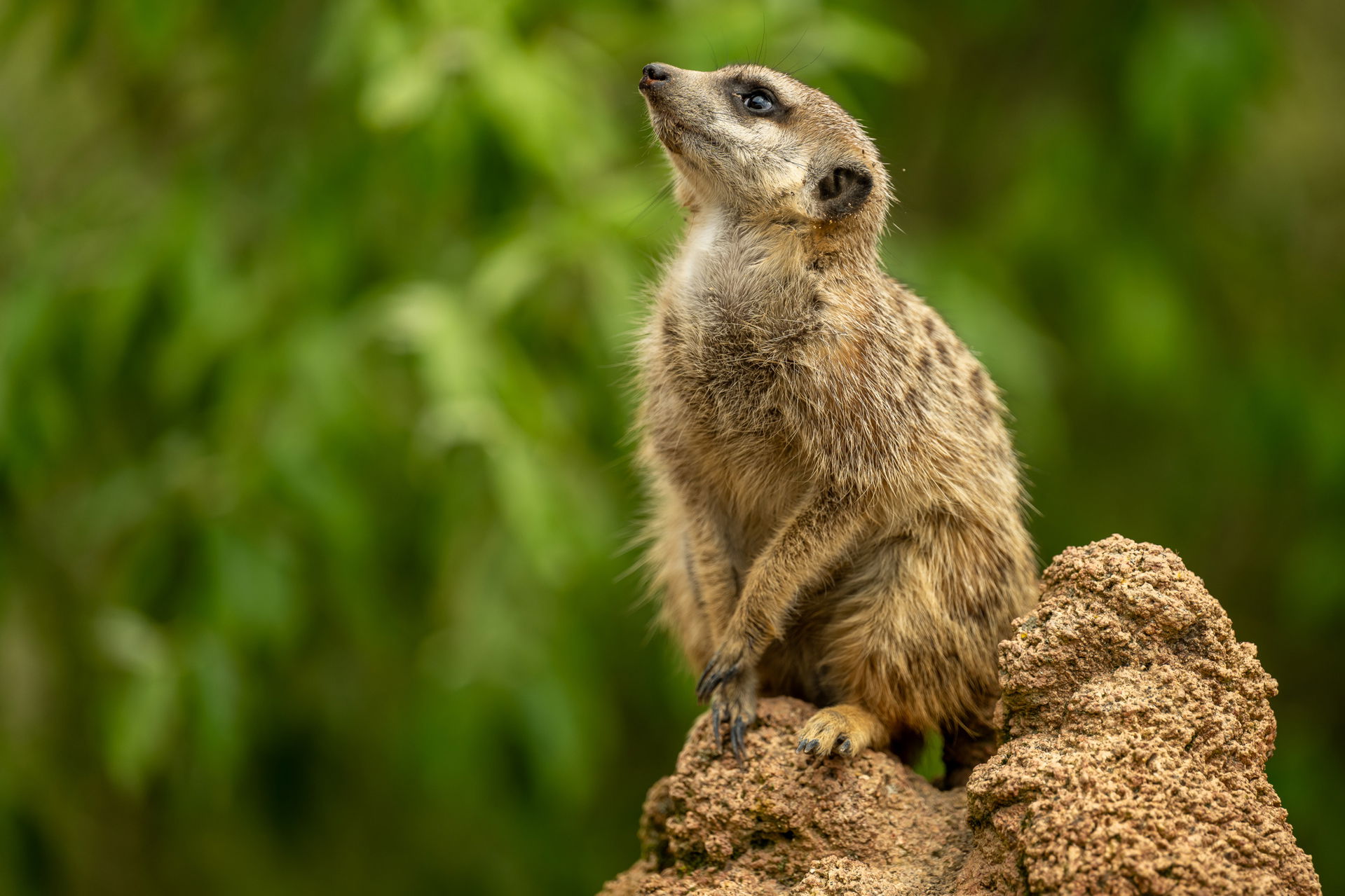
Meerkats display a pronounced territorial behaviour. They defend a territory of up to 15 square kilometres. Within this, they construct 6 to 10 burrows. These consist of a central chamber, accessed via tunnels several metres long. The meerkats sleep there, seek shelter and rear their juveniles.
Whilst foraging, at least one animal always keeps watch. To do this, it seeks out a good vantage point on hills or in trees. If danger threatens, it warns the others with sharp barks or growls. Despite their role, the sentries are usually the first to disappear into the safety of the burrow.
Overnight, the animals lose up to 5 per cent of their body weight. This makes foraging during the day all the more important.
Taxonomy
Mongooses (Herpestidae), genus Suricata
Habitat
Grassland and scrubland
Behaviour and ecology
diurnal
Social structure
Groups of 10 to 30 animals