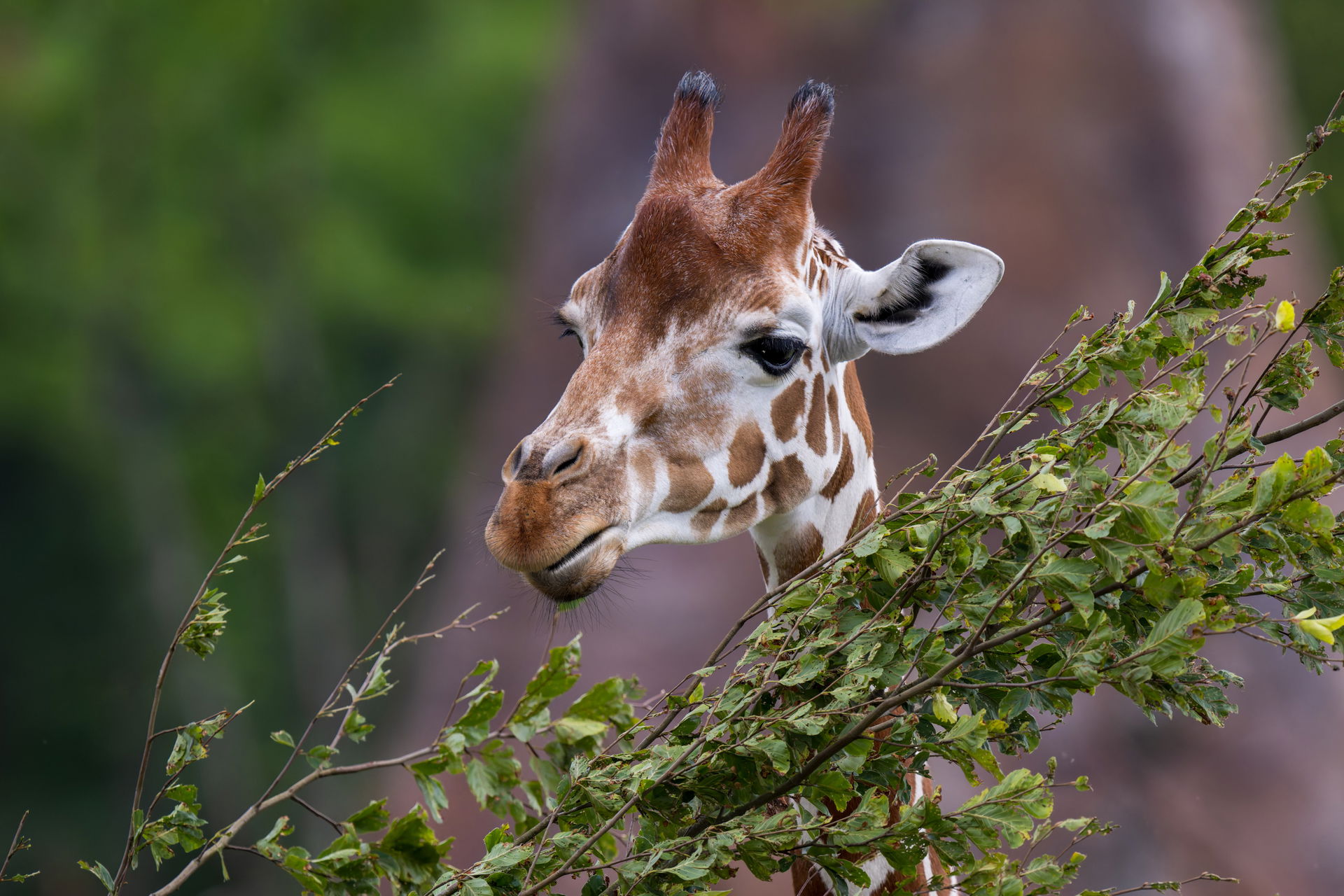
Netzgiraffe (Giraffa reticulata) in der Lewa Savanne des Zoo Zürich

Reticulated giraffe

Giraffa reticulata

The giraffe is known for its very long neck. Despite its length, the giraffe also has only seven cervical vertebrae – just like all other mammals.

EN

Red List
Endangered
Breeding programme

A giraffe eats up to 34 kg of leaves a day. Like our cows, giraffes are ruminants and regurgitate their diet to chew it again.

When a giraffe bends down to drink, it has to spread its legs wide apart to reach the water. Although it can go without water for up to a month, it drinks whenever the opportunity arises. In doing so, it always exposes itself to the risk of being attacked.

Giraffes communicate using infrasound (below 20 Hz). This means that the sounds they make are inaudible to us humans.

Taxonomy

Giraffidae, giraffes (Giraffa, 4 species)

Habitat

dry bush and tree savannahs, thorny bush steppe, sparse forests and seasonal floodplains.

Social structure

females: inhabit territories in groups, which may overlap; temporary groups of up to 50 animals with traditional, local birthing sites. males: adult males are intolerant of other large males in the centre of their home range; this can lead to fights.

Diet

various leaves with high nutritional value, particularly acacia; thanks to their high nutritional value and efficient digestion, they require only half as much plant material as herbivores.

Habitat at the zoo:

Lewa Savanna

Godparent

Support the animals of Zoo Zurich with your annual godparent sponsorship

Reticulated giraffe for CHF 12'000.–

Become a godparent

Godparent

Support the animals of Zoo Zurich with your annual godparent sponsorship

Reticulated giraffe for CHF 12'000.–

Become a godparent

Impressionen

Foto: Zoo Zürich, Fabio Süess

Giraffenbullen haben im Gesicht charakteristische Knochenwucherungen, sogenannte Exostosen. Foto: Zoo Zürich, Tim Benz

In der Lewa Savanne können die Zoogäste den Giraffen auf Augenhöhe begegnen. Foto: Zoo Zürich, Tim Benz

Giraffen sind bestens dafür ausgerüstet, um Blätter von Zweigen und Ästen zu streifen. Foto: Zoo Zürich, Tim Benz

Wissenswertes

  • 7

    Wie alle Säugetiere hat auch die Giraffe «nur» sieben Halswirbel.

  • 20

    Giraffen kommunizieren unter 20 Hz, also im Infraschallbereich.

  • 5

    Giraffenbullen können bis zu 5.8 m hoch werden.

  • 16,000

    Es gibt nur noch etwa 16'000 wildlebende Giraffen.

  • Pat:innen

    Malou-Stiftung für Tierschutz

    MALOU

    C. + G. Bosshard, Dietschwil

    LUNA

    L3P Architekten ETH FH SIA, AG, Regensberg Image Netzgiraffe Pat*in werden Preis für eine Patenschaft: CHF 12'000.– Bedrohungsstatus IUCN RedList Zuchtprogramm Logo des Eaza-Ex-situ-Programms EEP.

    IRMA

    Back to overview