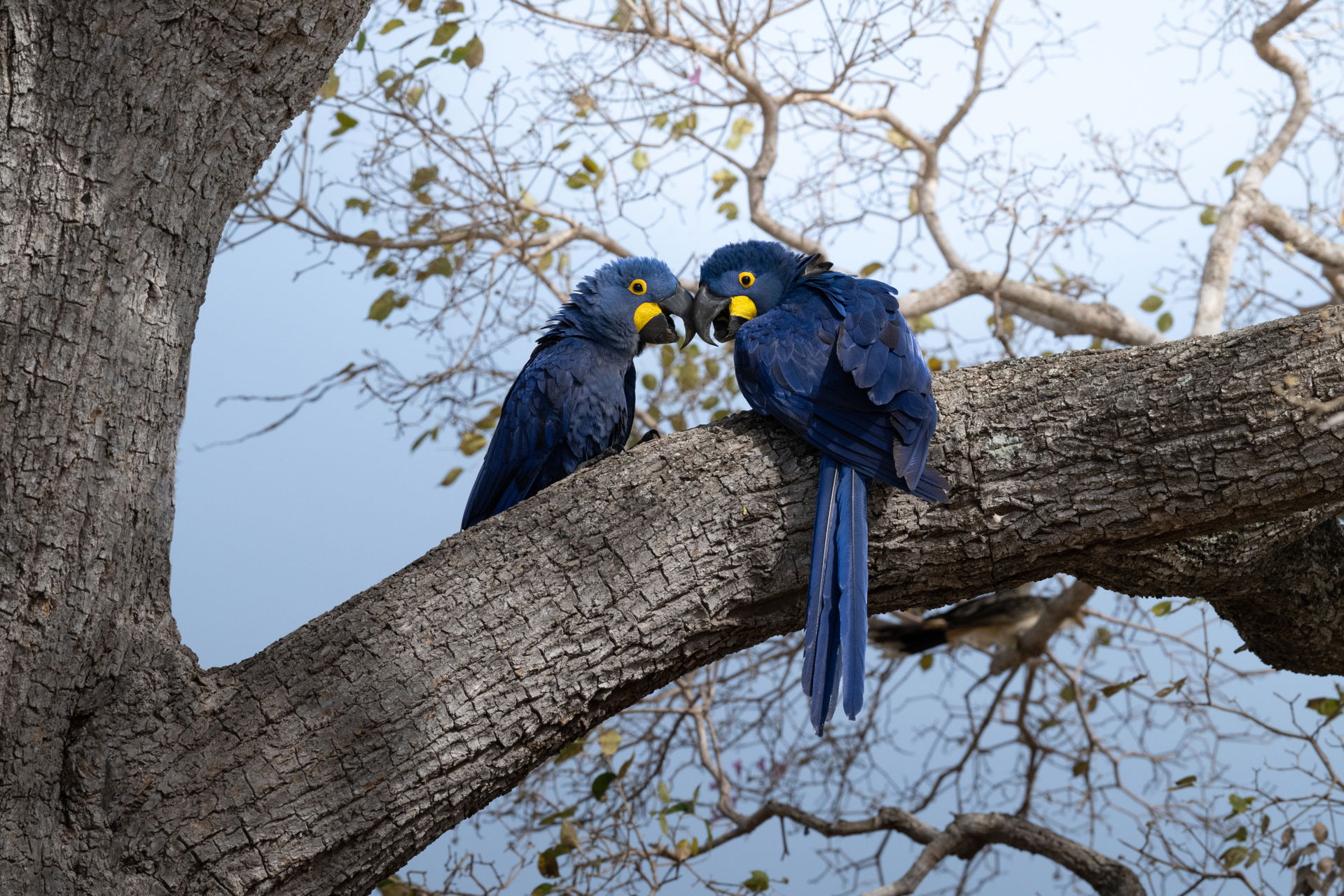

Hyazintharas (Anodorhynchus hyacinthinus) im Pantanal in Brasilien.

Research Project

Genetics of the Hyacinth Macaw

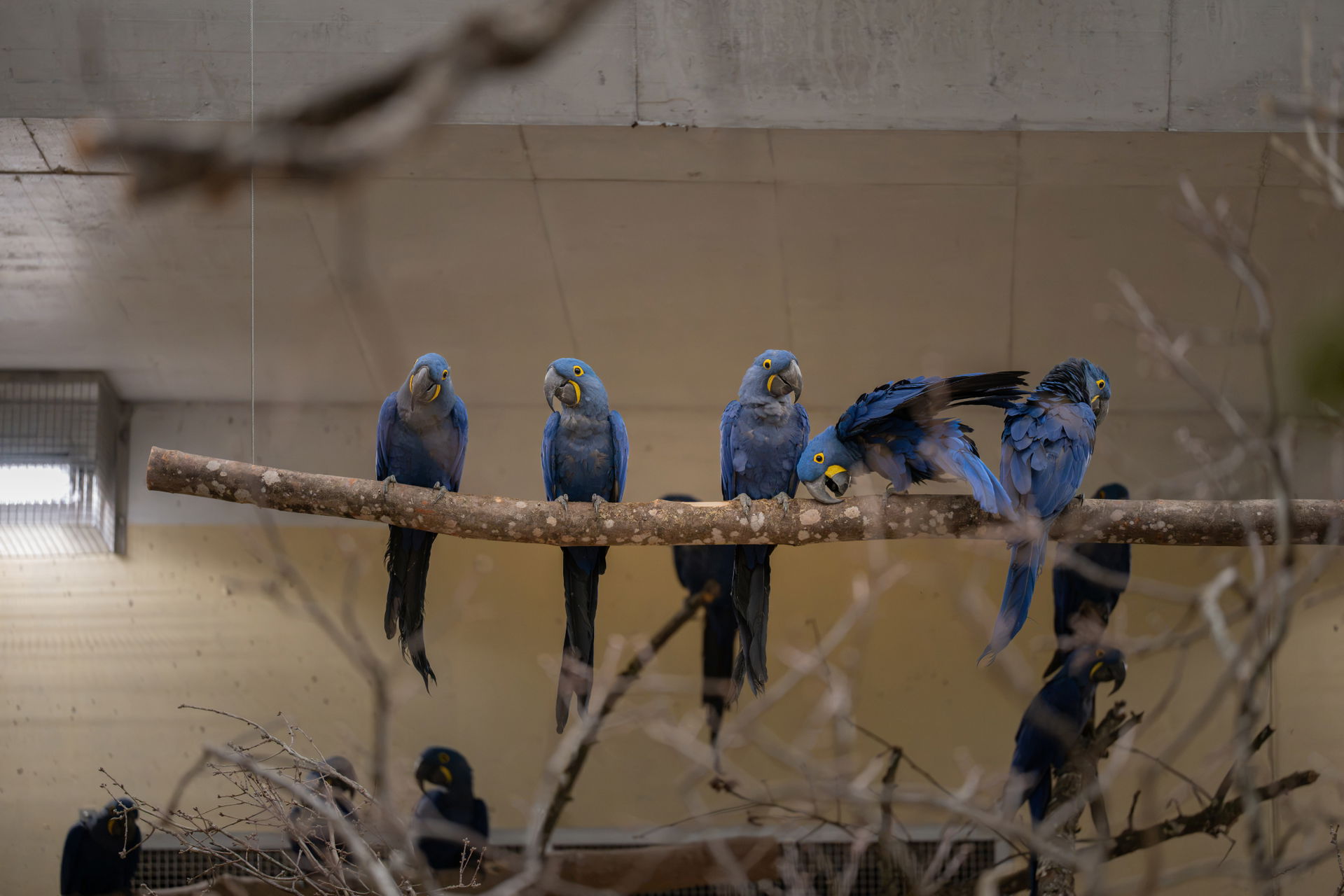
In this project, we are studying the genetic relationships among the hyacinth macaws that we keep and breed at our species conservation center, “Ornis.”

The group in Ornis currently constitutes the world's largest population of hyacinth macaws in human care (known as an ex situ population).

The research project is a collaboration between the zoo, the Royal Zoological Society of Scotland, and Nottingham Trent University.

Please help!

With your donation, you support scientific research here at the zoo. Your donation goes entirely toward our projects, and you can claim it as a tax deduction.

Declining Numbers

The hyacinth macaw (Anodorhynchus hyacinthinus) is endangered in its native range in South America (VU status on the IUCN Red List). Poachers removed at least 10,000 hyacinth macaws from the wild in the 1980s. Today, the wild population (known as the in situ population) numbers about 6,500 birds.

The population of wild hyacinth macaws has declined sharply over the last three generations. Most of the remaining birds live in the Brazilian Pantanal. Recurring, large-scale wildfires are putting additional pressure on the species there.

Hyazinthara-Nachzuchten (Anodorhynchus hyacinthinus) im Refugio des Pantanal Feuchtgebiets im Zoo Zürich.

Hyazinth Macaw night breeding at the Refugio in our Pantanal wetland. Photo: Zurich Zoo, Lea Pfaller

All for one

The study of the genetic relationships among the hyacinth macaws at the zoo is one aspect of a broader conservation strategy for this species based on the “One Plan Approach”. The One Plan Approach is a collaborative strategy that brings together all stakeholders working toward the conservation of a species—essentially “all for one.”

In this case, that bird is the hyacinth macaw. And its conservation as a species can only be achieved if all measures are combined: the protection of the birds’ natural habitat, the protection of wild parrots, and the targeted breeding and care of the animals in human custody.

  • Research Partners

    Royal Zoological Society of Scotland
  • Research Partners

    Nottingham Trent University

Breeding at the Zoo, Conservation (in) the Wild

Part of this holistic approach involves keeping and breeding birds outside their natural habitat, as the Ornis Zoo does. However, protecting and supporting wild birds in South America is also an integral part of this effort. The zoo supports this through its Pantanal conservation project.

Do you have any questions about research?

Your Donation to Research at the Zoo

FundraisingBox Logo

Frequently Asked Questions About Donations

Back to overview