27.10.2026 — Artenschutz — Current notes — Tiere — Videos
A New Habitat for a Desert Species Once on the Brink of Extinction
The Arabian oryx once stood on the verge of disappearing forever. Thanks to the commitment of zoos around the world, including Zoo Zurich, the species was saved from extinction. Today, it is considered a successful example of international conservation through the European Endangered Species Programme (EEP), which is coordinated by Zoo Zurich. Visitors can now experience these impressive desert animals in a newly redesigned habitat inspired by the landscapes of their natural range on the Arabian Peninsula.
With its long, almost straight horns, distinctive black-and-white facial markings, and pale coat, the Arabian oryx (Oryx leucoryx) looks almost like a mythical creature. In fact, some believe that sightings of individual oryx may have contributed to the unicorn legend. Heat haze and mirages in the desert may also have played a role in people perceiving the animals as unicorns.
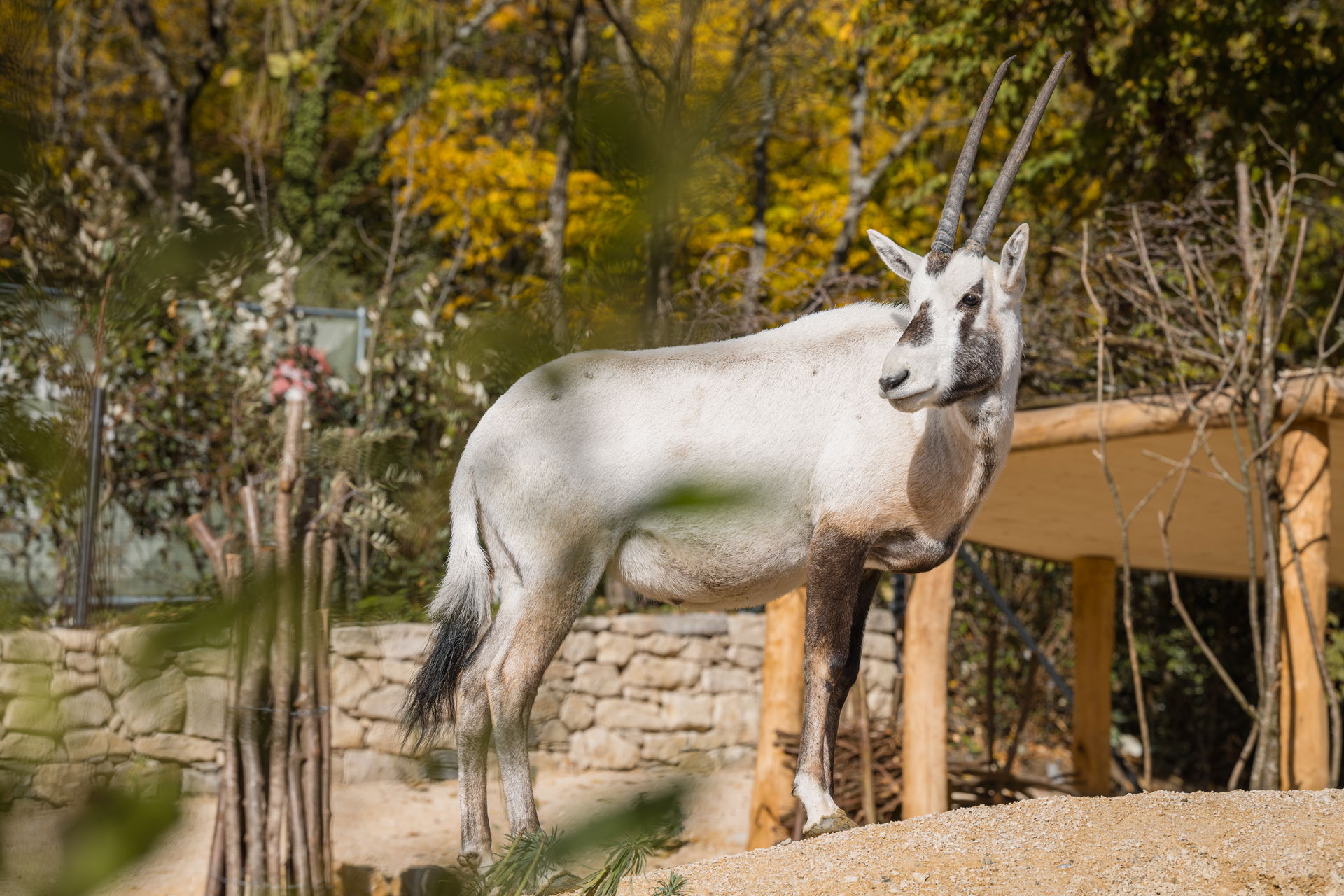
An appearance worthy of a mythical creature. Photo: Zoo Zurich, Fabio Süess
Perfectly Adapted to the Heat
The extreme temperatures of its natural habitat pose little challenge to the Arabian oryx. It is exceptionally well adapted to desert life: its light-colored coat reflects sunlight and helps prevent overheating. It also possesses a kind of natural “air-conditioning system” in its head. A dense network of fine blood vessels cools the blood before it reaches the brain. Yet even this remarkable adaptation to a harsh environment could not protect the species from its greatest threat: humans.
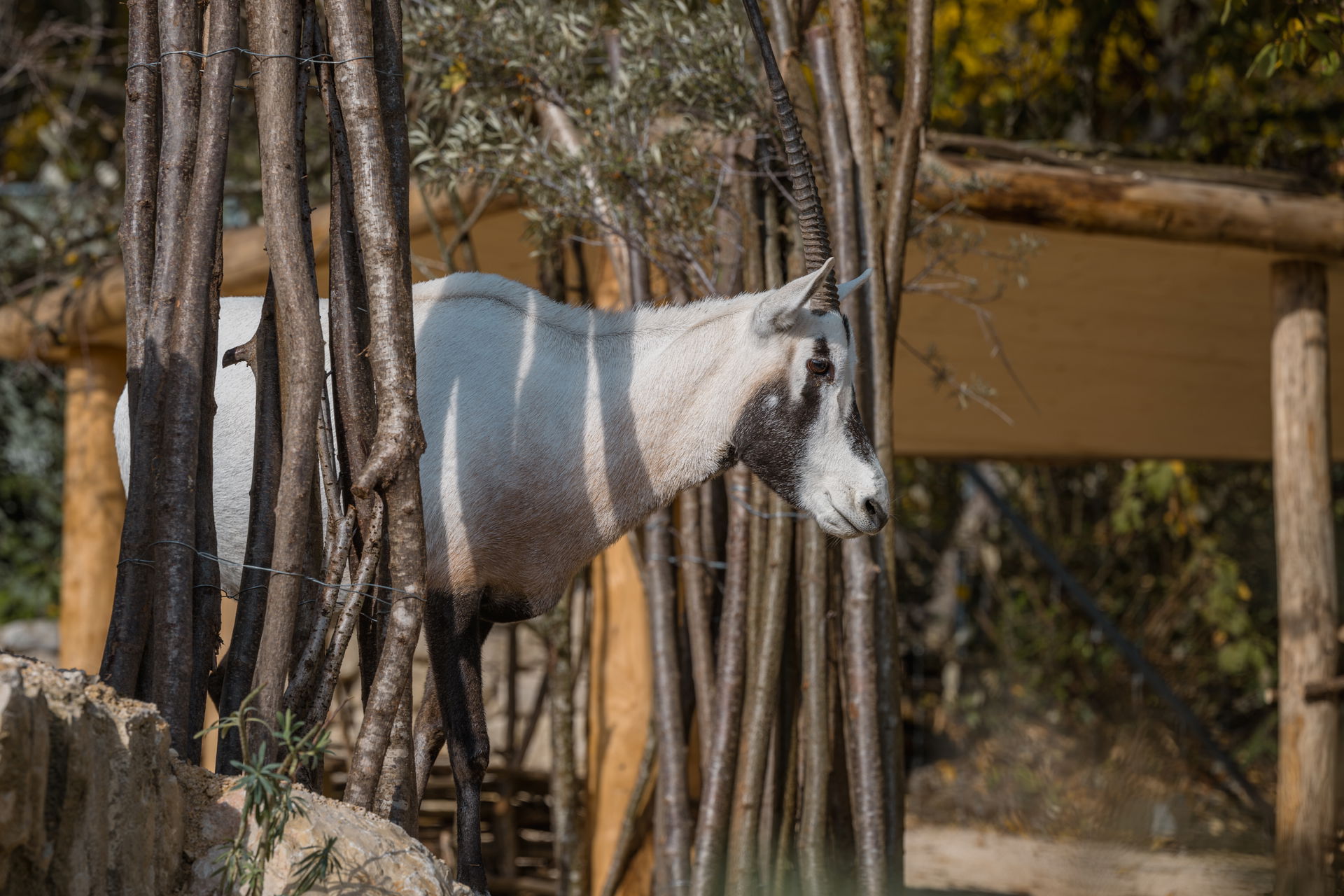
This desert animal has a natural “air-conditioning system” in its head. Photo: Zoo Zurich, Fabio Süess
Extinction
Intensive hunting nearly drove the Arabian oryx from the face of the Earth. Once widespread across the deserts of the Arabian Peninsula, its numbers began to decline steadily during the 1960s. In 1972, the last wild individual was poached in Oman, and the species was declared extinct in the wild.
The Rescue
A so-called “World Herd” was established from a small number of captured wild animals together with individuals from zoos and private collections. Beginning in 1979, the first animals from this reserve population arrived in Europe, including at Zoo Zurich. Six Arabian oryx formed the foundation of a highly successful breeding program there. Offspring born in zoos made it possible to return the species to its native range. The first animals were reintroduced in Oman in 1982. Additional reintroduction projects followed in Jordan, Saudi Arabia, Israel, and the United Arab Emirates. Young oryx born at Zoo Zurich also contributed to these efforts and ultimately returned to the desert landscapes of their ancestors.
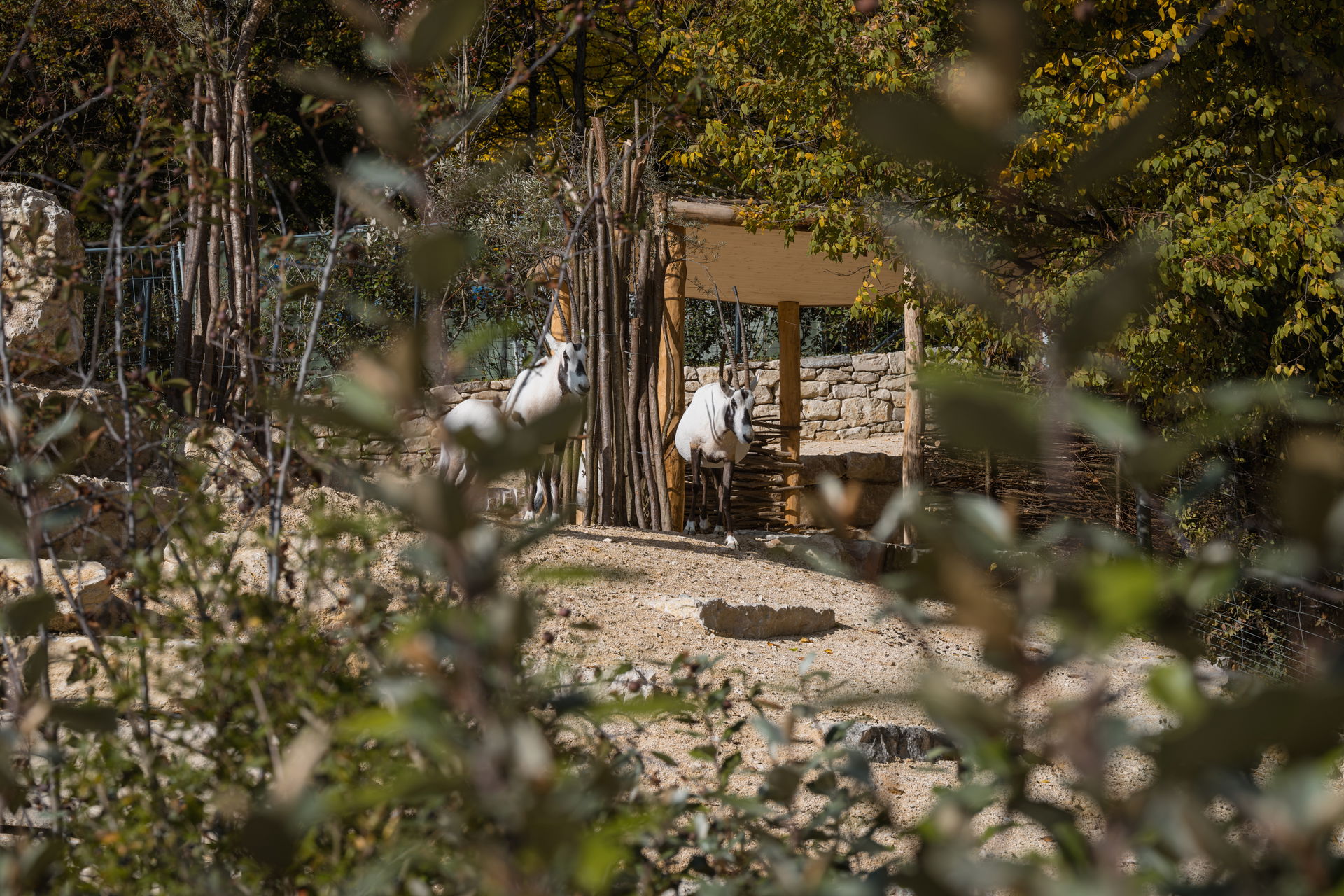
Once extinct in the wild, the species now lives again in its native range thanks to international conservation efforts involving zoos. Photo: Zoo Zurich, Fabio Süess
Successful Conservation Through Zoos
The Arabian oryx is a striking example of successful internationally coordinated conservation involving zoos. Thanks to conservation breeding and reintroduction programs, a species that had already disappeared from the wild was saved from extinction and returned to its natural habitat.
However, the Arabian oryx is not fully out of danger. The International Union for Conservation of Nature (IUCN) still classifies the species as Vulnerable. Zoo Zurich remains actively involved in its conservation and coordinates the European Endangered Species Programme (EEP) for the Arabian oryx. Together with zoos across Europe, it helps maintain a genetically healthy reserve population that can continue to contribute to the species’ long-term survival.
The new habitat at Zoo Zurich therefore showcases not only a fascinating desert animal, but also the important role modern zoos play in conserving threatened species. It also represents a guiding principle that is essential for successful conservation: Connecting what belongs together. Zoos within the European Association of Zoos and Aquaria (EAZA), conservation organizations, scientists, and policymakers must work together. Through the One Plan Approach, these partners combine their efforts to secure the long-term survival of threatened species and protect biodiversity worldwide.
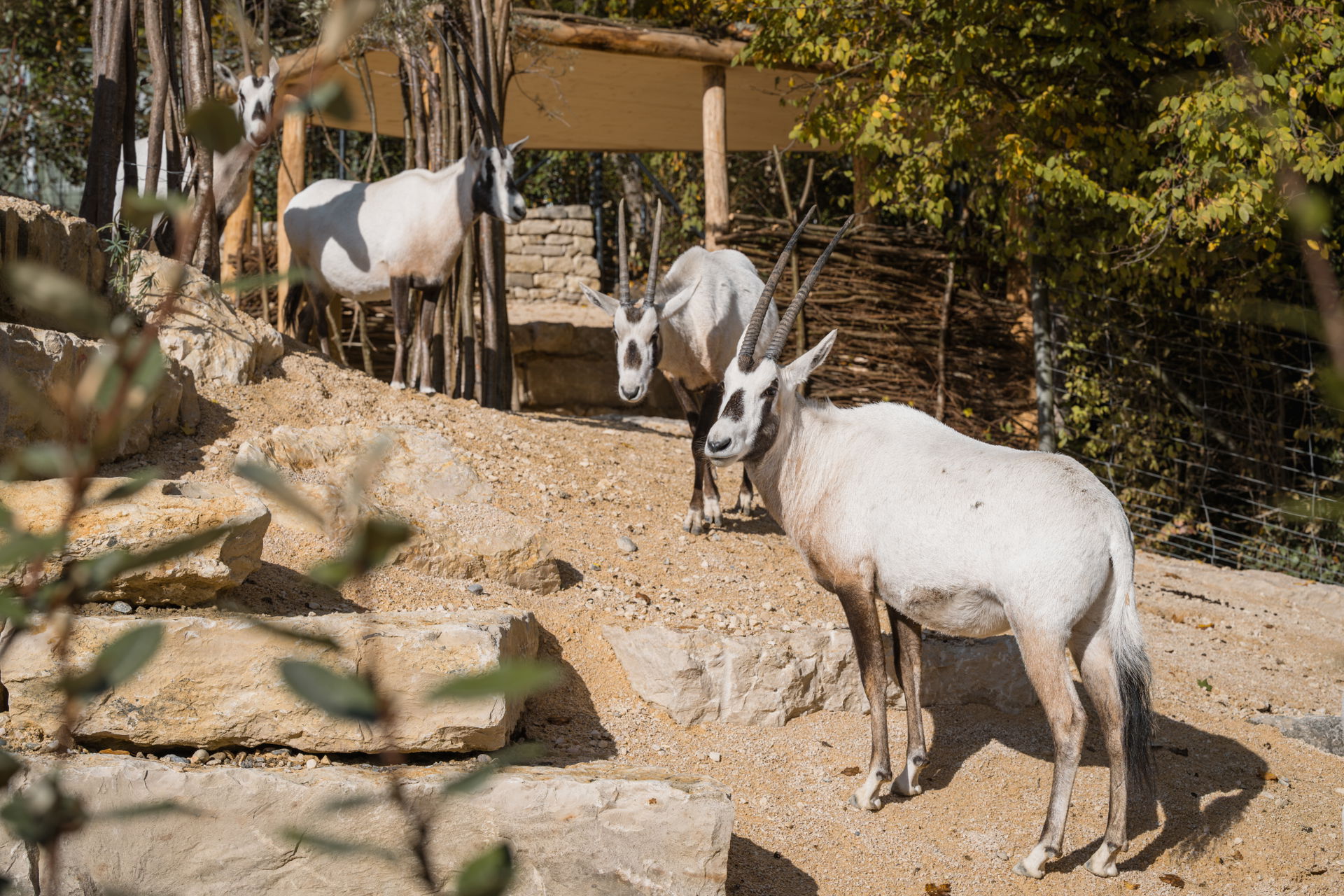
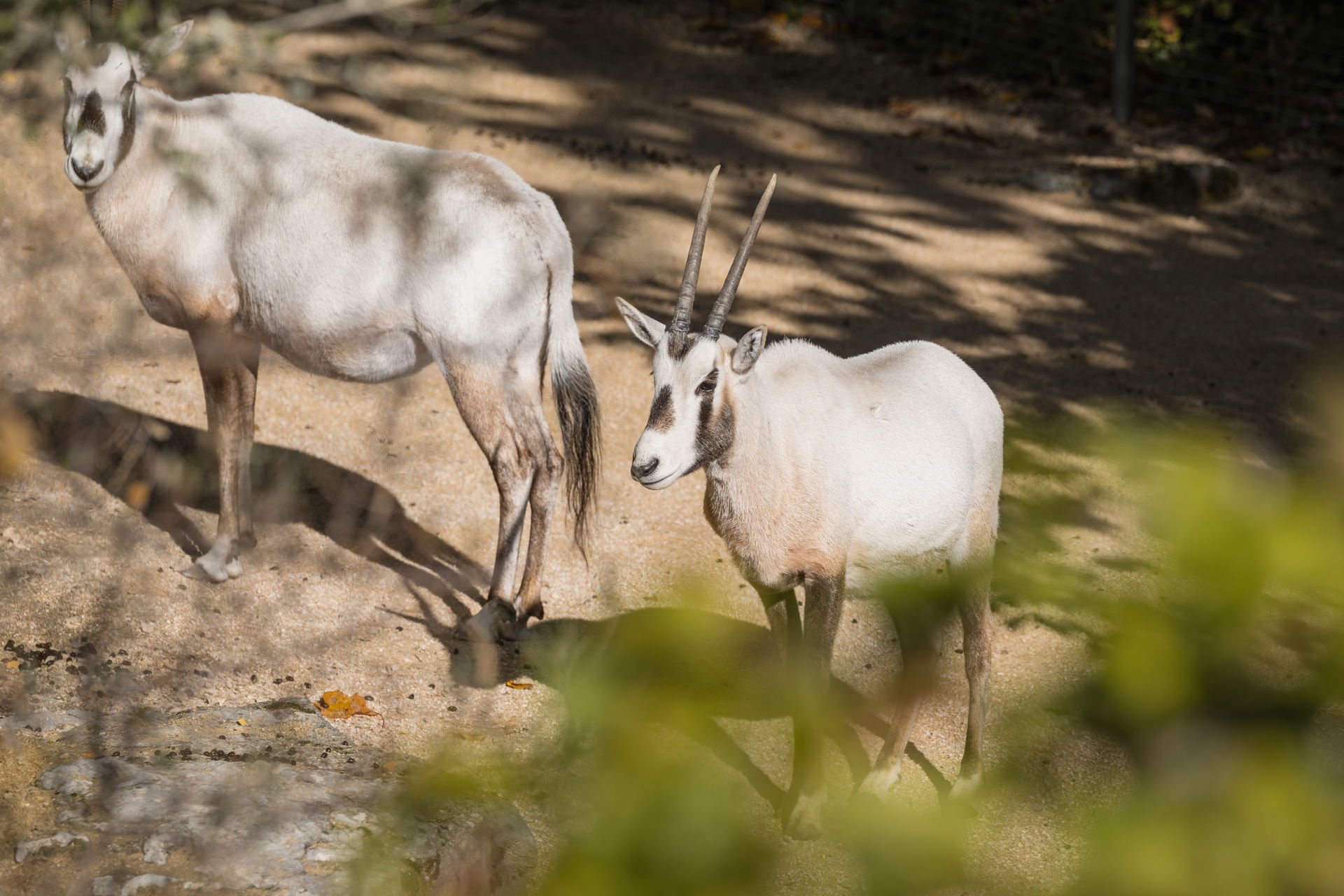
The Arabian oryx at Zoo Zurich in their newly redesigned habitat. Photo: Zoo Zurich, Fabio Süess
Werden Sie Oryx-Gotte oder -Götti
Mit einer Patenschaft für unsere Tiere – zum Beispiel für die Arabische Oryx – helfen Sie uns bei der Haltung bedrohter Arten und leisten so einen wichtigen Beitrag zum Artenschutz. Als Dankeschön erhalten Sie eine Urkunde, eine Einladung zum jährlichen Pat*innentag und je nach Patenschaft einen oder mehrere Zooeintritte.

- Education
- Research
- Species Conservation
 HabitatsWe protect nature – locally and globally