27.10.2026 — Lebensraumschutz
A Successful Collaboration: Hope for a Missing Toad
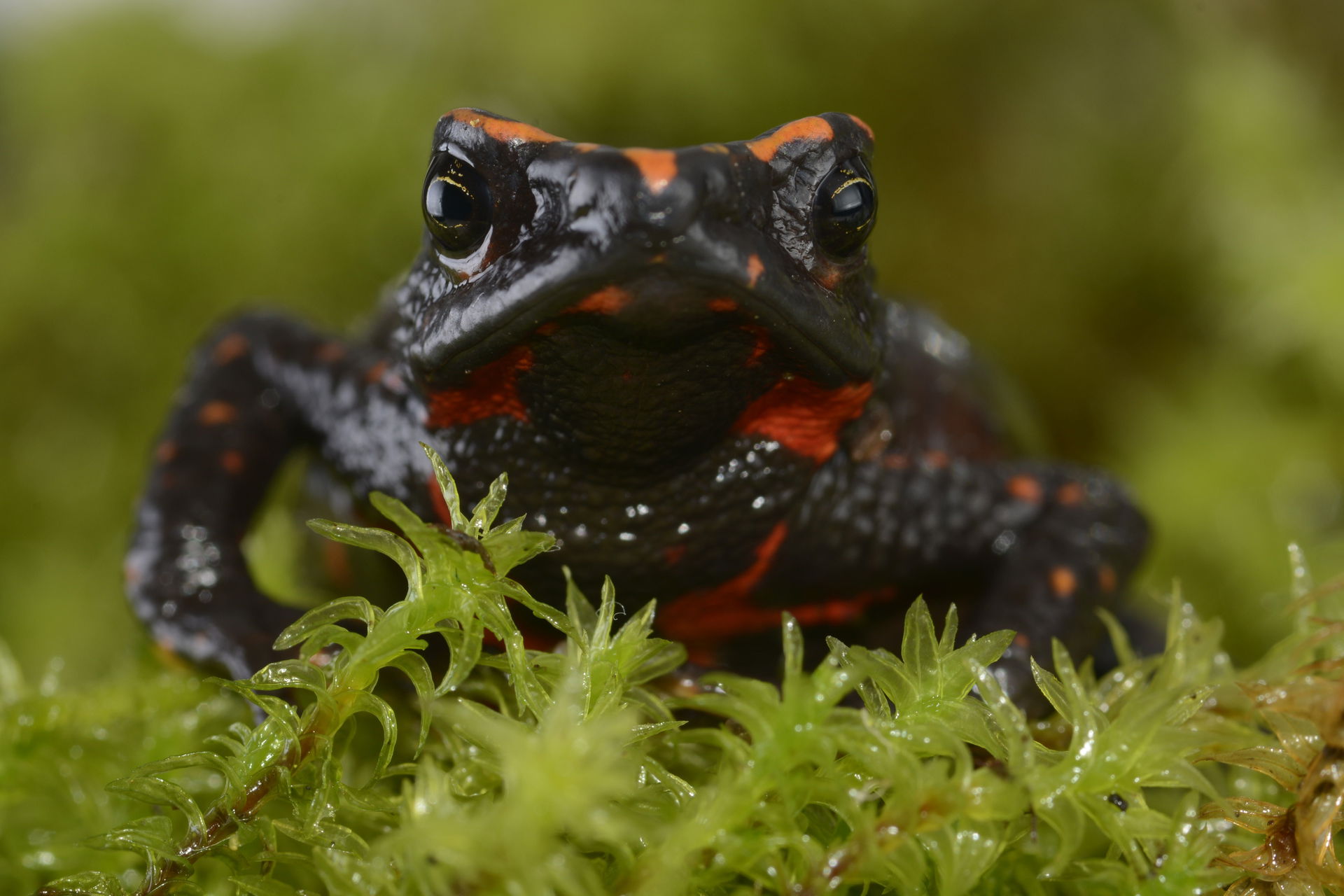
And suddenly, it was back: Atelopus lozanoi is a species of stub-footed toad that had been presumed extinct for nearly 20 years. That is, until 2016 — the year a Colombian farmer accidentally rediscovered the toad on his land, placed it under protection, and thus became its most important champion. This exemplary species conservation effort is one that we support on a long-term basis as part of our conservation project Amphibian Survival, in collaboration with our conservation partner, WCS Colombia.
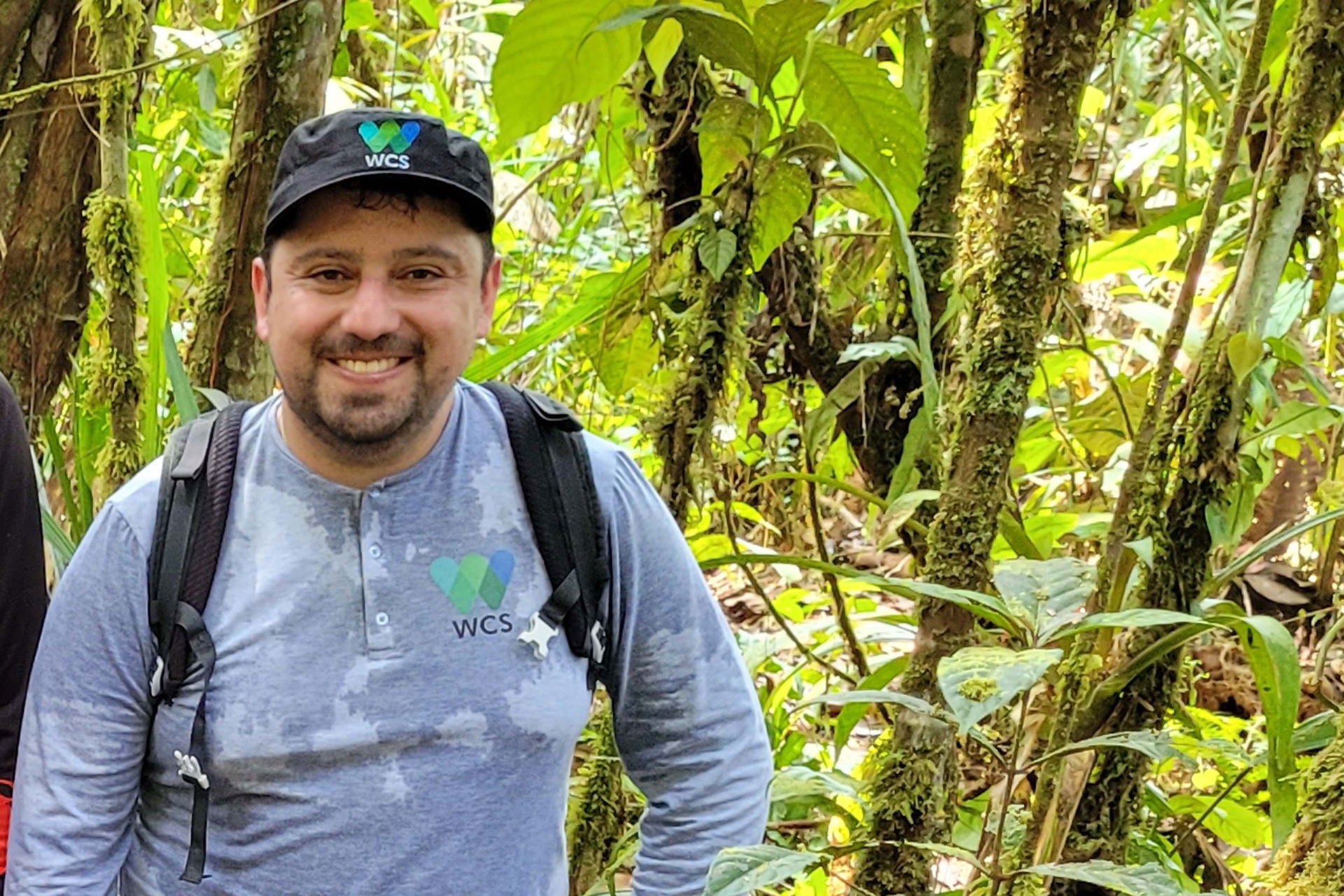
When our Conservation Fellow Gustavo González is out and about with Carlos Ríos on his land on the edge of Chingaza National Park, it’s always a particularly wonderful moment in the amphibian specialist’s professional life. Zoo Zurich funds the biologist’s work with the Wildlife Conservation Society Colombia (WCS) as part of its conservation project in South America.
Atelopus lozanoi in a protected area in Colombia. Photo: WCS Colombia, Gustavo González.
«For a herpetologist, there is probably nothing more wonderful than when, after years of absence, an amphibian species that was thought to be extinct suddenly reappears.»
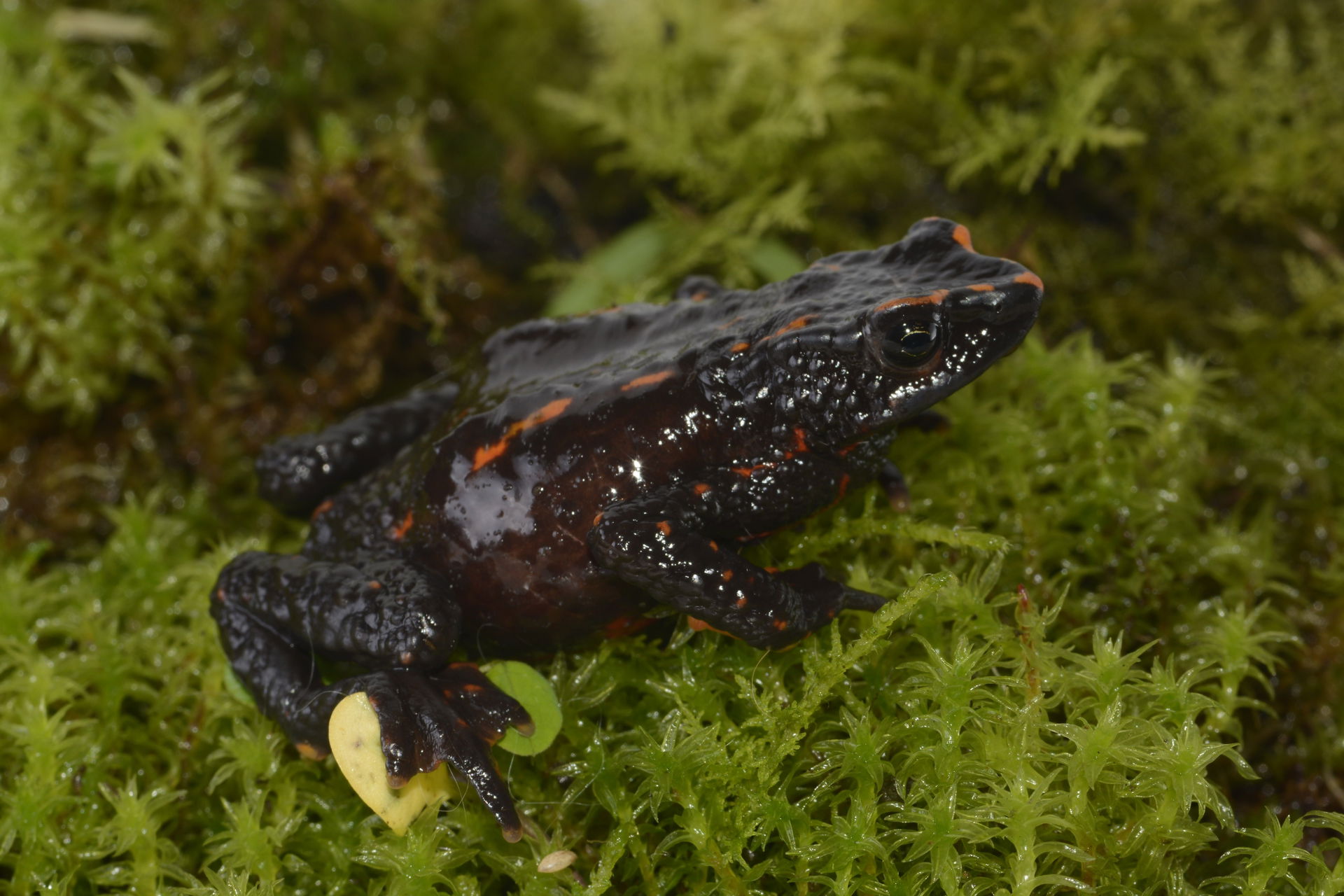
A chance discovery led to the Atelopus lozanoi to reappear here in 2016, virtually out of nowhere. Sightings are still rare. The species is far from being saved. But for the first time in many years, there is hope again for the toad.
“We actually see maybe one or two animals a year. And only here. In other places where the species used to occur, there has been no evidence of it to date. So this area is likely the only remaining habitat,” explains González. For the expert, this offers a glimmer of hope that saving the species is at least possible.
From a flood to zero
Before 1989, the black toad with its striking red markings was still found in vast numbers in its native range in central Colombia. Carlos Ríos also remembers those days: “The toad was as common as weeds. No matter where you went, you’d always find them everywhere.”
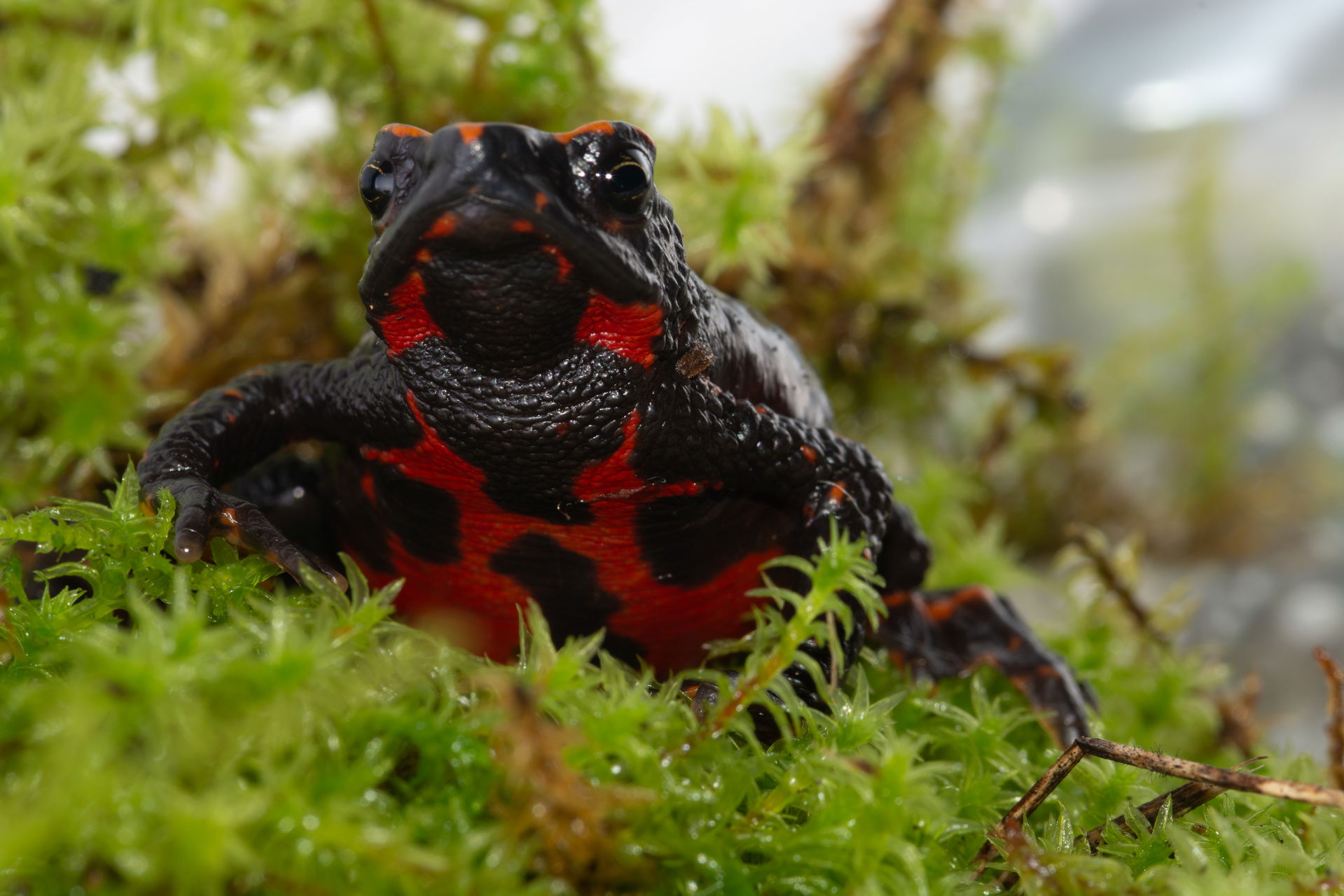
Photos like this one are still rare. Even today, finding this toad requires a great deal of luck. Photo: WCS Colombia, Gustavo González.
In the 1990s, the population began to decline rapidly. Just a few years later, no animals could be found, and by 2000 at the latest, the toad was considered presumed extinct.
Almost every species is endangered
Atelopus lozanoi is one of approximately 130 known species of stump-footed toads worldwide. This genus is among the most critically endangered vertebrate genera of all. Almost all species of stub-footed toads are considered critically endangered, already extinct, or missing.
One reason for this is that many short-toed toads are endemic — meaning they occur only in a single, usually small area — and even minor disturbances can have massive impacts on their survival. Colombia is home to 41 species of short-toed toads. The country is generally a hotspot for amphibian diversity. The presence of over 800 amphibian species has been documented, and many of them are threatened.
Pressure from all sides
One of the greatest threats to all amphibians worldwide is the chytrid fungus (Batrachochytrium dendrobatidis). As a result of globalization, this fungus began to spread worldwide around the 1980s, infecting amphibians that had never previously come into contact with it. Without any form of immune defense against this new enemy, mass mortality soon set in.
The aggressive fungus infects the animals' skin, through which they breathe. It gradually spreads across the entire skin surface and impairs vital functions such as water and electrolyte balance and respiration. For most animals, this is fatal.
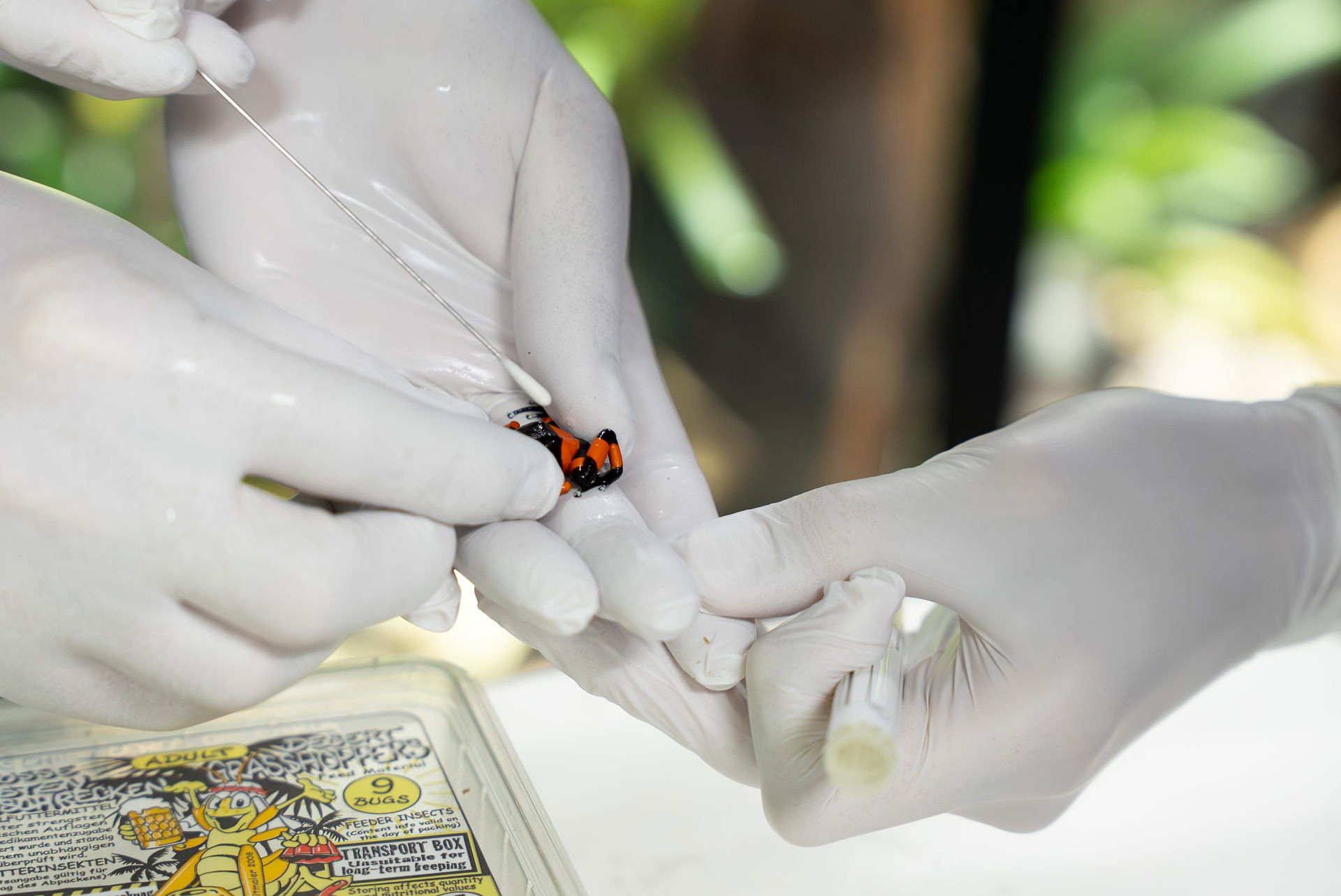
The chytrid fungus can also pose a threat at the zoo. All amphibians are therefore tested during quarantine. Pictured here is a Lehmann's tree frog. Photo: Zurich Zoo, Tim Benz.
The fungus also proved fatal to Atelopus lozanoi . But it wasn’t the only factor. The combination of the fungus, habitat loss, and the increase in invasive species such as the rainbow trout — which feeds on large numbers of the toad’s tadpoles — ultimately led to the collapse of the population.
A Glimmer of Hope
The rediscovery of Atelopus lozanoi after nearly 20 years — and the cautious glimmer of hope that the species might still be saved — is owed primarily to one man. Carlos Ríos had inherited the farmland where the toad is found — and which is now protected — from his father. As a great nature lover, he decided to stop farming the land and use it for ecotourism.
The farmland that owner Carlos Ríos has converted into a protected area is marked in orange. Photo: WCS Colombia, Gustavo González.
Carlos Ríos has certainly always been passionate about nature and biodiversity. Photo: WCS Colombia, Gustavo González.
A minor sensation
He and his family received support in setting up the project from specialists at the adjacent national park. Photos were also taken during one of the many field trips undertaken to document the existing biodiversity. And at some point, a black-and-red-patterned toad was spotted in one of the photos: Atelopus lozanoi — a minor sensation.
“It’s a bit ironic: I used to see this toad all the time, and now I celebrate every sighting,” Ríos says happily. Despite all the threats, a small population of the stub-toed toad — apparently well hidden — has managed to survive all these years. For Ríos, one thing is clear: “I’d do just about anything to protect them.” It must never disappear again.
A view of the protected area and the adjacent national park, where the toad is still found. Video: WCS Colombia.
To prevent this, Ríos also has the support of the program led by WCS Colombia and funded by the Zurich Zoo, “Strategy for the Conservation of Amphibians in Colombia”. “The goal is to strengthen monitoring of the toad and other species, carry out habitat restoration, curb invasive species such as the rainbow trout, and advance research on the chytrid fungus,” explains González.
Where necessary, vegetation is restored through planting. Photo: Gustavo González, WCS Colombia.
Posters provide information about the species conservation project. Photo: Gustavo González, WCS Colombia.
Theater performances are intended to raise awareness and educate. Photo: Gustavo González, WCS Colombia.
The effort involved is considerable. A nature conservation agreement has even been signed that sets out clear protective measures. These include, for example, fencing off forest and stream areas so that grazing cattle can no longer access them. Native vegetation is also being restored — where necessary — through planting initiatives. Sustainable and nature-based tourism is being promoted. It is an important source of revenue, because nature conservation comes at a cost. There are even plays that raise awareness about the value of the toad and the need to protect its habitat.
Local Communities as the Key
Only the combination of all these measures can guarantee long-term success and, consequently, the conservation of the species. Herpetologists therefore place particular emphasis on environmental education and the involvement of local communities in such projects.
«When people realize that conservation can generate additional revenue, they are willing to adjust their activities that harm the environment and get involved in conservation efforts.»
Local volunteers working on the project. Photo: Gustavo González, WCS Colombia.
Reintroduction efforts are intended to support the species. Photo: Gustavo González, WCS Colombia.
Back to Nature
WCS Colombia, together with its partners, has already successfully implemented this approach at Lehmann’s poison frog (Oophaga lehmanni), a frog species threatened with extinction that has since become the flagship species for an entire region. Large segments of the local population have recognized the value of the frog, are actively working to protect it, and have now become its most important ambassadors.
Zoo Zurich is also involved in this success story as part of its Amphibian Survival. For example, it funds the breeding facility for reintroductions at Cali Zoo and all other necessary steps. To date, 271 frogs have already been released into the wild. More animals are currently waiting in the wings.
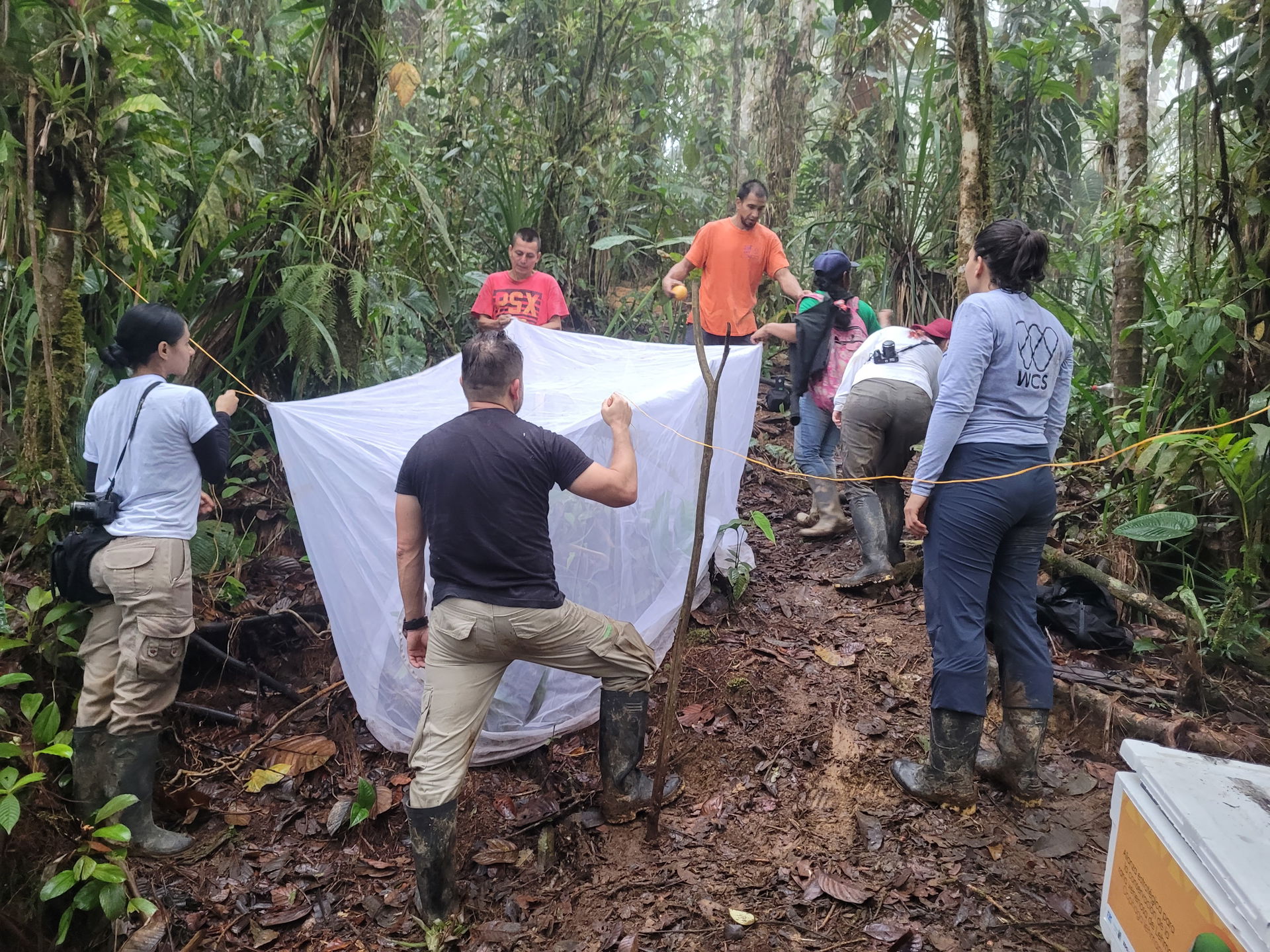
The team has already been able to release more than 270 animals back into the wild. Photo: Gustavo González, WCS Colombia.
On Site and at the Zoo
As with all conservation projects at the zoo, it is the combination of on-site (in-situ) measures with those carried out at the zoo (ex-situ) that drives and enables such positive developments.
On-site efforts focus on habitat protection, risk mitigation, reintroductions where appropriate, environmental education, and the involvement of local communities. Outside the natural habitat — and thus at the zoo — the focus is on maintaining reserve populations, conducting research, educating and raising awareness among zoo visitors about amphibian decline, and thereby funding nature conservation.
«This story is a wonderful example of what Zoo Zurich stands for: We bring together what belongs together!»
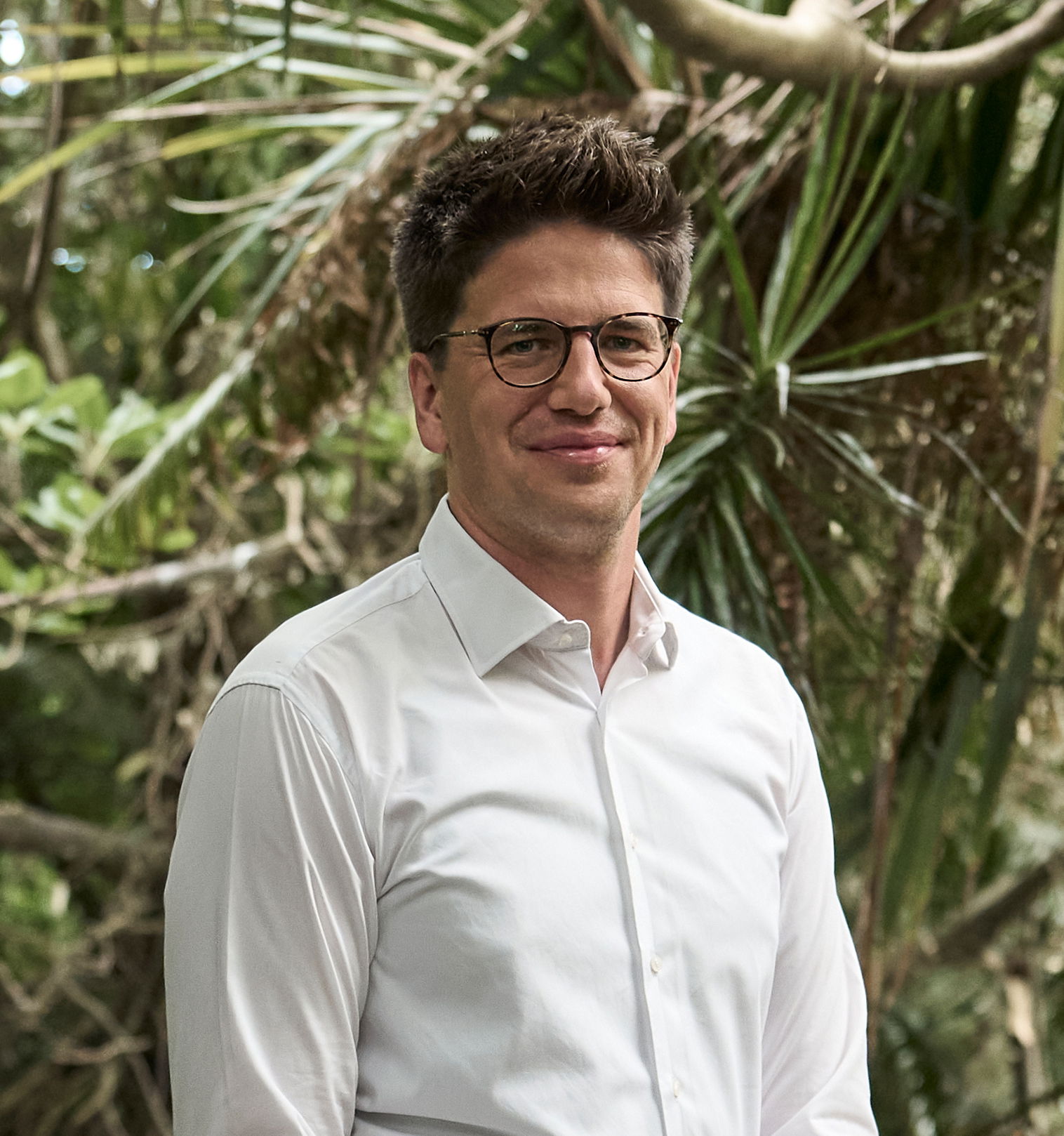
Rio Pescado stubfoot toad (Atelopus balios). Photo: Zoo Zurich, Enzo Franchini.
Rio Pescado stubfoot toad (Atelopus balios). Photo: Zoo Zurich, Enzo Franchini.
Lehmann's Poison frog (Oophaga lehmanni). Photo: Zoo Zurich, Tim Benz.
Lehmann's Poison frog (Oophaga lehmanni). Photo: Wildlife Conservation Society Colombia.
The Zurich Zoo is therefore home to Lehmann's poison frog (Oophaga lehmanni) as well as the critically endangered Rio Pescado stubfoot toads (Atelopus balios), close relatives of Atelopus lozanoi. Both species serve as ambassadors for their endangered counterparts, are part of a reserve population, and provide a foundation for gaining new insights into the species.
Bringing Together What Belongs Together
While in Switzerland, over a million visitors each year learn more about Lehmann’s tree-climbing toads, Lehmann’s tree frog, and other endangered frog and toad species, donate a voluntary “nature conservation franc,” and in some cases get even more involved, in Colombia, frogs can be reintroduced and the population of a toad once thought to be extinct can be “revived.” So what happens in Zurich has an impact all the way to Colombia. We bring together what belongs together, thereby creating genuine, meaningful species conservation.
Take Action
Would you like to be part of this success story in preserving biodiversity in Colombia? If so, we would appreciate your donation!