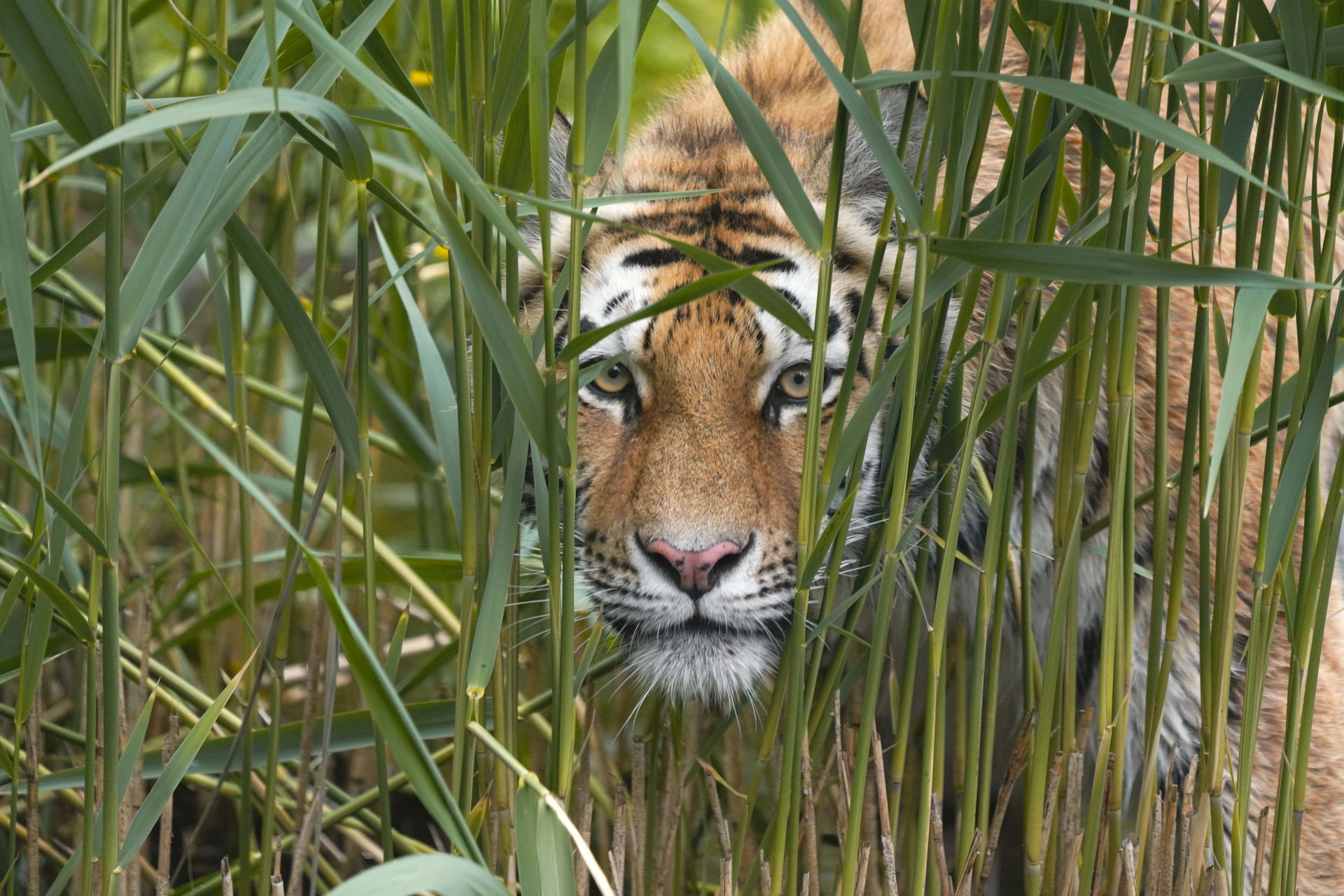
The tiger is divided into six distinct modern subspecies, of which the Amur tiger is the largest and also the one with the northernmost Distribution. This largest of the big cats is extremely adaptable and can withstand temperatures as low as minus 40 degrees Celsius.
The tiger devotes a large part of its time to what is known as ‘stalking’: it waits patiently for prey and the opportunity to catch it. Once the tiger has spotted a potential prey animal, it approaches cautiously. Finally, it attempts to overpower it with a well-aimed leap from behind. However, its hunting success rate is rather low: on average, only one in ten attacks is successful.
To simulate this natural behaviour at Zoo Zurich, we don’t simply feed the Amur tigers meat every day. Instead, we provide the animals with a Feeding regime tailored to their hunting strategy. This involves, for example, the tigers moving back and forth between different habitat areas, providing them with species-appropriate incentives, and having their ‘prey’ whizz past them via a feeding cableway. In this way, we can replicate both success and failure in the animals’ hunting behaviour and replicate their natural living conditions as closely as possible.
In the 1940s, the Amur tiger was almost extinct in the wild. Only around 50 animals remained in the region north of Vladivostok. Thanks to strict conservation measures introduced by the Soviet government, the population had risen to around 200 animals by 1982. Today, there are around 750 Amur tigers living in Russia and in neighbouring areas of China and North Korea.
Nevertheless, the Amur tiger remains critically endangered. Its bones are still in high demand in traditional Chinese medicine, even though the trade in tiger bones has been banned in China since 1993. The illegal trade continues to flourish, with Thailand and Vietnam serving as key transit points.
Taxonomy
Cats (Felidae), true big cats (Panthera, 5 species)
Habitat
Deciduous and coniferous forests in lowland and mountainous areas
Behaviour and ecology
nocturnal, territorial
Social structure
Solitary animals, females with juvenile animals