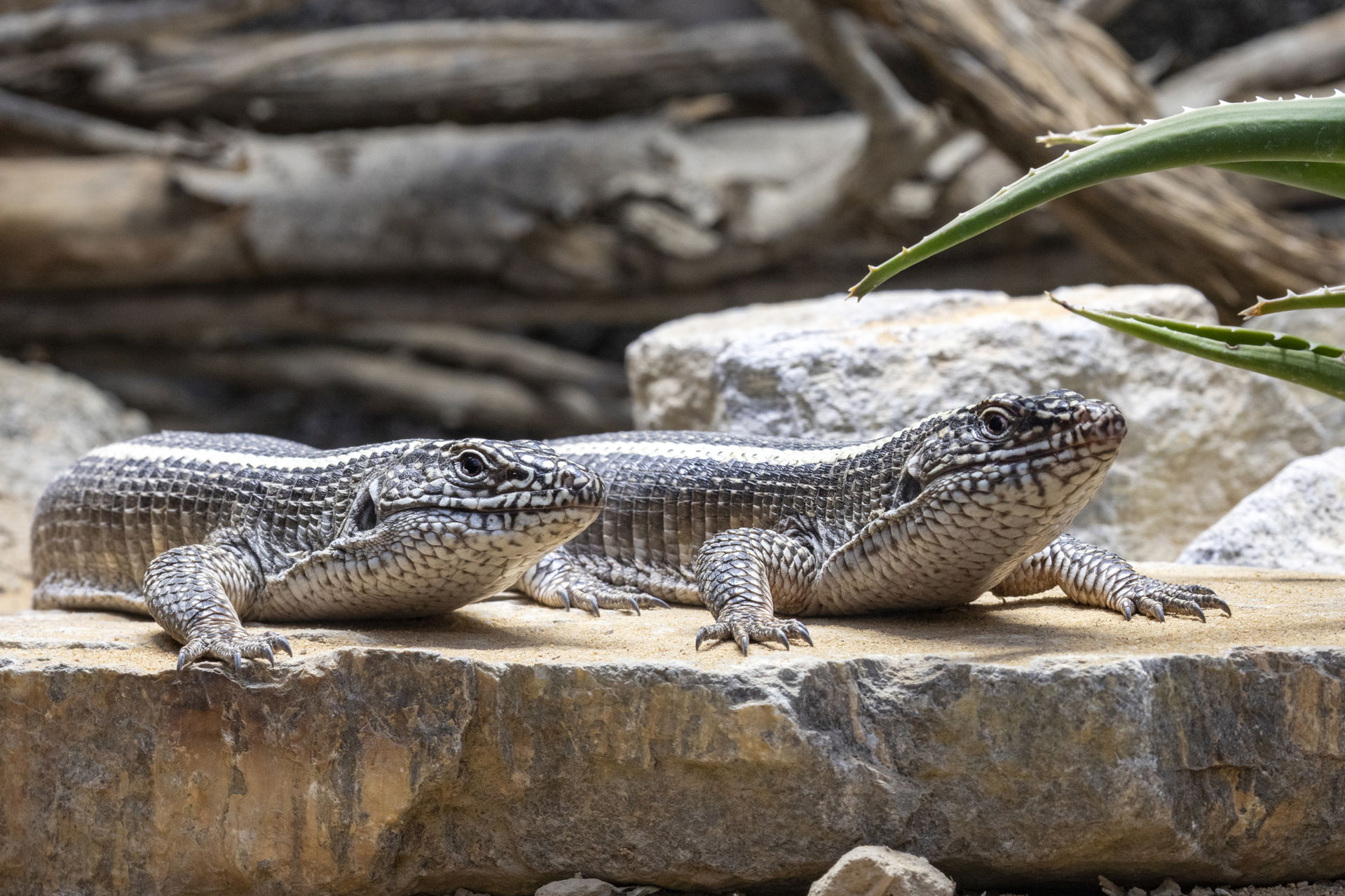
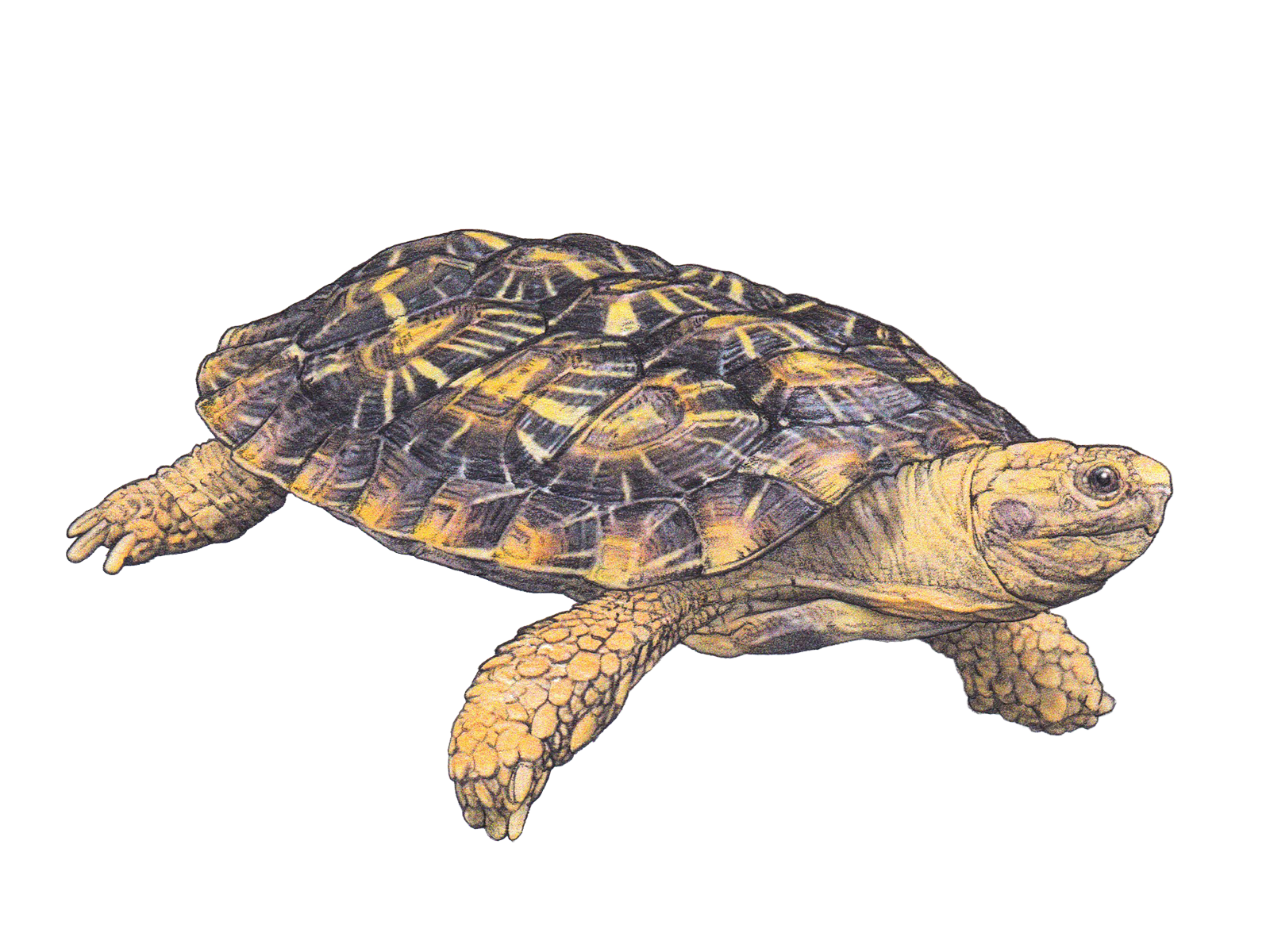
The body of the Common giant plated lizard is slightly flattened. Two pale stripes run along its dark brown back. The chin and throat are whitish and, in males, take on a dull plum colour during the mating season.
When danger threatens, the Common giant plated lizard dashes under large stones or into crevices in the rock. There, it inflates its lungs and wraps its tail around itself. In this way, it fills the hiding place with its entire body and is effectively wedged inside. It even has a soft fold of skin between its back and side, which expands to make the surface area of its body appear larger.
Taxonomy
Shield lizards (Gerrhosauridae), genus Matobosaurus (2 species)
Habitat
Granite outcrops in the savannahs of southern Africa (known as ‘kopjes’)
Behaviour and ecology
diurnal
Social structure
loose colonies and family groups