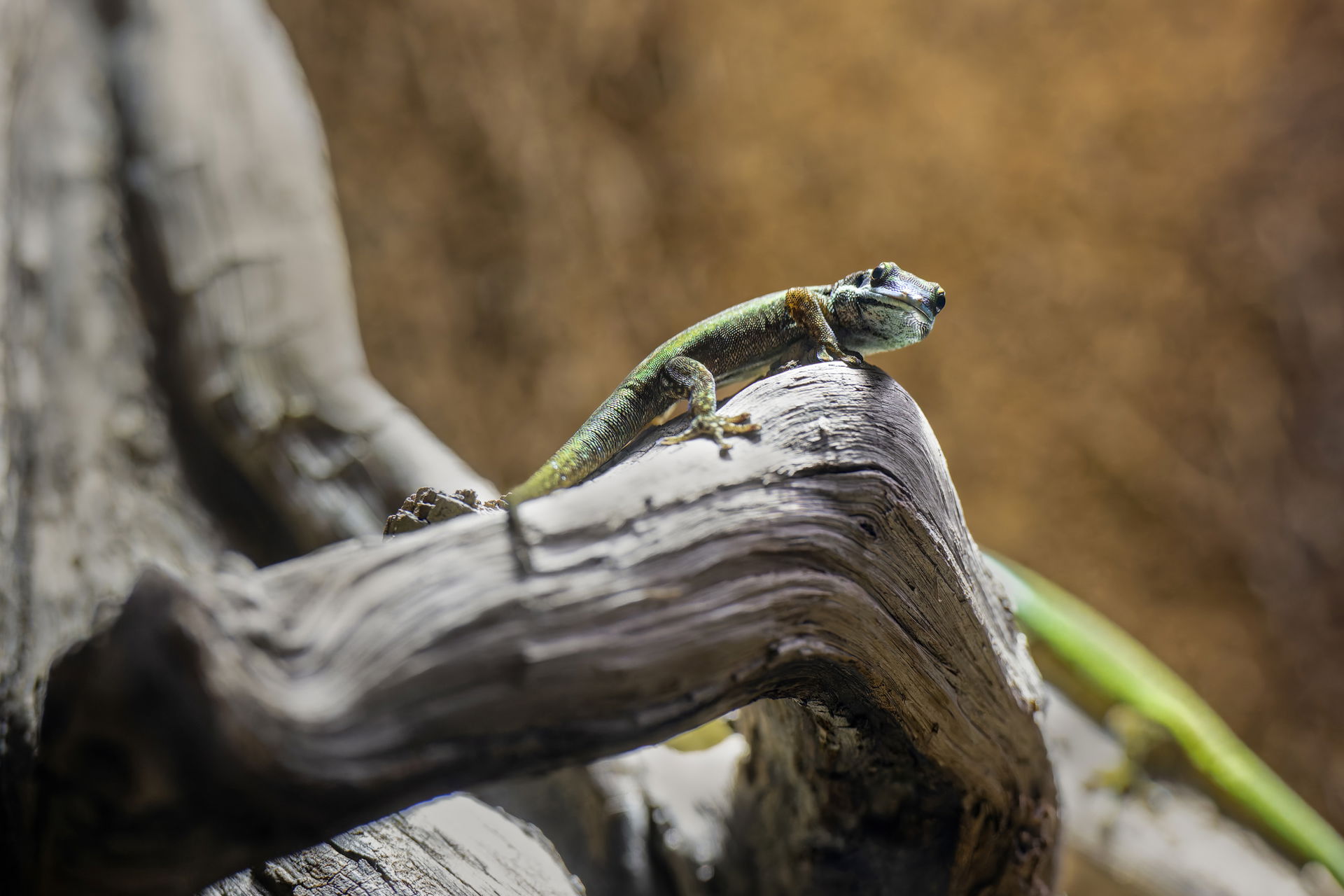
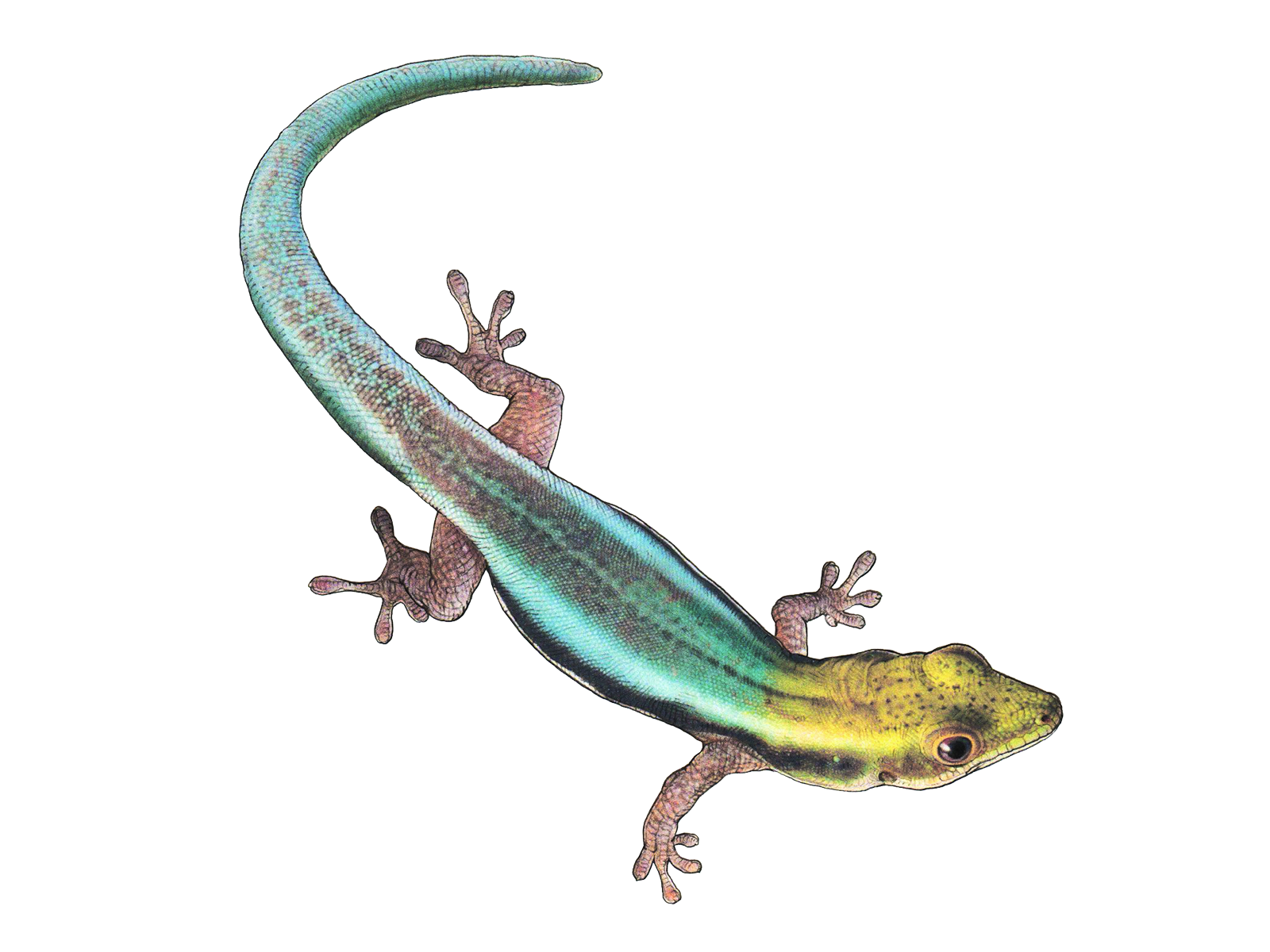
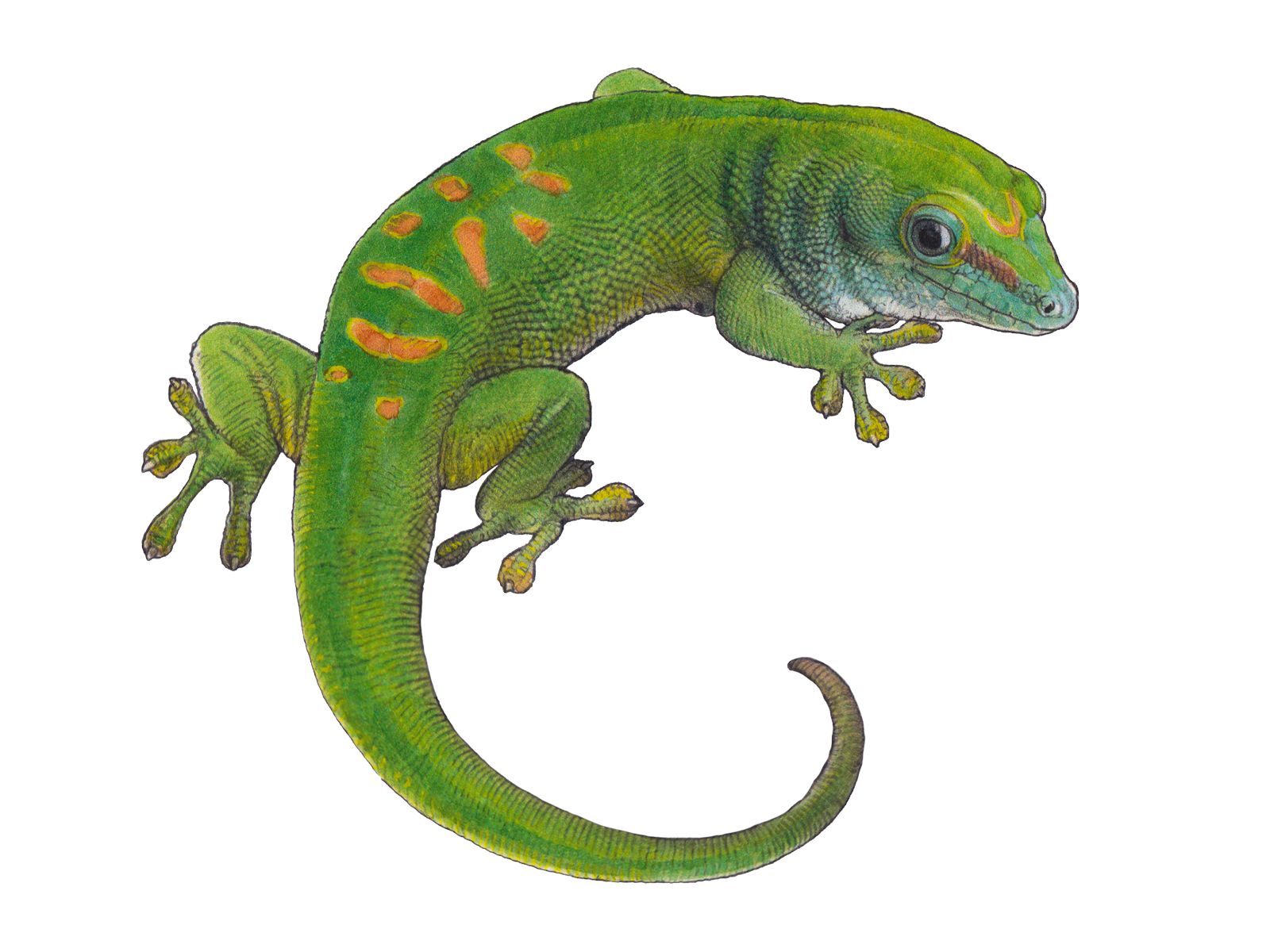
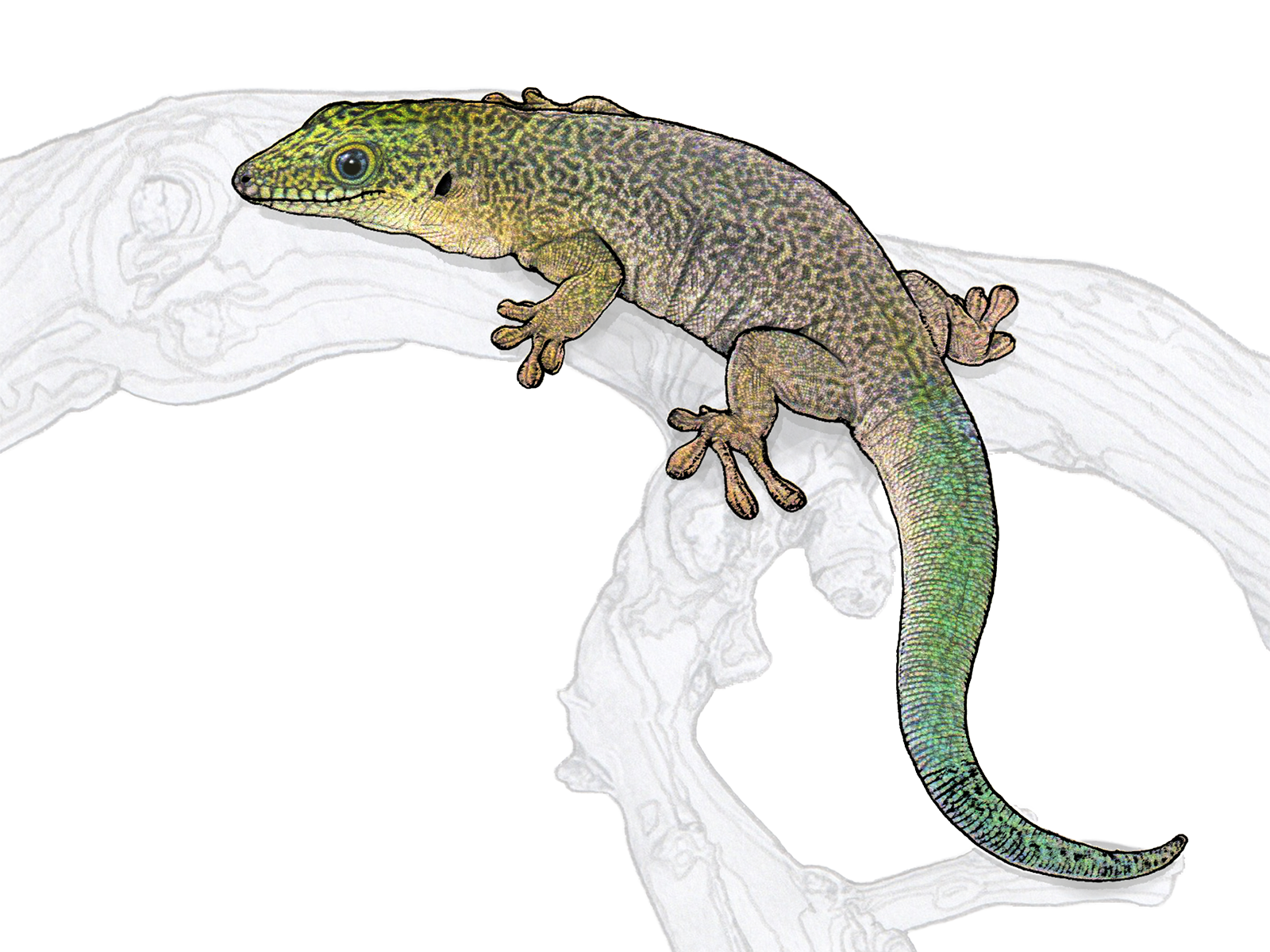
Measuring around 12 centimetres, the Manapany day gecko is one of the smaller members of its genus. It can be recognised by the three brown-red stripes on its head, which extend down to its neck and then merge into the spotted pattern on its back.
Their basic colour is a rich green. In males, the tail and the nape of the neck may be blue. Depending on the amount of sunlight and the substrate they inhabit, the animals may have a darker colouration.
The Manapany day gecko is found only in the small village of Manapany in the south-west of the island of La Réunion. There, it inhabits plants in gardens, on fences and on walls. Due to its limited distribution, it is assumed to have a stenecious behaviour and ecology. This means that the Manapany day gecko cannot tolerate major fluctuations in environmental conditions.
Furthermore, the areas surrounding Manapany are heavily influenced by agriculture, which makes it even more difficult for the species to spread. Due to its small habitat and the growing number of invasive species on the island – which are potential predators – the species is critically endangered.
Like most geckos, Manapany day geckos feed on insects and other small invertebrates. However, they also feed on fruit, nectar and pollen. It is believed that they are an important pollinator for many local plant species.
Taxonomy
Gekkonidae, Phelsuma (over 50 species)
Habitat
in the village of Manapany on the island of La Réunion, on plants and walls
Behaviour and ecology
diurnal
Diet
insects and other small invertebrates, fruit, nectar and pollen