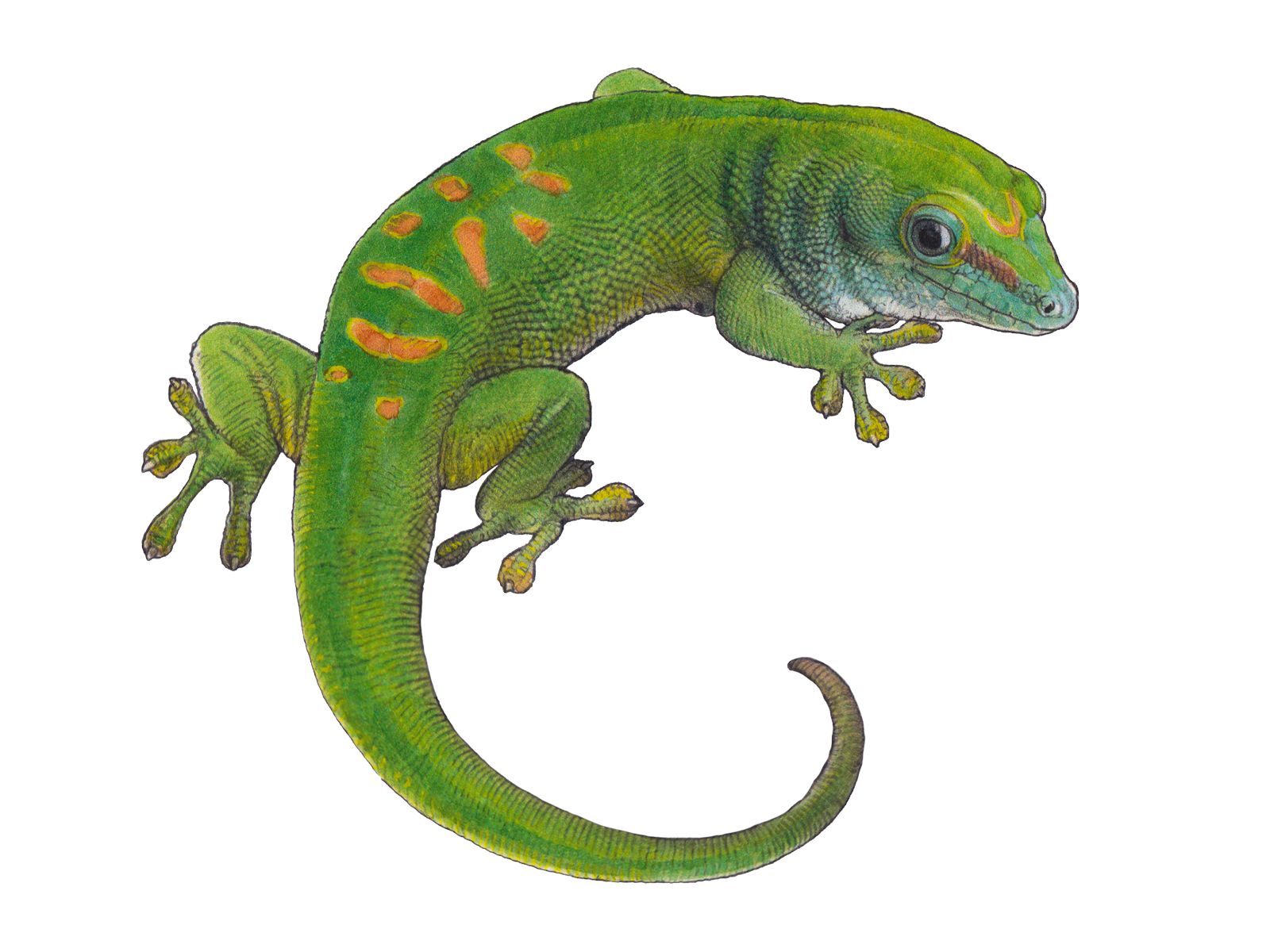
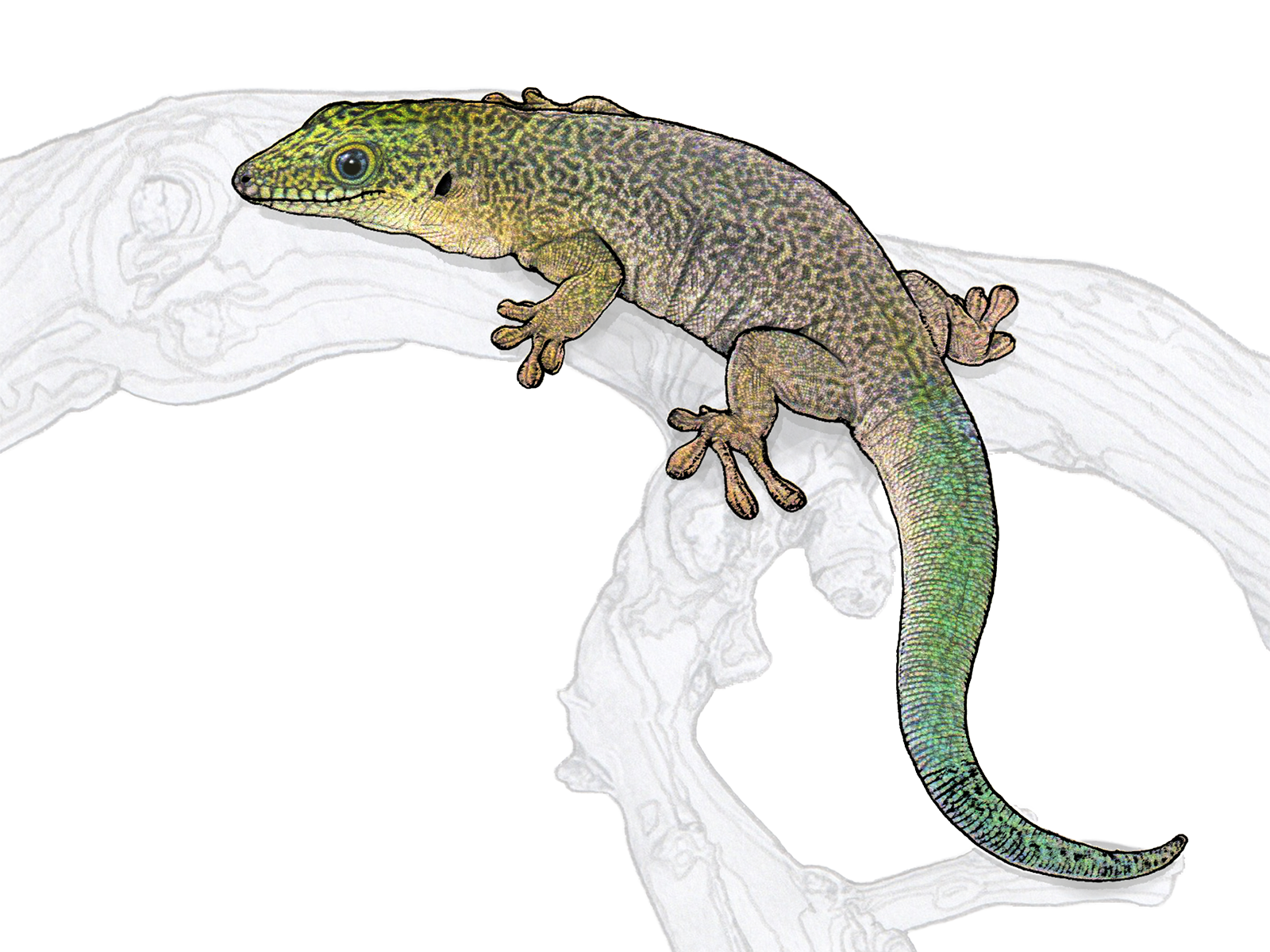
The yellow-headed day gecko was first scientifically described in 1991. This initial description was carried out by the Frankfurt-based herpetologist Robert Seipp. He gave the species the scientific name Phelsuma klemmeri, in honour of Konrad Klemmer, then Curator of Herpetology at the Senckenberg Museum.
Within the Phelsumen genus, the yellow-headed day gecko is a rather small but colourful species. There are few external differences between males and females. Males grow slightly larger than females. Furthermore, the cheeks of females are often enlarged because they store calcium there.
Geckos have special ‘adhesive pads’ on their toes. If you look closely, you can see their coarsest structure – the lamellae – as ridges or lines with the naked eye.
However, these alone are not enough to enable them to adhere. For what only becomes visible under a microscope is that each individual lamella has thousands of minute bristles or hairs. They are only just as long as a human hair is thick.
At their tips, these tiny hairs branch out a hundredfold into unimaginably small plates. It is these, ultimately, which – in a sophisticated interplay with the blood circulation – enable the gecko to cling to smooth surfaces.
Taxonomy
Gekkonidae, Phelsuma (over 50 species)
Behaviour and ecology
diurnal