12.11.2026 — Animals
New male Giraffe in the Lewa Savanna
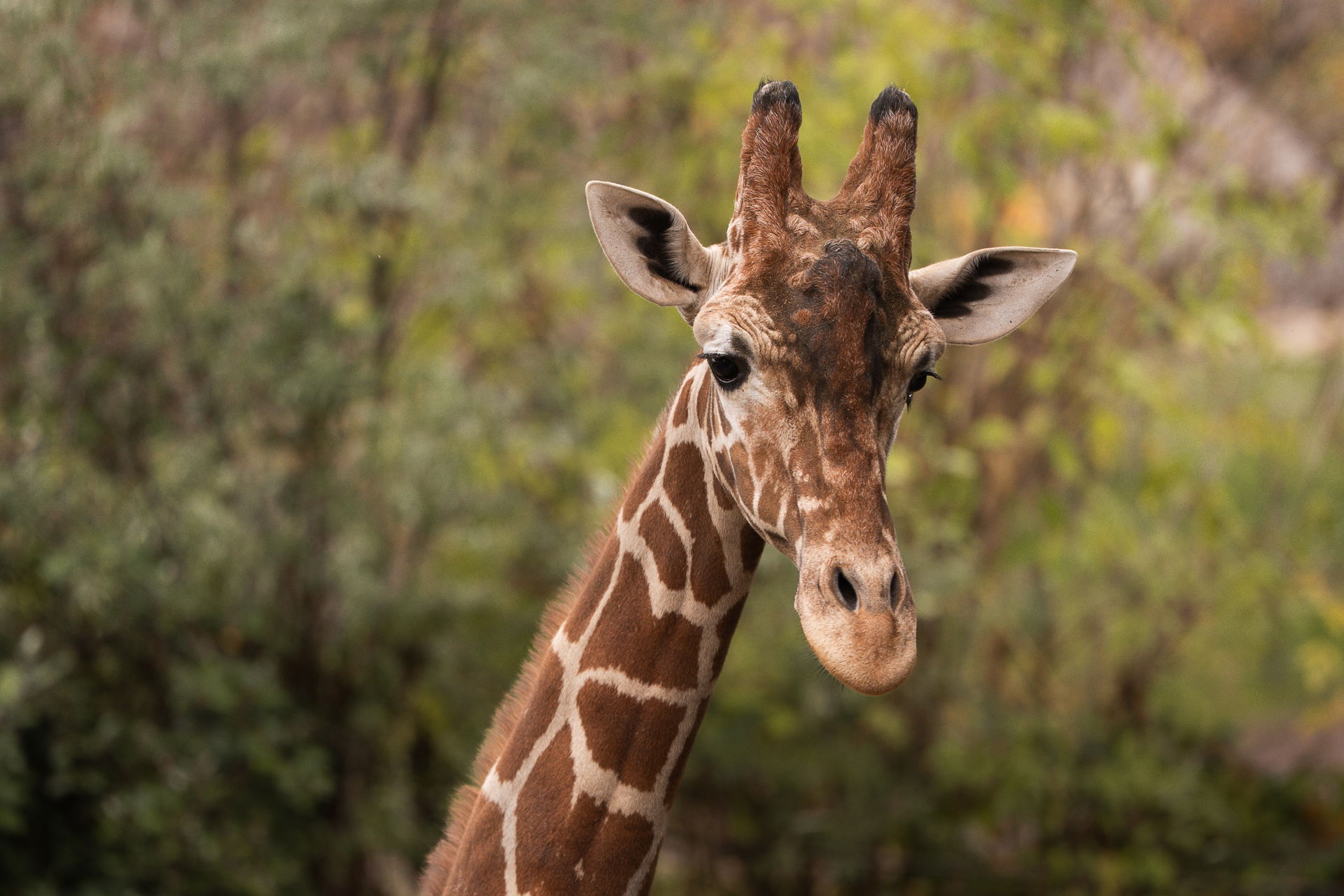
A new male reticulated giraffe has been living at the Zurich Zoo since early October. After four weeks in quarantine, Maïwenn is now gradually getting to know the Lewa Savanna and its various inhabitants. The female giraffes were the first to meet him. The initial encounter went extremely smoothly and was marked by friendly and curious mutual exploration.
Over four meters tall and weighing nearly 800 kilograms — Maïwenn, the male reticulated giraffe, makes quite an impression. And at nearly five years old, he hasn’t even reached his full height yet. Adult male reticulated giraffes can grow to nearly six meters tall. The three female giraffes, however, don’t seem to mind the few centimeters he’s still short. They showed great interest in one another right from their first encounter.
Video: Zoo Zurich, Tim Benz.
Step by step
The male giraffe had traveled from the Copenhagen Zoo to Zurich via special transport and initially underwent a four-week quarantine here. During this time, he was already allowed to explore the forecourt of the back area on his own. Once quarantine is complete, he will move on to other areas, such as all the indoor enclosures, the winter enclosure, and, at a later date, the entire savanna.
Who's ready to mate? Photo: Zoo Zurich, Tim Benz.
This is best determined by examining the urine. Photo: Zoo Zurich, Tim Benz.
That's why they sniff and sniff and sniff. Photo: Zoo Zurich, Tim Benz.
Rhinoceroses, most recently
Maïwenn has already gotten a glimpse of the Southern white rhinoceros. However, they’re still kept apart. It will be a while before she shares the savanna with them. First, Maïwenn gets to know the impalas, Grévy's zebra, Scimitar-horned oryx, Helmeted guineafowl, and South African ostrich, one after another.
Impala (Aepyceros melampus). Photo: Zoo Zurich, Fabio Süess.
Grévy's zebra (Equus grevy). Photo: Zoo Zurich, Fabio Süess.
Scimitar-horned oryx (Oryx dammah). Photo: Zoo Zurich, Fabio Süess.
Helmeted guineafowl (Numida meleagris). Photo: Zoo Zurich, Fabio Süess.
South African ostrich (Struthio camelus australis). Photo: Zoo Zurich, Fabio Süess.
The two largest species in the Lewa Savanna are the last to encounter each other. It’s important that Maïwenn is already thoroughly familiar with his new habitat by the time he meets his most imposing fellow inhabitants.
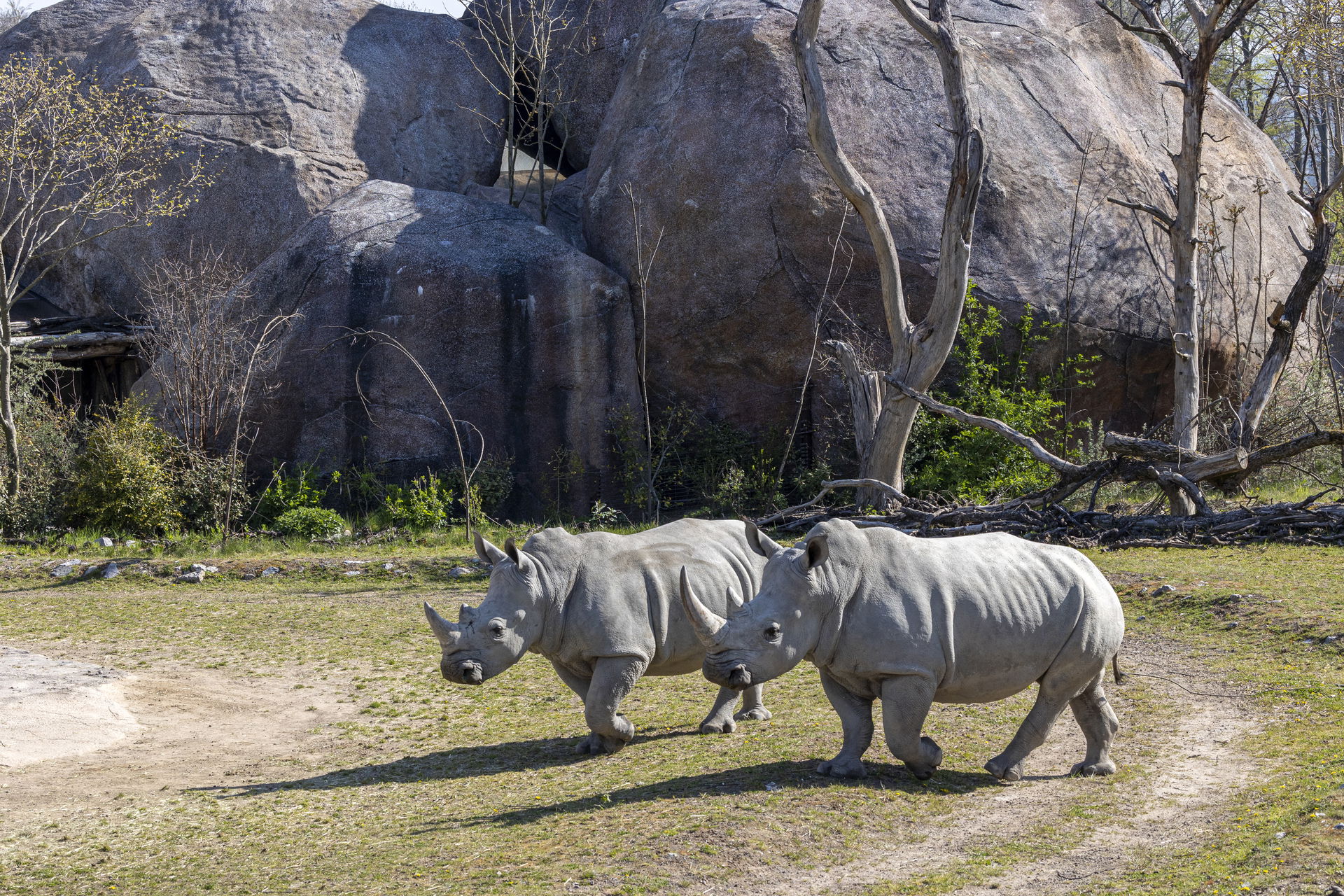
Photo: Zoo Zurich, Enzo Franchini.
The rhinos are the dominant species in the Lewa Savanna at the Zoo Zurich, and they must be respected. This is true even for a male giraffe standing nearly five meters tall. Life in a group is exciting and enriching for all seven species, but it requires respectful coexistence and adherence to certain hierarchical rules—just as it does in the wild.
Several distinctive features
Maïwenn was born at the French ZooParc de Beauval as part of the reserve population of the European Endangered Species Breeding Program (EEP) for the species. Although he is a bull, Maïwenn has a female first name. He was given this name in honor of a generous donor who was closely associated with the ZooParc de Beauval and, above all, the endangered reticulated giraffes (Giraffa reticulata) with whom she had close ties.
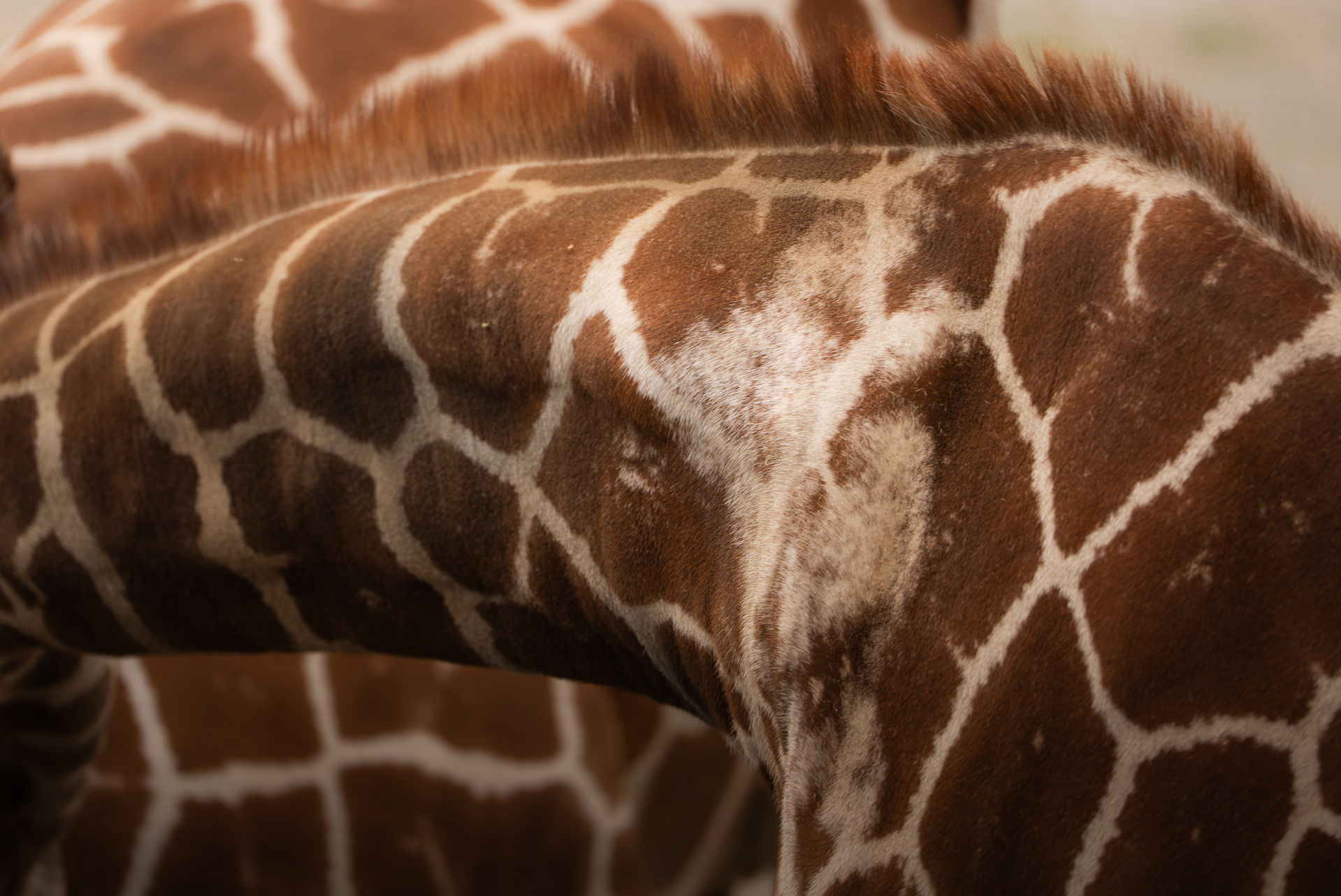
Pigment spots are a quirk of nature that can also be found in various animal species in the wild. Photo: Zoo Zurich, Tim Benz.
Not only his name, but also his appearance is striking. The male giraffe has a pigmentation disorder that causes several white spots on his neck. Such completely harmless pigmentation disorders occur from time to time in varying degrees of severity. This is true not only for giraffes but for many animal species. Even in the wild, there are frequently animals that exhibit pigment disorders.
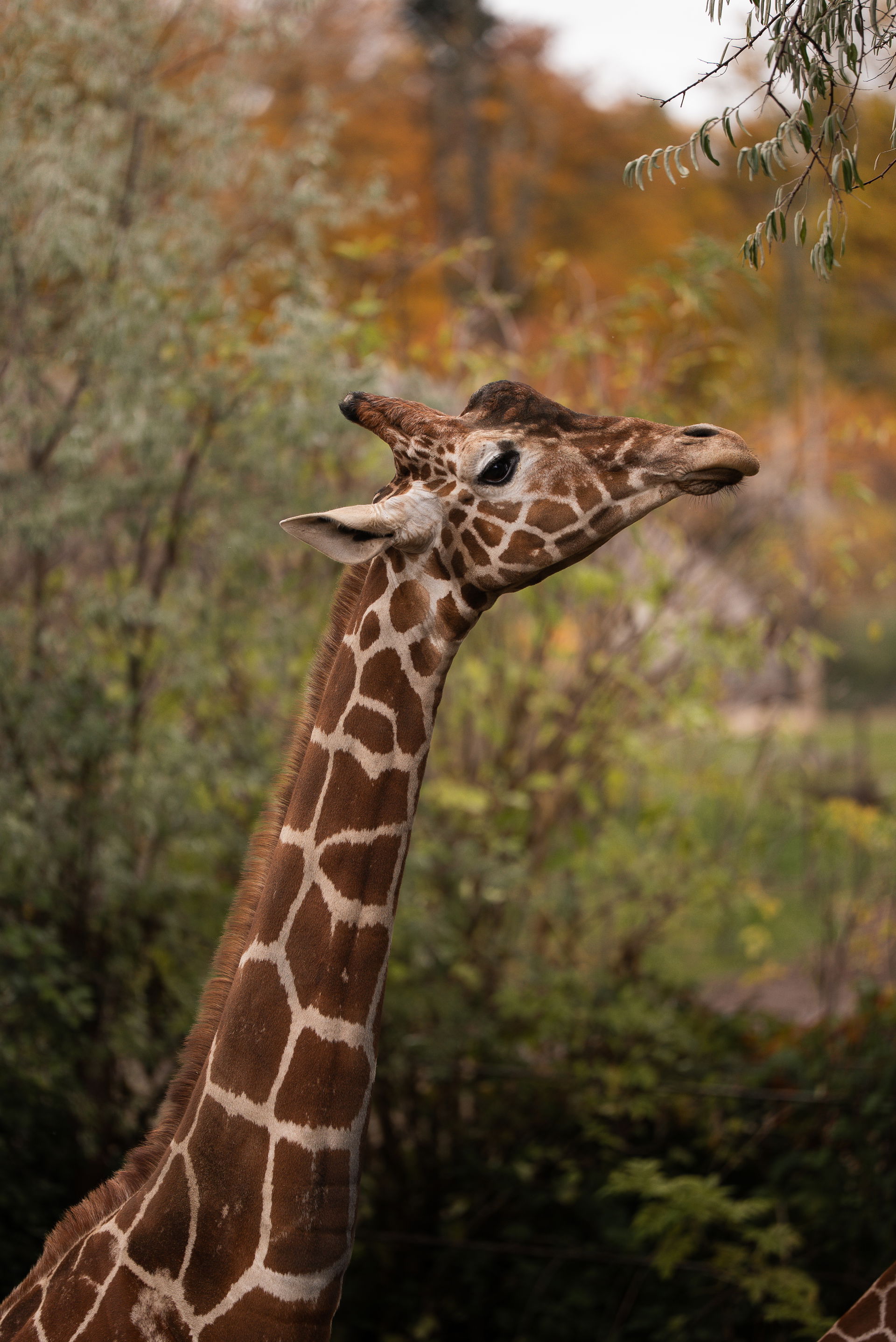
Reticulated giraffes prefer to eat fresh leaves. Their long necks and long tongues help them do so. Photo: Zoo Zurich, Tim Benz.
Four species of giraffe
The reticulated giraffe’s natural habitat consists of dry bush and tree savannas stretching from Ethiopia through Somalia to Kenya. The reticulated giraffe is listed as critically endangered on the Red List of Threatened Species. Only about 16,000 animals remain in the African wilderness. This makes the reticulated giraffe the second rarest of all four giraffe species, after the northern giraffe (Giraffa camelopardalis).
Even though some data suggest that populations have recovered slightly in recent years, strong conservation efforts will still be needed in the future, both in their natural habitat and elsewhere. Over the past 35 years, the total giraffe population has declined by about 30 percent, and by as much as 95 percent in some regions — largely unnoticed by the public. The renowned nature filmmaker Sir David Attenborough therefore once coined the term «silent extinction» to describe the disappearance of giraffes.
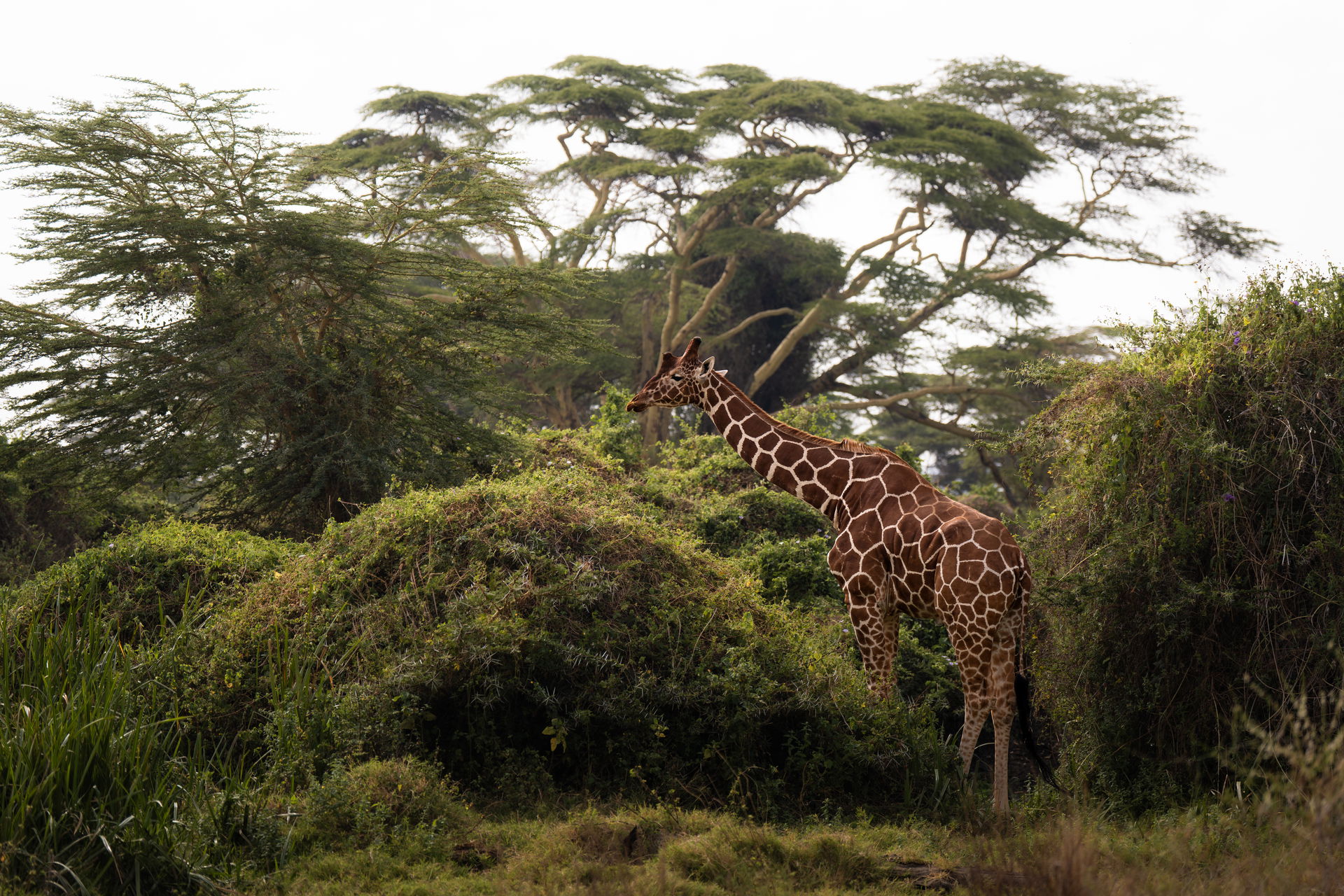
A reticulated giraffe at the Lewa Wildlife Conservancy in Kenya. Photo: Zoo Zurich, Tim Benz.
Through our Conservation Project Lewa, we are committed to protecting and preserving the remaining habitat of the reticulated giraffe in Kenya. And with the arrival of the male giraffe Maïwenn, we can simultaneously breed the species and thus strengthen ex situ conservation as part of the European Conservation Breeding Program. As a modern zoo and conservation organization, our goal is to connect people, animals, and nature and to contribute to the protection of our unique biodiversity. The new male giraffe on the Lewa Savannah is an important piece of this puzzle.
Help protect the habitat of the reticulated giraffes!
- Education
- Research
- Species Conservation
 HabitatsWe protect nature – locally and globally